The Misses Vickers
John Singer Sargent · 1884
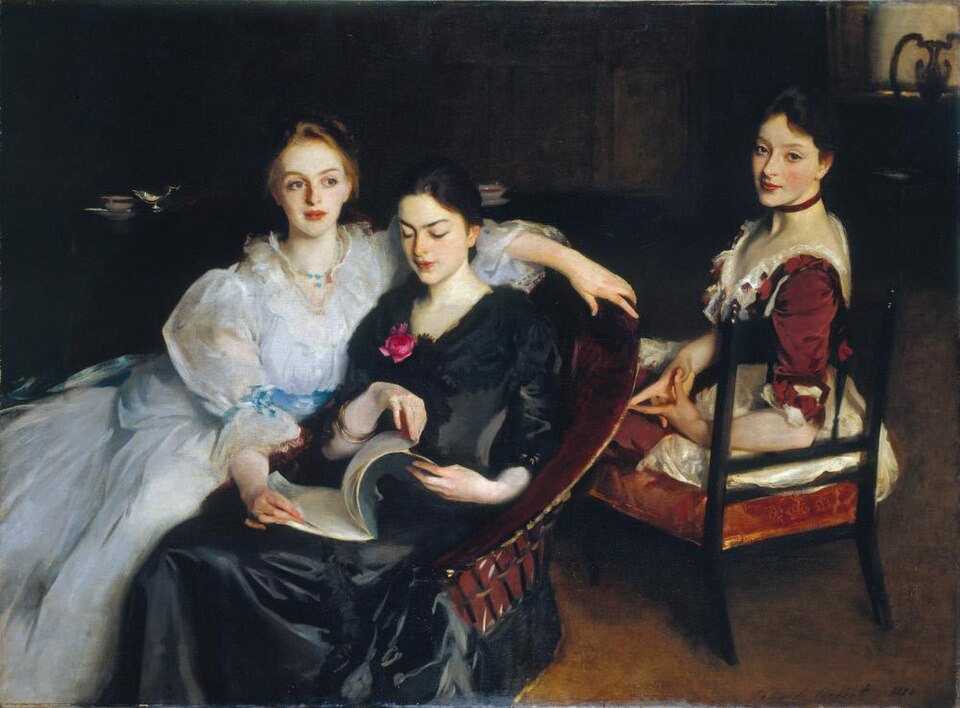
Three sisters in pale day dresses sit among teacups and a piano, two of them turning the pages of a blurred book. Sargent painted The Misses Vickers in 1884, just after the scandal of Madame X.
The story behind the painting
The three sisters are Florence Evelyn, Mabel Frances and Clara Mildred Vickers, daughters of Colonel Thomas Vickers, a wealthy Sheffield industrialist who commissioned the portrait. Sargent received the commission just before he showed Portrait of Madame X in 1884, which critics and public found overly sexual. He left Paris soon after and feared that clients would withdraw, but Colonel Vickers kept his request. In July Sargent travelled to the family estate at Bolsover Hill in Sheffield to begin. Privately he was less than gracious, calling his sitters three ugly women who lived in a dingy hole, yet that disdain does not show in the picture.
What to look for
The sisters wear fine day dresses whose yards of fabric drape over their laps and spill from the sofa and chair. Everyday objects, two cups of tea, a small milk jug and a piano, give the scene a casual tone. Everything is painted with clarity except one thing: the pages of the book that the two sisters on the sofa are leafing through are blurred, the only hint of movement in a still, quiet room. Look at how they gaze out at us. The canvas is large, about 167 by 212 cm, and the grouping recalls Sargent's Daughters of Edward Darley Boit of 1882.
Meaning and intent
Sargent admired the Pre-Raphaelites, and Rossetti's portraits of women inspired him. The picture also has formal links to Millais's group portrait of the Armstrong sisters, Hearts Are Trumps, of 1872. Through the objects and the poses, the scene manages to be still and active at once, and the three wealthy sisters appear humble. For Sargent, after the glamorous and often flashy Paris clientele, the commission felt like a step back in his career; for the Vickers family it was the beginning of a long relationship, and Sargent became a regular guest at their dinners and parties.
Legacy
The portrait was shown at the Salon of 1885 and at the Royal Academy in 1886. Critics at the Salon mostly overlooked it, though one anonymous writer in The Spectator called it perhaps the cleverest thing in the exhibition. In 1886 The Times found the sisters thin and almost ghostly at first sight, but after a second and third look nearly convinced that this bold and subtle art told the truth about its sitters. Colonel Vickers was pleased, and Sargent went on to paint thirteen members of the extended family. The painting belongs to the Sheffield Galleries and Museums Trust.
Lo sapevi?
- Painted in 1884 for Colonel Thomas Vickers of Sheffield.
- Shown at the Salon of 1885 and the Royal Academy in 1886.
- Sargent went on to paint thirteen members of the Vickers family.
- Owned by the Sheffield Galleries and Museums Trust.
L'artista
John Singer Sargent (1856-1925)
Altre opere di John Singer Sargent
 Carnation, Lily, Lily, Rose - John Singer Sargent (1885-1886)
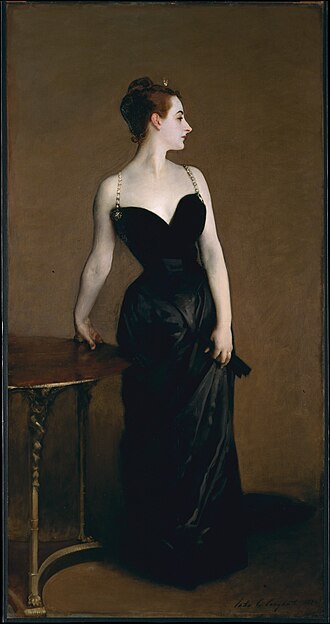 Madame X - John Singer Sargent (1884)
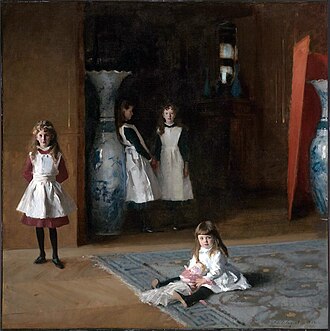 The Daughters of Edward Darley Boit - John Singer Sargent (1882)
.jpg) Gassed - John Singer Sargent (1919)
Gassed - John Singer Sargent (1919).jpeg) Lady Agnew of Lochnaw - John Singer Sargent (1892)
Lady Agnew of Lochnaw - John Singer Sargent (1892) El Jaleo - John Singer Sargent (1882)
.jpg) Street in Venice - John Singer Sargent (1882)
Street in Venice - John Singer Sargent (1882) Lady with the Rose - John Singer Sargent (1882)
Dipinti di artisti collegati
 Luncheon on the Grass - Édouard Manet (1863)
 Olympia - Édouard Manet (1863)
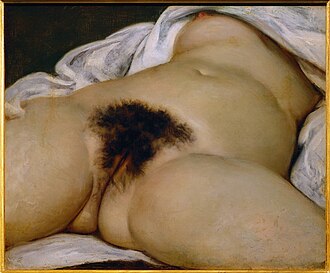 L'Origine du monde - Gustave Courbet (1866)
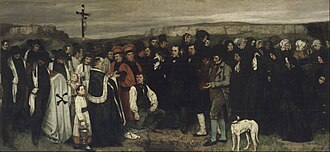 A Burial at Ornans - Gustave Courbet (2020)
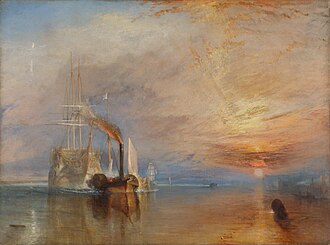 The Fighting Temeraire - J. M. W. Turner (1839)
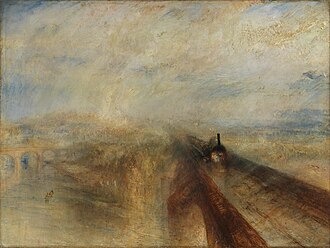 Rain, Steam and Speed - The Great Western Railway - J. M. W. Turner (1844)
 The Oath of the Horatii - Jacques-Louis David (1784)
.jpg) The Intervention of the Sabine Women - Jacques-Louis David (1799)
The Intervention of the Sabine Women - Jacques-Louis David (1799)