The Daughters of Edward Darley Boit
John Singer Sargent · 1882
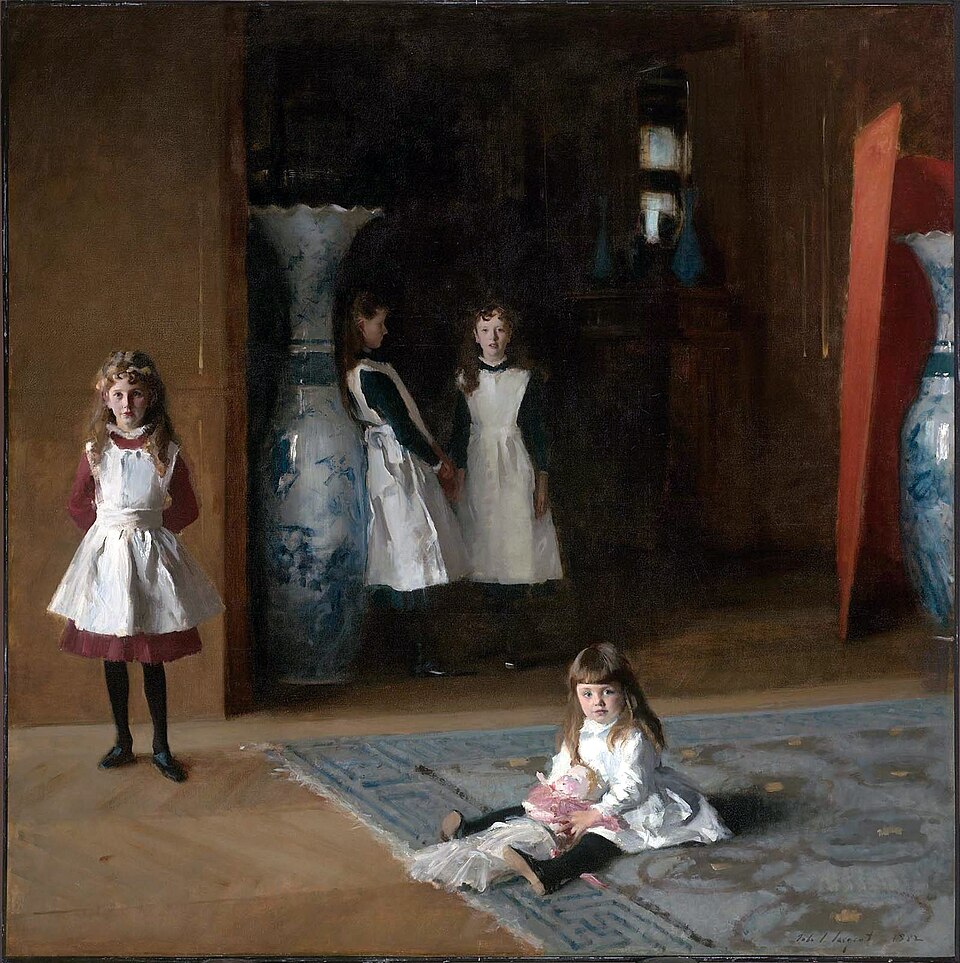
Four sisters in white pinafores wait in a dim Paris hallway, the youngest on the floor, the eldest half lost in shadow. Sargent called it simply Portraits of children, yet it has been described as the most psychologically compelling painting of his career.
The story behind the painting
John Singer Sargent painted the four daughters of his friend Edward Darley Boit in 1882, in what is thought to be the foyer of the family's Paris apartment. Boit was an American cosmopolite and a minor painter; his wife was Mary Louisa Cushing, known as Isa. It is not certain whether Boit commissioned the picture or whether Sargent suggested it. The original title was Portraits d'enfants. The dark interior recalls the Venetian rooms Sargent had just been painting, and the square canvas, about 222 cm each way, was unusual for a group portrait.
What to look for
The girls are not given equal weight, as a conventional group portrait would demand. Four-year-old Julia sits on the floor; eight-year-old Mary Louisa stands alone at the left; Jane, twelve, and Florence, fourteen, stand back near a dark doorway, one face almost hidden. Beside them rise two tall blue-and-white Japanese vases. The broad, deep space owes much to Velázquez's Las Meninas, which Sargent had copied on the advice of his teacher Carolus-Duran, and some of the brushwork has been traced to Frans Hals. Critics have also compared it with Renoir's Madame Charpentier and Her Children and Degas's Bellelli Family.
Meaning and intent
In 1882 and 1883 Paris critics noticed the odd composition and the wooden forms of the figures. In 1887 Henry James saw a happy play-world of charming children, and that reading stood for nearly a century. Modern critics find something unsettling: the girls seem to show successive stages of childhood, drawing away into alienation as they grow older. Barbara Gallati reads the two eldest, at the edge of a dark entry, as stepping into an unknown future. Bill Brown sees a portrait of vases and a still life of girls, a blurring of person and thing.
Legacy
None of the sisters ever married, and the two eldest suffered emotional troubles as adults. In 1919 the four of them gave the painting to the Museum of Fine Arts, Boston, in memory of their father. It now hangs in the Art of the Americas Wing between the two real vases it depicts, later given by the family's heirs. Its bond with Velázquez is taken so seriously that Boston lent it to the Prado in 2010 to hang beside Las Meninas, and in 2025 the Metropolitan Museum showed it next to Sargent's own copy of that masterpiece.
Lo sapevi?
- Painted in Paris in 1882, first titled Portraits d'enfants.
- The sisters gave it to the Museum of Fine Arts, Boston, in 1919.
- It hangs between the two Japanese vases shown in it.
- Shown beside Las Meninas at the Prado in 2010.
L'artista
John Singer Sargent (1856-1925)
portrait · Museum of Fine Arts Boston · family portrait
Altre opere di John Singer Sargent
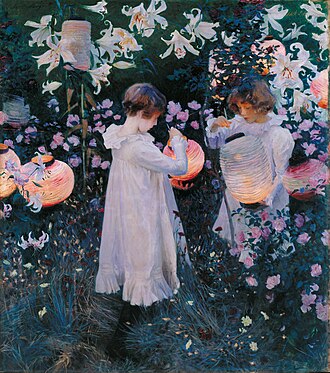 Carnation, Lily, Lily, Rose - John Singer Sargent (1885-1886)
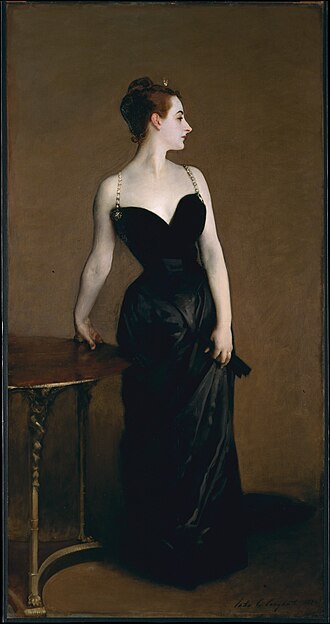 Madame X - John Singer Sargent (1884)
.jpg) Gassed - John Singer Sargent (1919)
Gassed - John Singer Sargent (1919).jpeg) Lady Agnew of Lochnaw - John Singer Sargent (1892)
Lady Agnew of Lochnaw - John Singer Sargent (1892) El Jaleo - John Singer Sargent (1882)
.jpg) Street in Venice - John Singer Sargent (1882)
Street in Venice - John Singer Sargent (1882) The Misses Vickers - John Singer Sargent (1884)
 Lady with the Rose - John Singer Sargent (1882)
Dipinti di artisti collegati
 Luncheon on the Grass - Édouard Manet (1863)
 Olympia - Édouard Manet (1863)
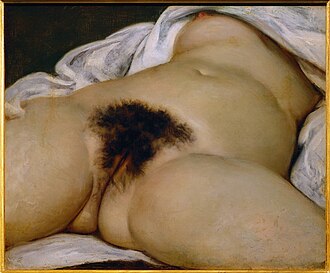 L'Origine du monde - Gustave Courbet (1866)
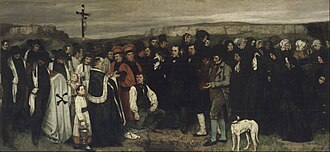 A Burial at Ornans - Gustave Courbet (2020)
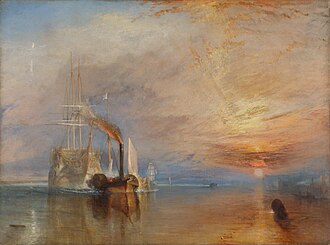 The Fighting Temeraire - J. M. W. Turner (1839)
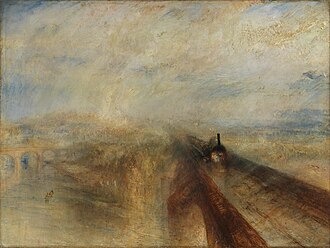 Rain, Steam and Speed - The Great Western Railway - J. M. W. Turner (1844)
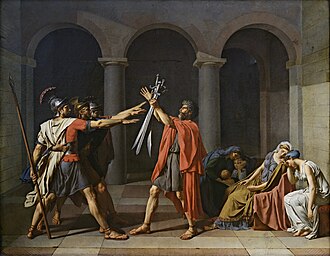 The Oath of the Horatii - Jacques-Louis David (1784)
.jpg) The Intervention of the Sabine Women - Jacques-Louis David (1799)
The Intervention of the Sabine Women - Jacques-Louis David (1799)