Street in Venice
John Singer Sargent · 1882
.jpg)
A young woman hurries down a shadowed Venetian backstreet, eyes lowered, while a man in the dark turns to watch her. Sargent skipped the palaces and canals and painted a quick, uneasy moment instead.
The story behind the painting
John Singer Sargent painted Street in Venice around 1882, during a stay in the city where he made a number of Venetian scenes. The setting is a quiet backstreet off the Calle Larga dei Proverbi, near the Grand Canal. The woman is probably the Venetian model Gigia Viani. Like his other Venetian pictures, it largely ignores the famous architecture and turns instead to edgy back-street life. The painting is oil on wood and small, about 45 by 54 cm according to Wikidata. It was first exhibited in 1882 at the Galerie Georges Petit in Paris.
What to look for
The woman walks along the flagstones, kicking her skirt forward with her right foot, her shawl and hem flowing as she moves quickly past. To the right, two dark figures of men huddle in conversation, and one follows her with his gaze while she keeps her eyes down. In the middle background a couple sit outside a café, absorbed in each other. The street is a series of descending rectangles that meet at her head, with a strip of blue sky above. The picture is almost monochrome, with touches of red in her comb, her dress and the café behind.
Meaning and intent
The Wikipedia article reads the painting as being about the invasive male gaze and its effect on a passing woman, shown in her down-turned eyes and fast pace. Sargent placed the moment in Venice, away from London, Paris or New York, cities he knew better and thought more refined. The broad, dark areas recall Diego Velázquez, while the tight cropping and the frozen movement suggest the influence of photography, especially Carlo Naya's pictures of Venice. Margaret Conrads has linked its mood to Giovanni Boldini's Crossing the Street. Sargent cared more about tone than colour here.
Legacy
The Impressionist influence shows in the broad strokes of the dress and the unusual cropping. In 1888 Elizabeth Chanler of Boston bought the painting and gave it to the architect Stanford White in return for professional services. In 1962 it was acquired by the National Gallery of Art in Washington, D.C., where it is on permanent display. Wikidata lists the museum by its Spanish name, Galería Nacional de Arte. Its almost photographic, freeze-frame capture of a single moment remains what sets it apart.
Lo sapevi?
- Painted around 1882 in Venice.
- The model is probably Gigia Viani.
- First shown in 1882 at the Galerie Georges Petit, Paris.
- At the National Gallery of Art, Washington, since 1962.
L'artista
John Singer Sargent (1856-1925)
Altre opere di John Singer Sargent
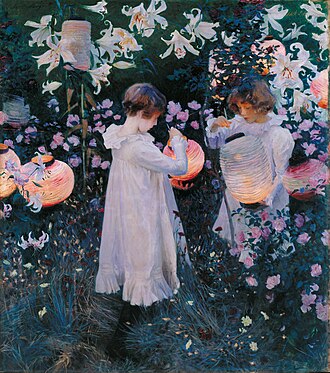 Carnation, Lily, Lily, Rose - John Singer Sargent (1885-1886)
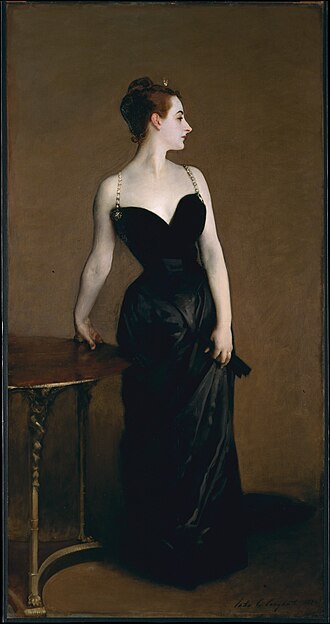 Madame X - John Singer Sargent (1884)
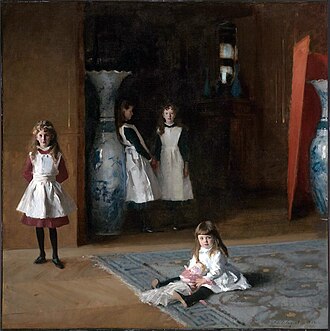 The Daughters of Edward Darley Boit - John Singer Sargent (1882)
.jpg) Gassed - John Singer Sargent (1919)
Gassed - John Singer Sargent (1919).jpeg) Lady Agnew of Lochnaw - John Singer Sargent (1892)
Lady Agnew of Lochnaw - John Singer Sargent (1892)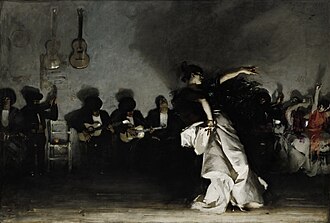 El Jaleo - John Singer Sargent (1882)
 The Misses Vickers - John Singer Sargent (1884)
 Lady with the Rose - John Singer Sargent (1882)
Dipinti di artisti collegati
 Luncheon on the Grass - Édouard Manet (1863)
 Olympia - Édouard Manet (1863)
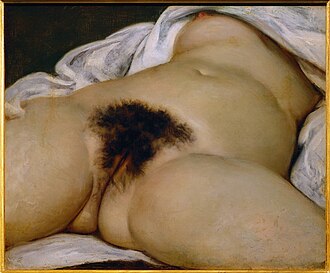 L'Origine du monde - Gustave Courbet (1866)
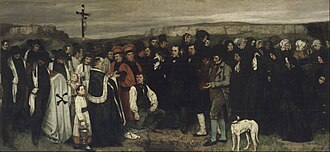 A Burial at Ornans - Gustave Courbet (2020)
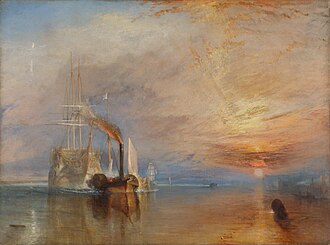 The Fighting Temeraire - J. M. W. Turner (1839)
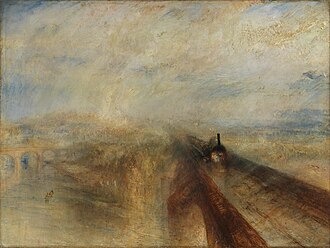 Rain, Steam and Speed - The Great Western Railway - J. M. W. Turner (1844)
 The Oath of the Horatii - Jacques-Louis David (1784)
.jpg) The Intervention of the Sabine Women - Jacques-Louis David (1799)
The Intervention of the Sabine Women - Jacques-Louis David (1799)