A Burial at Ornans
Gustave Courbet · 2020
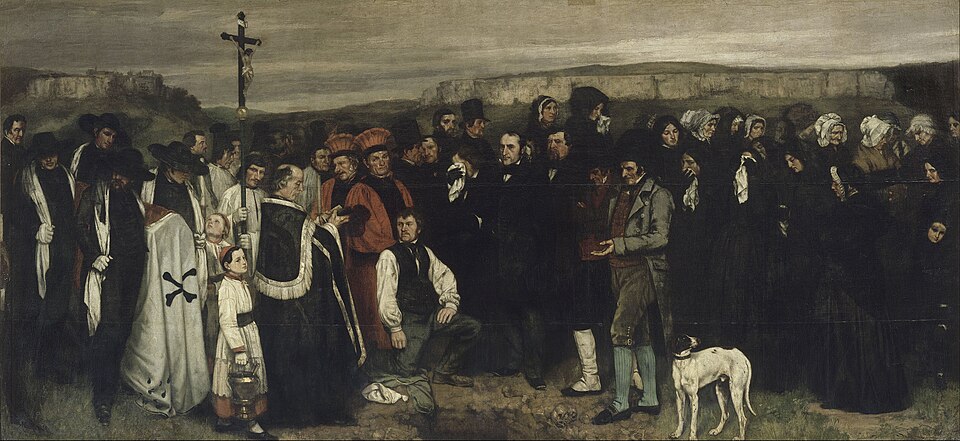
In a small town cemetery, a whole community gathers around an open grave, painted at the size once reserved for gods and heroes. Courbet's funeral at Ornans made ordinary people monumental, and Paris never quite forgot the shock.
The story behind the painting
Gustave Courbet painted this canvas in 1849-50, recording a funeral in Ornans, the small town where he was born. The people of Ornans posed as models, and Courbet made a sketch before the final work. Scholars have proposed different starting points. Courbet scholar Gerstle Mack thought the original inspiration was most likely the funeral of Oudot, the painter's grandfather, who had died the year before. Another theory links it to a funeral in the family of Pierre-Joseph Proudhon, Courbet's close friend. Courbet likely also looked at seventeenth-century Dutch group portraits and at popular woodcuts of the 1830s and 1840s that showed mourners gathered around a scene of death. When the painting was shown at the Paris Salon of 1850, it caused what has been called an explosive reaction and brought Courbet instant fame.
What to look for
Start at the bottom centre, where an open grave lies at your feet, with a skull and bones along its edge. Behind it the mourners stand in a long line, loosely in three groups: the church members, with a priest, choir boys, beadles and a cross bearer whose crucifix rises above every head; two old veterans beside a white dog; and officials and other mourners. Courbet himself called the veterans men of the Revolution of '93 wearing the clothes of their time, and they have been identified as Secrétan and Cardet, friends of his grandfather. Notice how no single figure is given priority. The people stand side by side in similar dark clothes, almost merging, and the very wide format pulls your eye sideways along the crowd rather than up toward a hero.
Meaning and intent
By 1848 Courbet wanted to show common people realistically, and he described his art in letters as democratic. Many of his contemporaries read the painting as a political statement, seeing an egalitarian message in its level row of figures. The art historian T.J. Clark argued instead for stillness, ambiguity and irony, and read it as a picture about class and the permanence of rural life rather than left or right politics. The critic Champfleury insisted there was not a trace of socialism in it, only the death of a citizen escorted by other citizens. Details invite further readings: the skull placed between clergy and veterans, and the inattentive churchmen beneath the towering crucifix, which Proudhon saw as a sign of France losing its faith.
Legacy
Much of the original scandal came from the canvas's size. Academic doctrine held that such grand scale belonged to history painting, the highest genre, and Courbet had spent it on a provincial funeral. Critics also found the work ugly, crowded and without a clear focal point, and some objected to its seemingly impious tone. Yet the same qualities are why the painting is widely regarded as a major turning point in nineteenth-century French art. Today it hangs in the Musée d'Orsay in Paris, and according to the Wikipedia article it underwent conservation treatment led by Cinzia Pasquali in 2026. Wikidata lists its date as 2020, which conflicts with the 1849-50 date given by the article, perhaps reflecting a later event rather than the painting's creation.
Lo sapevi?
- Painted in 1849-50; Wikidata lists 2020, which conflicts with the Wikipedia date.
- Size: 315 x 668 cm.
- Shown at the Paris Salon of 1850.
- Musée d'Orsay, Paris.
L'artista
Gustave Courbet (1819-1877)
genre art · man · Musée d'Orsay · dog
Altre opere di Gustave Courbet
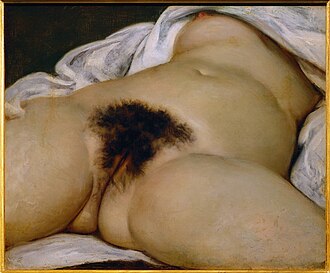 L'Origine du monde - Gustave Courbet (1866)
 The Painter's Studio - Gustave Courbet (1855)
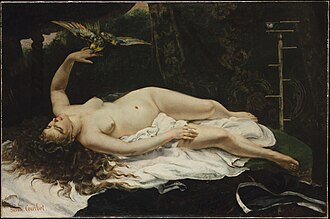 Woman with a Parrot - Gustave Courbet (1866)
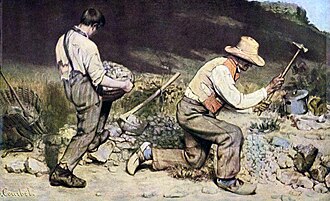 The Stone Breakers - Gustave Courbet (1850)
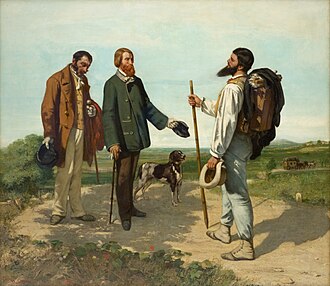 The Meeting, or Bonjour, Monsieur Courbet! - Gustave Courbet (1854)
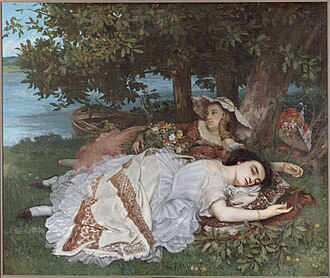 Young Ladies Beside the Seine - Gustave Courbet (1857)
.jpg) The Source - Gustave Courbet (1862)
The Source - Gustave Courbet (1862)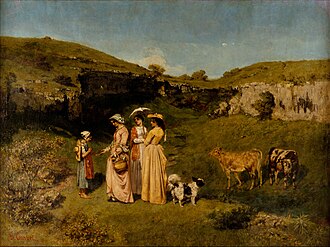 Young Ladies of the Village - Gustave Courbet (1850s)
Dipinti di artisti collegati
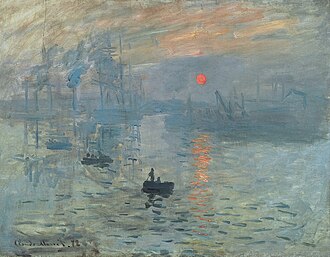 Impression, Sunrise - Claude Monet (1872)
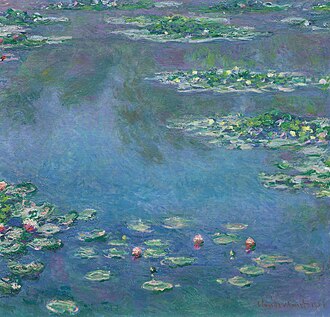 Water Lilies - Claude Monet (1906)
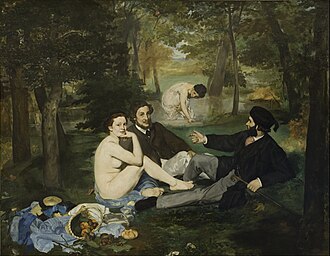 Luncheon on the Grass - Édouard Manet (1863)
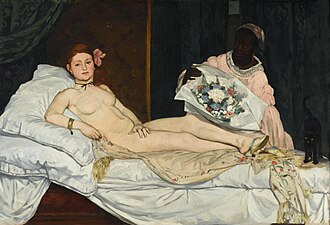 Olympia - Édouard Manet (1863)
 The Starry Night - Vincent van Gogh (1889)
.jpg) Café Terrace at Night - Vincent van Gogh (1888)
Café Terrace at Night - Vincent van Gogh (1888)