The Ecstasy of Saint Francis of Assisi
El Greco · 1575
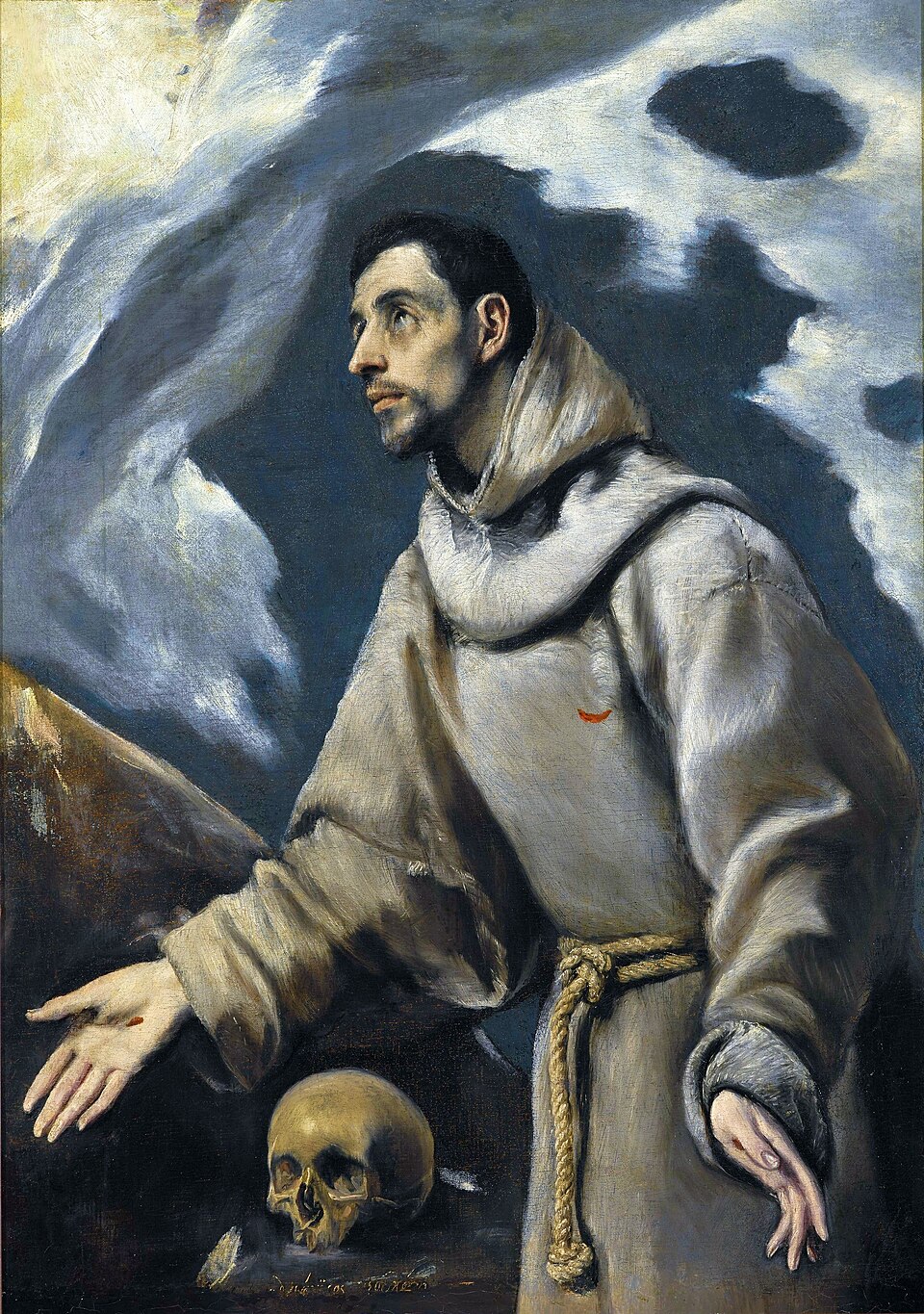
A weeping saint lifts his arms toward a cold, bright light. For years this El Greco hung unnoticed on the wall of a Polish parish house, until two researchers found it in 1964 and a hidden Greek signature later proved whose hand had painted it.
The story behind the painting
In 1964 Izabella Galicka and Hanna Sygietyńska-Kwoczyńska, researchers from the Polish Academy of Sciences, were listing art monuments in Sokołów County when they found the painting hanging in the parish house of the church in Kosów Lacki. They first attributed it to El Greco's workshop and wrote to the Spanish historian Josep Gudiol Ricart, who answered that from a photograph it could be by El Greco himself, but he could not judge without seeing the canvas. When the press announced the discovery on 1 April 1967, some periodicals dismissed it as an April Fools' joke. The registry of monuments that year dated it to roughly 1570 to 1577, while Wikidata gives 1575.
What to look for
The canvas, oil, 102 by 75 cm, shows Saint Francis from the knees up at the moment he receives the stigmata. He leans forward, turned three-quarters toward a bright light from the left, gazing at the sky with tears in his eyes. His figure is unnaturally elongated, his arms opened in a gesture of surrender to God. Look at the monk's habit with wide pleated sleeves, the hooded collar and the double rope tied in a knot. Behind him rises the outline of Mount La Verna, and under his right hand lies a skull. There are two light sources: one strongly lights the saint, the other comes from a cloud just before his face. The palette is described as cold.
Meaning and intent
The painting presents Francis in an ecstatic, deeply spiritual state, with the radiant light and unusual colour carrying that feeling, and the skull standing as an emblem of vanity. In the mid-1970s the cardiologist Jan Kwoczyński suggested that the model suffered from Marfan syndrome, pointing to the spider-like fingers and shining eyes, and noted a resemblance to a shepherd in works by Jacopo and Francesco Bassano. The source places this idea among older speculations about El Greco's elongated figures, and says such theories have met strong criticism from art experts, who do not read the style as an accident of illness.
Legacy
In January 1974 conservators found an authentic El Greco signature in Greek minuscule beneath a false overpainted signature reading A. van Dück. That September a commission of the Ministry of Culture confirmed the work as an original El Greco. Fearing seizure, the church kept it out of public view for decades; it was secretly moved to the curia in Siedlce in 1968, and in 1990 a loan request from the Royal Castle in Warsaw was refused. Since 15 October 2004 it has hung permanently in the Diocesan Museum in Siedlce, and in 2014 it travelled to the Royal Castle for the first time.
Lo sapevi?
- Found in 1964 in a parish house in Kosów Lacki, Poland.
- A hidden Greek signature was uncovered under a false one in 1974.
- Oil on canvas, 102 x 75 cm.
- On permanent display in the Diocesan Museum in Siedlce since 2004.
L'artista
El Greco (1541-1614)
Altre opere di El Greco
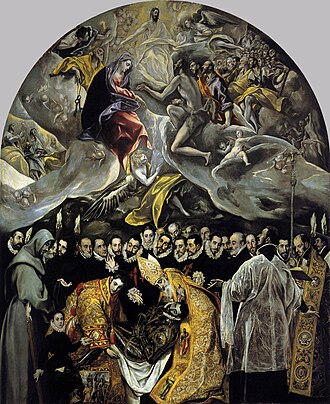 The Burial of the Count of Orgaz - El Greco (1586)
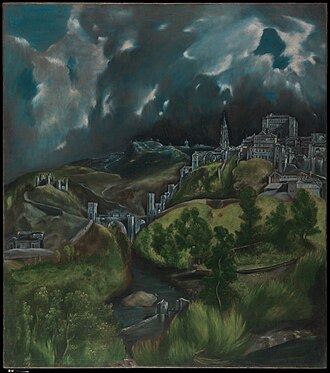 View of Toledo - El Greco (1596)
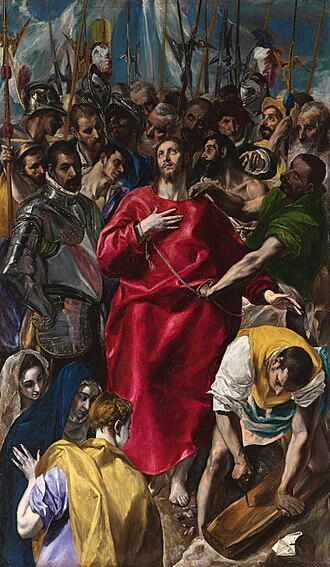 The Disrobing of Christ - El Greco (1570s)
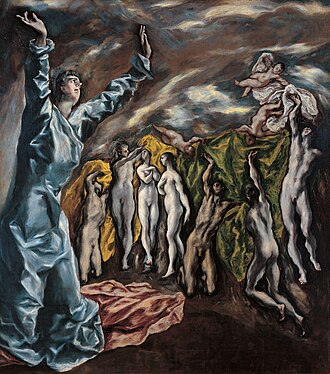 Opening of the Fifth Seal - El Greco (1610)
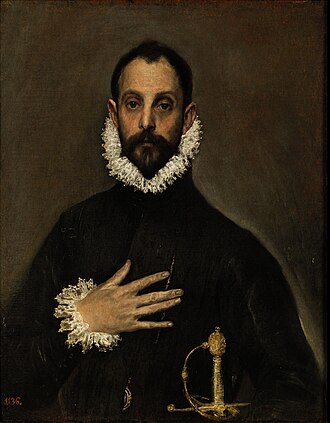 The Nobleman with his Hand on his Chest - El Greco (1580)
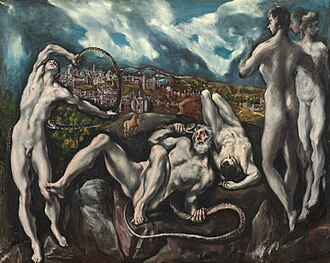 Laocoön - El Greco (1610s)
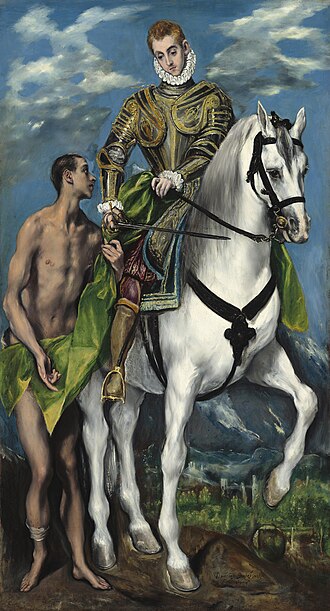 Saint Martin and the Beggar - El Greco (1597)
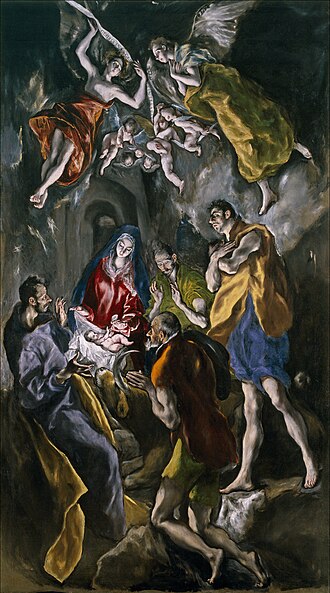 Adoration of the Shepherds - El Greco (1612)
Dipinti di artisti collegati
 The Wedding at Cana - Paolo Veronese (1560s)
 The Feast in the House of Levi - Paolo Veronese (1573)
 Last Supper - Jacopo Tintoretto (1563)
 Miracle of the Slave - Jacopo Tintoretto (1540s)
 Venus of Urbino - Titian (1538)
 Assumption of the Virgin - Titian (1510s)
 Supper at Emmaus - Caravaggio (1601)
 La vocazione di San Matteo - Caravaggio (1609)
 The Ambassadors - Hans Holbein the Younger (1533)
 The Body of the Dead Christ in the Tomb - Hans Holbein the Younger (1520s)