Saint Martin and the Beggar
El Greco · 1597
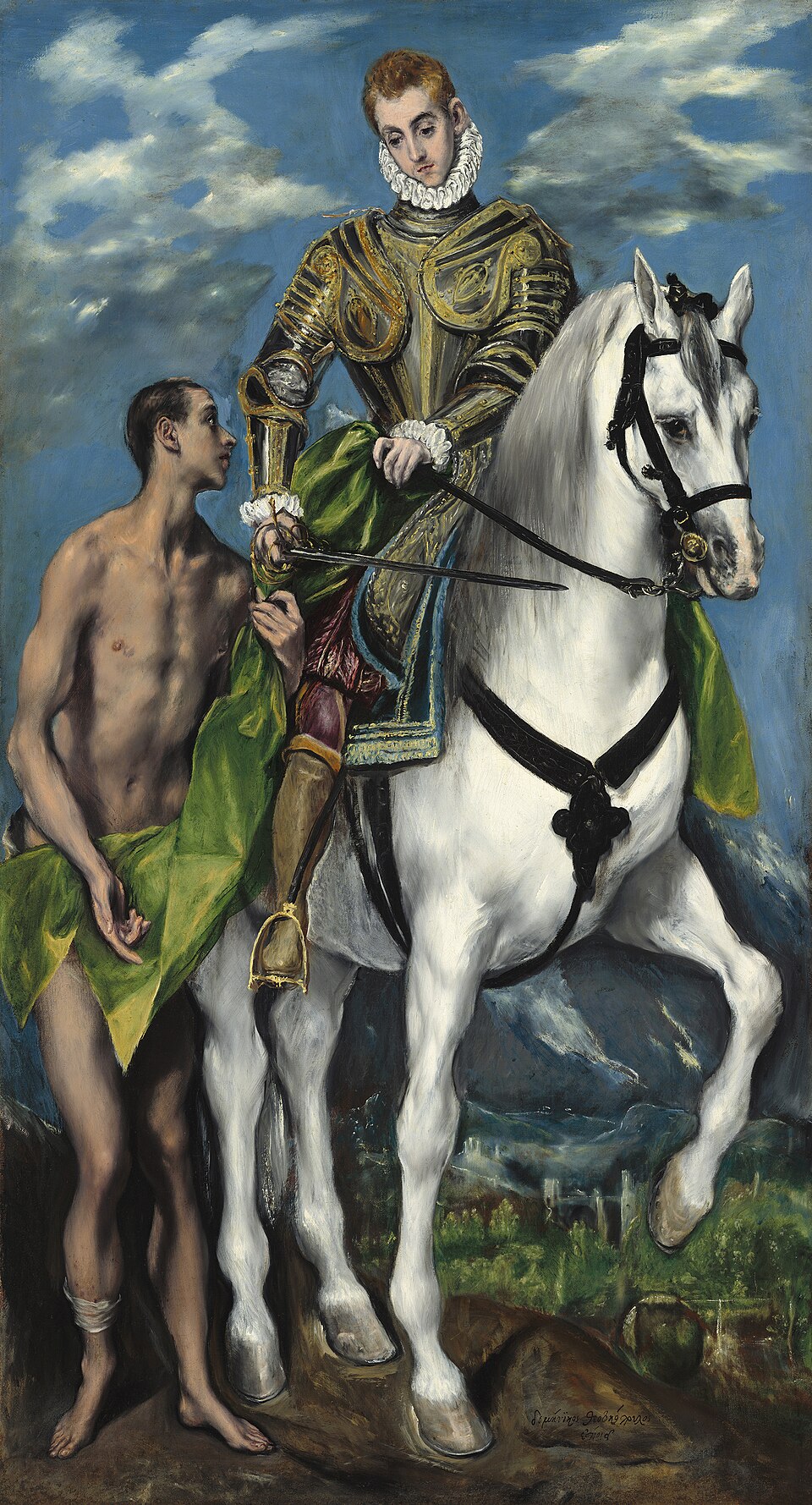
A soldier on horseback draws his sword, not to fight, but to cut his cloak in two and share it with a man who has nothing. El Greco painted that moment of mercy for a chapel in Toledo.
The story behind the painting
El Greco painted Saint Martin and the Beggar around 1597-1599. It tells a legend from the life of Martin of Tours: the saint, meeting a poor beggar, cut off half of his own cloak to clothe him. The picture was made as part of a triptych commissioned for a private chapel in the Spanish city of Toledo. Together with its companion, The Virgin and Child with Saints Martina and Agnes, it remained in that chapel for until 1907, when both were sold to the American collector Peter Widener. They later entered the permanent collection of the National Gallery of Art in Washington, D.C., where they hang today.
What to look for
This is a tall picture, about 193.5 by 103 centimetres, and its height suits the story. Above sits the saint in armour, with a ruff at his neck, mounted on his horse. Below and beside him stands the beggar, almost unclothed. The meeting of the two, one on horseback and one on foot, one dressed and one bare, is the whole drama. Follow the line of the cloak: it passes from the saint toward the poor man, joining them at the very moment it is being divided. El Greco makes the act of giving the bridge between two very different lives.
Meaning and intent
The legend is simple and the source tells it in one line: Martin cut his cloak in half to clothe a beggar. What the painting adds is attention. We do not see a crowd or a battle; we see two people and one gesture. The soldier's sword, an instrument of war, becomes a tool of sharing. Placed in a private chapel, the image would have offered its viewers a model of charity in front of which they could pray. It is a scene about seeing another person in need, and about answering with what one has, even if it is only half a cloak.
Legacy
The subject clearly mattered to El Greco. He had a practice of painting smaller versions of his large commissioned works, which he could then sell independently, and a smaller version of Saint Martin and the Beggar now belongs to the Art Institute of Chicago. The large original, with its long history in a Toledo chapel, came to the United States through the Widener collection and now hangs in Washington. For visitors there, it remains one of the clearest images of a simple act of kindness: a rider who stops, looks down, and divides what he has.
Lo sapevi?
- Painted around 1597-1599 for a private chapel in Toledo
- Size: 193.5 × 103 cm
- Sold in 1907 to Peter Widener; now in the National Gallery of Art, Washington
- A smaller version by El Greco is in the Art Institute of Chicago
L'artista
El Greco (1541-1614)
religious art · man · Galería Nacional de Arte · horse
Altre opere di El Greco
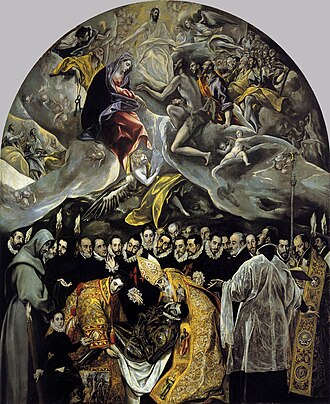 The Burial of the Count of Orgaz - El Greco (1586)
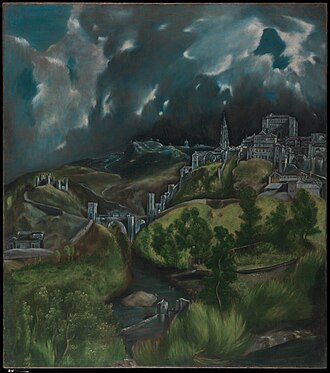 View of Toledo - El Greco (1596)
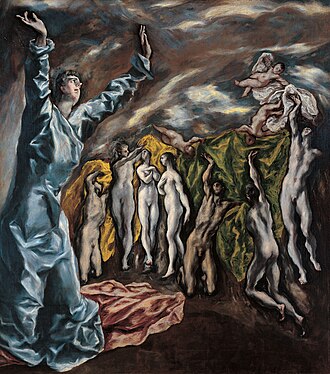 Opening of the Fifth Seal - El Greco (1610)
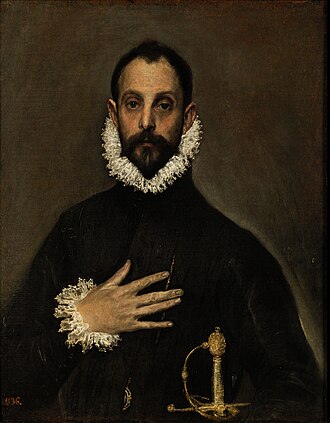 The Nobleman with his Hand on his Chest - El Greco (1580)
%20-%20Laoco%C3%B6n%20-%20Google%20Art%20Project.jpg) Laocoön - El Greco (1610s)
Laocoön - El Greco (1610s).jpg) Adoration of the Shepherds - El Greco (1612)
Adoration of the Shepherds - El Greco (1612)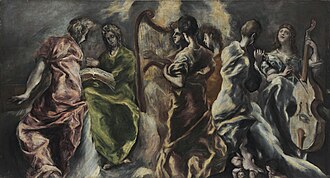 The Concert of the Angels - El Greco (1600s)
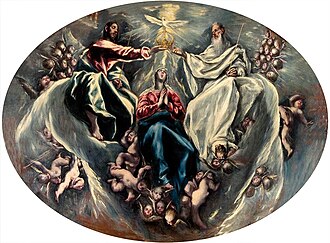 The Coronation of the Virgin - El Greco (1597)
Dipinti di artisti collegati
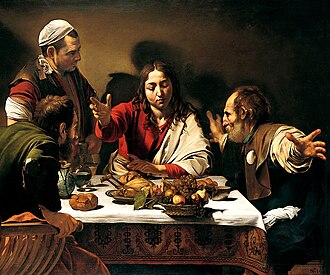 Supper at Emmaus - Caravaggio (1601)
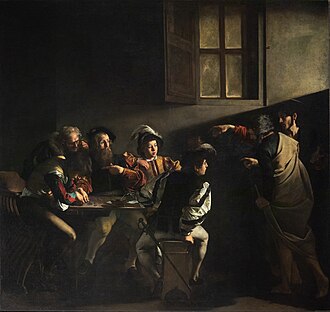 La vocazione di San Matteo - Caravaggio (1609)