The Body of the Dead Christ in the Tomb
Hans Holbein the Younger · 1520s

A panel only 30.5 cm high and two metres long holds the body of Christ as a real corpse: thin, stretched, eyes and mouth still open. Dostoevsky said a painting like this could make a person lose his faith.
The story behind the painting
Hans Holbein the Younger painted this oil and tempera panel on limewood between 1520 and 1522; Wikidata simply dates it to the 1520s. Nobody knows exactly why it was made. Suggestions include a predella for an altarpiece, a free-standing work, or an ornament for a sepulchre, and in 1999 the historians Oscar Bätschmann and Pascal Griener proposed that it may have been part of a Holy Tomb, perhaps a lid laid over it. It is linked to Bonifacius Amerbach, whom Holbein also portrayed, and it entered the Amerbach Cabinet as a picture of a dead man by H. Holbein. A legend says Holbein used a body pulled from the Rhine as his model.
What to look for
The format is the first shock: about 30.5 by 200 cm, a narrow box that seems to press the body flat. Christ lies life-size, long and emaciated. His face, hands and feet, and the wounds in his torso, are painted as dead flesh in the early stages of decay. Three wounds are visible, in the hand, the side and the feet. Bätschmann and Griener noted that the raised middle finger seems to reach towards the viewer, and that strands of hair look as if they break through the surface. Above the body, angels with the instruments of the Passion carry the Latin inscription Jesus of Nazareth, King of the Jews.
Meaning and intent
Holbein shows the Son of God after he has suffered the fate of an ordinary human. Like many artists of the early Reformation he was fascinated by the macabre, and his father had taken him to see Matthias Grünewald's altarpiece at Isenheim, a work meant to stir both guilt and empathy. In the same spirit, this panel was meant to provoke piety by refusing any comfort. The critic Michel Onfray wrote that, because nobody closed the eyes and mouth, the viewer seems to see Christ seeing, as if even in death he still looks and speaks.
Legacy
The panel has fascinated people since it was made, and it remains in the Kunstmuseum Basel. In 1867 Fyodor Dostoevsky stood before it so long that his wife pulled him away, fearing it would bring on an epileptic seizure. He put the painting into his 1869 novel The Idiot: Prince Myshkin sees a copy in Rogozhin's house and says it could make a viewer lose his faith, and the dying Ippolit argues that it shows the victory of blind nature over even the most perfect being. Few paintings have carried a theological argument so far into literature.
Lo sapevi?
- Painted between 1520 and 1522, oil and tempera on limewood.
- About 30.5 by 200 cm, with Christ shown life-size.
- Dostoevsky saw it in 1867 and wrote it into The Idiot.
- Held by the Kunstmuseum Basel.
religious art · man · Jesus Christ · corpse
Altre opere di Hans Holbein the Younger
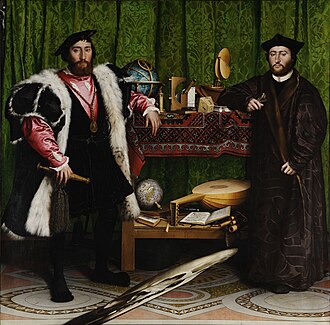 The Ambassadors - Hans Holbein the Younger (1533)
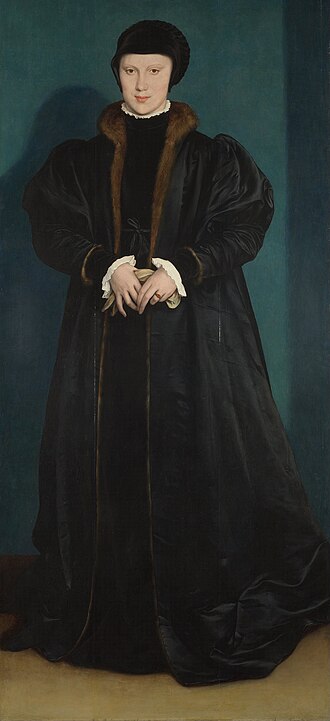 Christina of Denmark, Duchess of Milan - Hans Holbein the Younger (1538)
Dipinti di artisti collegati
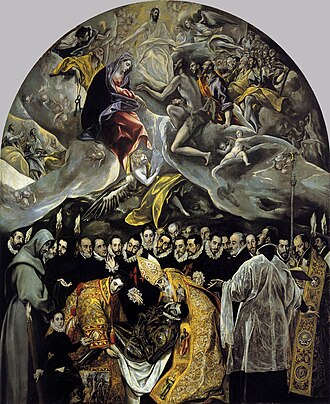 The Burial of the Count of Orgaz - El Greco (1586)
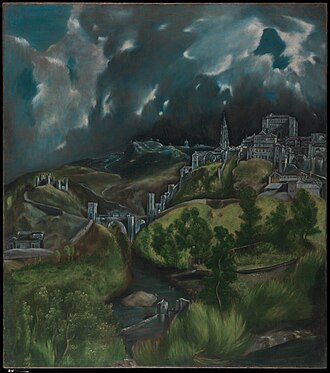 View of Toledo - El Greco (1596)
.jpg) Venus of Urbino - Titian (1538)
Venus of Urbino - Titian (1538)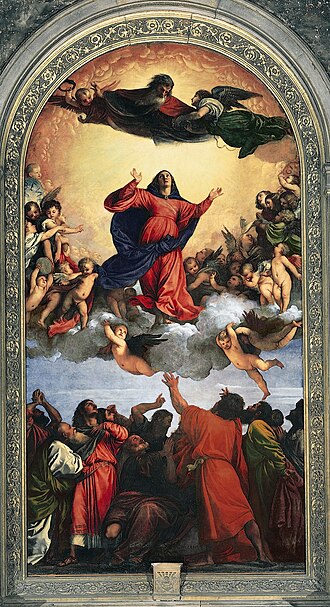 Assumption of the Virgin - Titian (1510s)
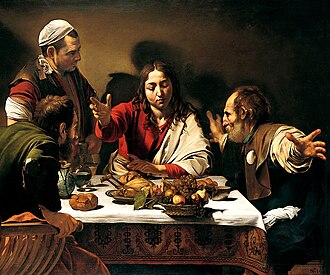 Supper at Emmaus - Caravaggio (1601)
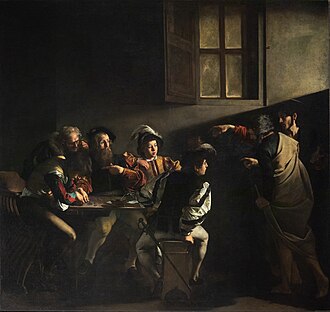 La vocazione di San Matteo - Caravaggio (1609)