self-portrait
Jean-Auguste-Dominique Ingres · 1858
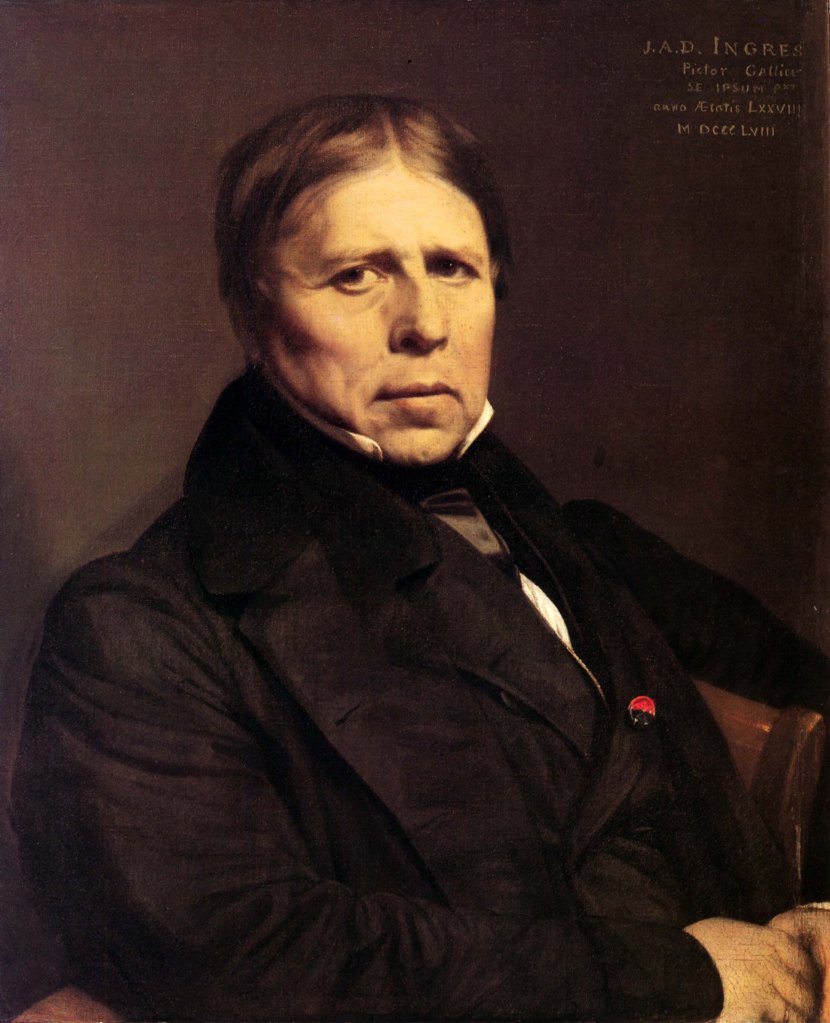
Asked to join the Uffizi's gallery of great painters, Ingres at seventy-eight painted himself grim, stiff and unflattered, simple and humble, he said, so the masters around him would not accuse him of pride.
The story behind the painting
In 1839 the director of the Uffizi, Antonio Ramirez di Montalvo, asked Ingres for a portrait of himself for the museum's gallery of self-portraits of great artists. Ingres declined, busy as director of the French Academy in Rome. In 1855 Montalvo's successor, Marchese Luca Bourbon del Monte, asked again, and this time Ingres agreed. On 20 March 1858 he wrote that the portrait was finally done, adding that he had wanted to make it simple and humble so that the great painters among whom he would sit would not accuse him of prideful temerity. It is the first known time he used a photograph, of about 1855, as his main source.
What to look for
Ingres appears in half-bust, tightly wrapped in stiff, almost military clothes, an evening dress uniform that shows his rank as grand officer of the Legion of Honour. His mouth turns down and his expression is foreboding and intense. The sources point out small vanities: he is slimmer than he was, his skin is smoothed, and his grey hair is fuller and darker than photographs of the time suggest. The painting was probably finished with help from unidentified collaborators, but the face can only have come from his own hand. It measures 62 by 51 cm.
Meaning and intent
Ingres always considered portraits a distraction from his true calling, history painting, and by now he could no longer commit to society portraits that took him four or five years. Historians often read the face as conflicted and bad-tempered, a frustrated history painter at the end of a career spent largely on portraits. Yet they also see that grim mouth as an overstatement: photographs show him almost smiling, his letters show contentment, and after being widowed he was happily married to his second wife. Wikipedia notes he took Raphael as his ideal, and Rembrandt's 1669 self-portrait has been suggested as an influence.
Legacy
The portrait was widely praised when first shown and is now considered one of the finest self-portraits in art history, often compared to Rembrandt's late self-portraits. It hangs in the Uffizi in Florence, where it was meant to be. Ingres made two variants: in 1859 he reworked an octagonal oil sketch into a pendant for his Portrait of Madame Ingres, with medals, top hat and glove, now in the Fogg Art Museum; and in 1864 to 1865 he painted a near-replica of that for Antwerp. He died on 14 January 1867, aged eighty-six.
Lo sapevi?
- Painted in 1858 for the Uffizi's gallery of artists' self-portraits.
- Ingres's first known portrait based mainly on a photograph.
- Often compared to Rembrandt's late self-portraits.
- Two variants followed, now at the Fogg Art Museum and in Antwerp.
L'artista
Jean-Auguste-Dominique Ingres (1780-1867)
self-portrait · Uffizi Gallery · Jean-Auguste-Dominique Ingres
Altre opere di Jean-Auguste-Dominique Ingres
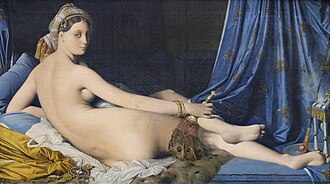 Grande Odalisque - Jean-Auguste-Dominique Ingres (1814)
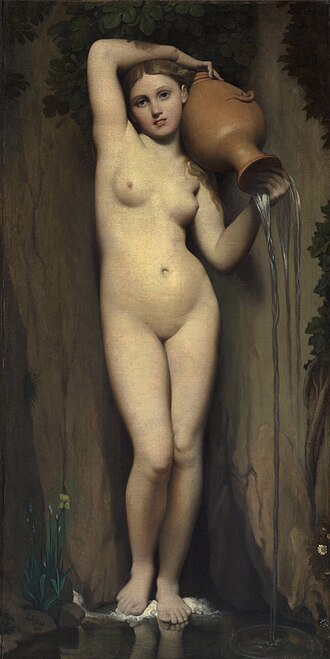 The Source - Jean-Auguste-Dominique Ingres (1856)
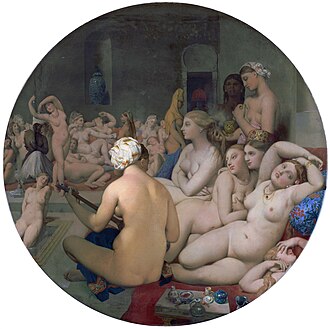 The Turkish Bath - Jean-Auguste-Dominique Ingres (1862)
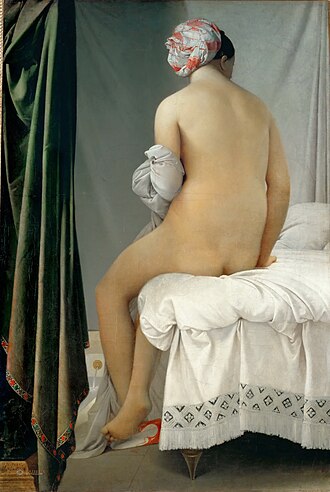 The Valpinçon Bather - Jean-Auguste-Dominique Ingres (1808)
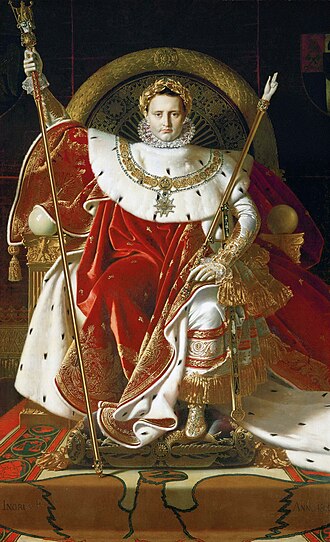 Napoleon I on his Imperial Throne - Jean-Auguste-Dominique Ingres (1806)
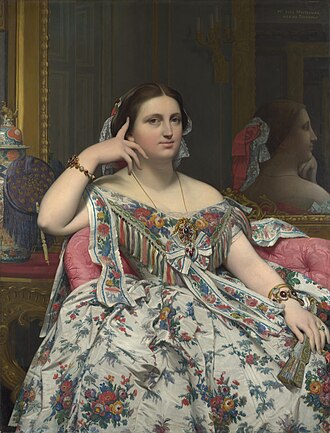 Madame Moitessier - Jean-Auguste-Dominique Ingres (1856)
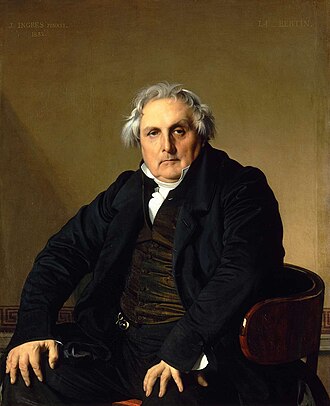 Portrait of Monsieur Bertin - Jean-Auguste-Dominique Ingres (1832)
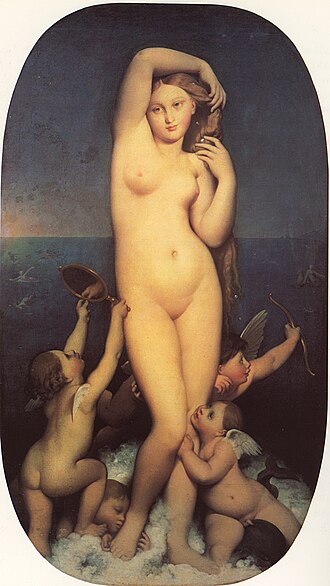 Vénus Anadyomène - Jean-Auguste-Dominique Ingres (1808)
Dipinti di artisti collegati
 The Death of Socrates - Jacques-Louis David (1787)
 The Oath of the Horatii - Jacques-Louis David (1784)
 The Third of May 1808 - Francisco Goya (1814)
 La maja nuda - Francisco Goya (1800)