The Valpinçon Bather
Jean-Auguste-Dominique Ingres · 1808
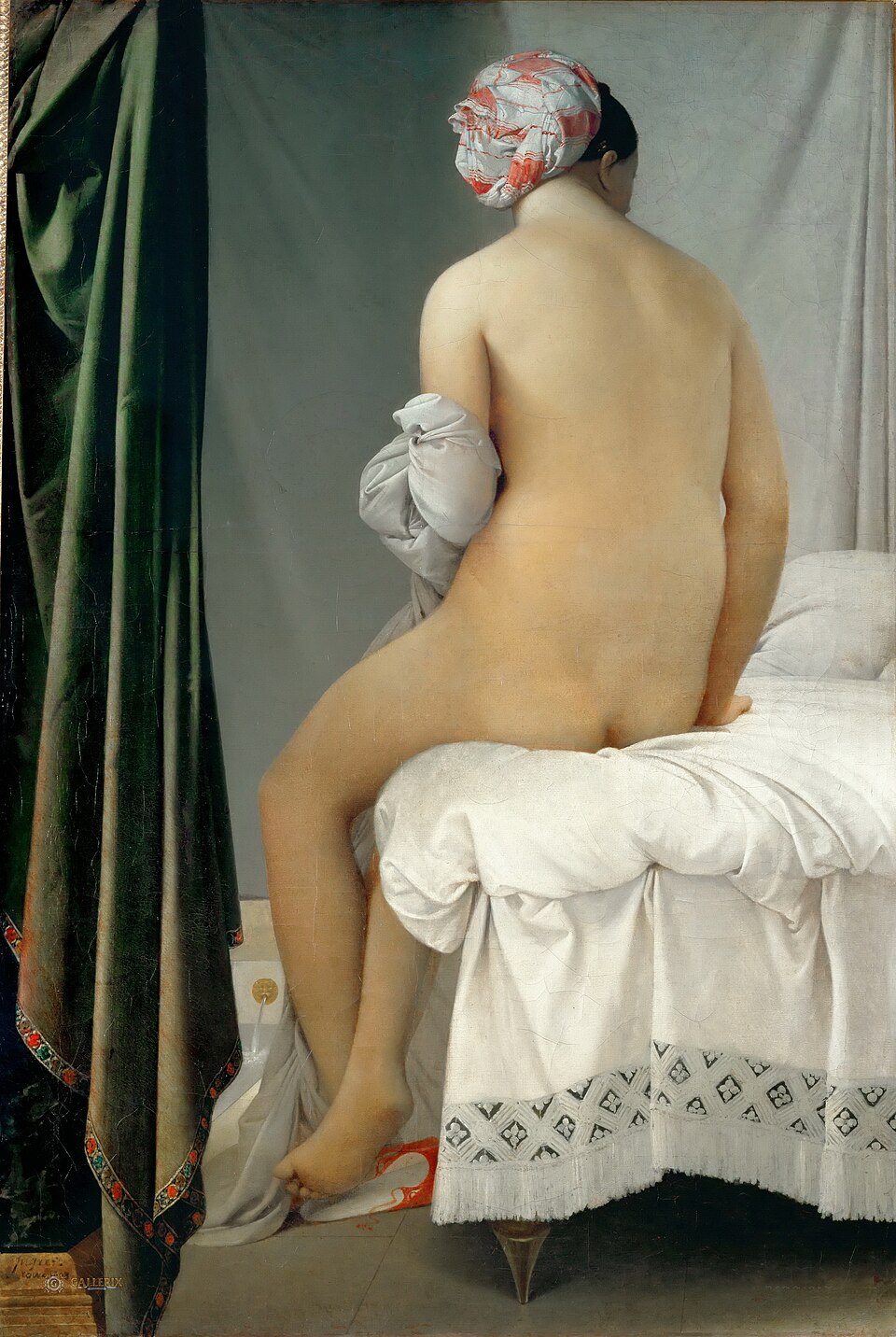
A woman sits on the edge of a bed with her back to us, a turban on her head, the sheets folded around her. Ingres painted her in Rome in 1808, and the critics did not like her. Fifty years later she was a masterpiece.
The story behind the painting
Ingres painted this canvas in 1808 while he was studying at the French Academy in Rome. He was in his late twenties, and he had already painted a smaller female nude a year earlier, the Bathing Woman of 1807, also seen from behind. This larger work is widely regarded as his first great treatment of the nude. It was first called simply Seated Woman. The name we use today came later, from one of its nineteenth-century owners, the Valpinçon family. In French it is also known as La Grande Baigneuse. The Louvre has held it since 1879.
What to look for
Look at how much of the picture is about the back: the turn of the neck, the long curve of the spine, the legs folded at the edge of the bed. The fall of a metallic green drapery, the swell of the white curtain in front of her and the folds of the sheets and linen all echo those curves. Then notice what cools them down: the pale, even tone of the skin and the elegant black-veined marble on the left. The critic Robert Rosenblum wrote that the figure seems to float weightlessly on the enamel smoothness of the surface, as if time, movement and even gravity were suspended.
Meaning and intent
Compared with the 1807 Bathing Woman, this painting leaves out the overt sexuality and offers instead a calm, measured sensuality. Charles Baudelaire spoke of the model's deep voluptuousness, yet in many ways she is presented as chaste, and that tension runs through the whole picture: the curves invite, the cool flesh and marble hold back. We never see her face. She is turned away and absorbed in her own quiet moment, which leaves the viewer looking at a private stillness rather than at a person who looks back.
Legacy
The painting was not well received when it was first exhibited. Almost fifty years later, when Ingres was famous, the Goncourt brothers wrote that Rembrandt himself would have envied the amber colour of this pale torso, and the Louvre calls it a masterpiece of harmonious lines and delicate light. Ingres returned to this figure many times, up to The Turkish Bath of 1863, whose mandolin player in the foreground echoes her. Man Ray's 1924 photograph Le violon d'Ingres was inspired by it, and Herman Braun-Vega referred to it more than twenty times, once placing her on a modest Peruvian beach.
Lo sapevi?
- Painted in 1808 in Rome, at the French Academy.
- First titled Seated Woman, later named after an owner.
- In the Louvre since 1879.
- Inspired Man Ray's photograph Le violon d'Ingres (1924).
L'artista
Jean-Auguste-Dominique Ingres (1780-1867)
woman · Department of Paintings of the Louvre · nude · sitting · nudity · bed · drapery · back · bed sheet
Altre opere di Jean-Auguste-Dominique Ingres
 Grande Odalisque - Jean-Auguste-Dominique Ingres (1814)
 The Source - Jean-Auguste-Dominique Ingres (1856)
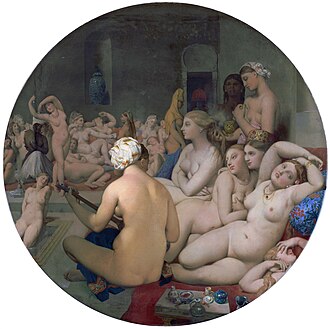 The Turkish Bath - Jean-Auguste-Dominique Ingres (1862)
 Napoleon I on his Imperial Throne - Jean-Auguste-Dominique Ingres (1806)
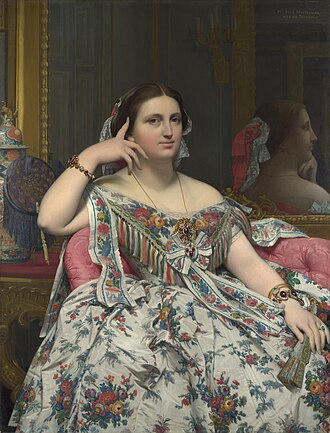 Madame Moitessier - Jean-Auguste-Dominique Ingres (1856)
 Portrait of Monsieur Bertin - Jean-Auguste-Dominique Ingres (1832)
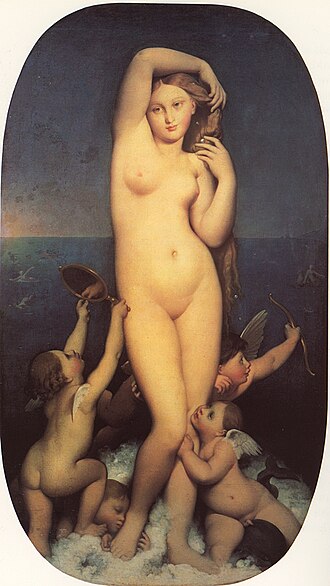 Vénus Anadyomène - Jean-Auguste-Dominique Ingres (1808)
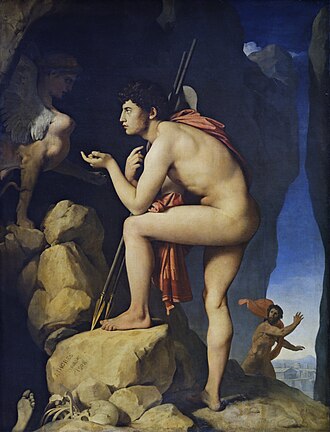 Oedipus and the Sphinx - Jean-Auguste-Dominique Ingres (1808)
Dipinti di artisti collegati
 The Death of Socrates - Jacques-Louis David (1787)
 The Oath of the Horatii - Jacques-Louis David (1784)
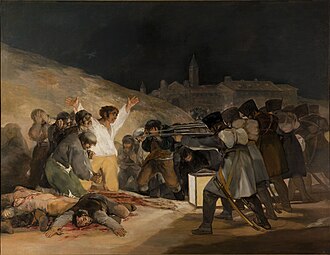 The Third of May 1808 - Francisco Goya (1814)
.jpg) La maja nuda - Francisco Goya (1800)
La maja nuda - Francisco Goya (1800)