Madame Moitessier
Jean-Auguste-Dominique Ingres · 1856
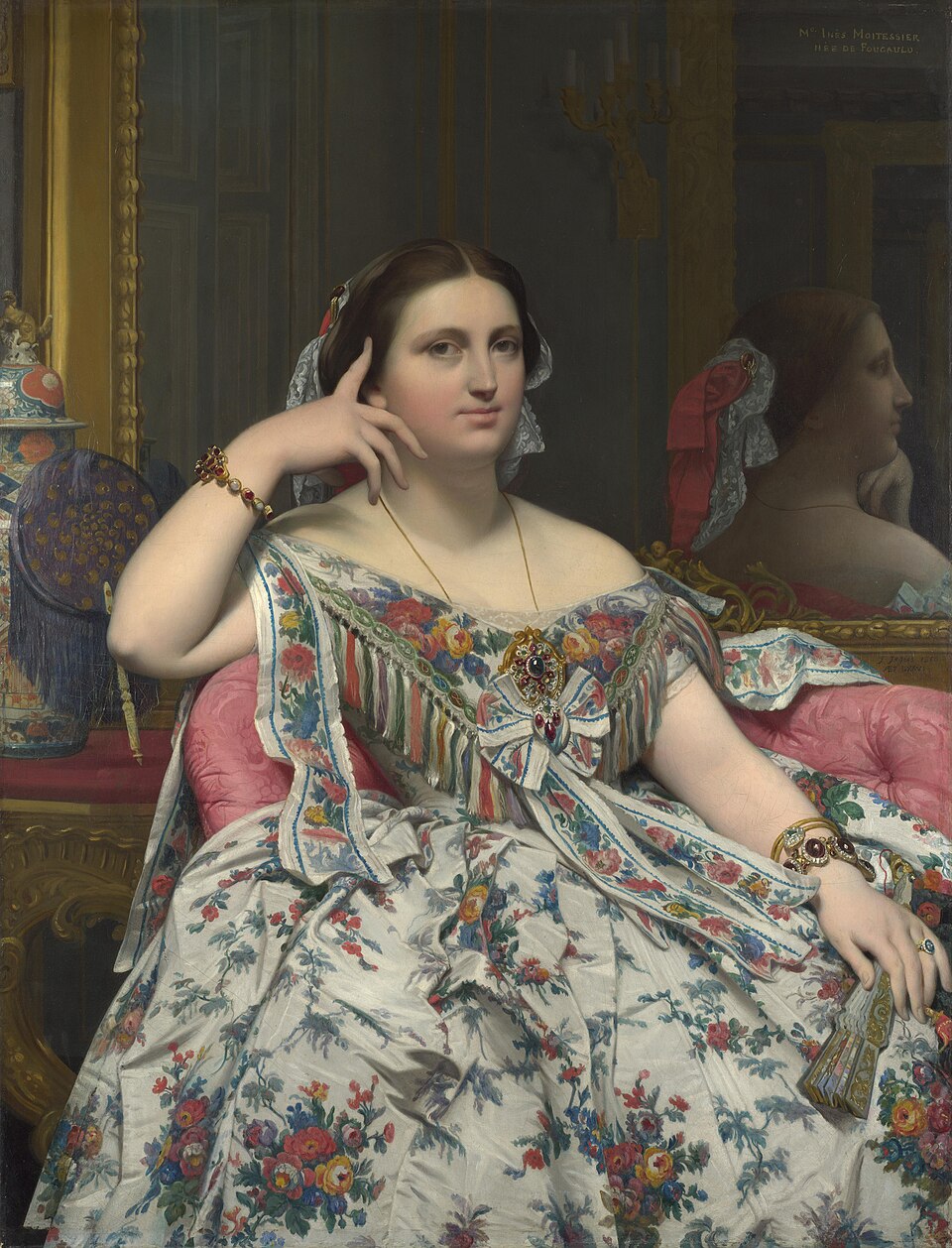
She sits in a flowered silk dress, a finger resting at her temple, her profile echoed in a mirror behind her. Ingres refused the commission at first, then met her and changed his mind. The portrait took him twelve years.
The story behind the painting
Marie-Clotilde-Inès de Foucauld married the rich banker and lace merchant Sigisbert Moitessier in 1842. In 1844 Ingres's old friend Charles Marcotte suggested a portrait of her. Ingres, who considered portraiture lower than history painting, refused, until he met her and was struck by her beauty. Work went slowly. Their daughter Catherine was meant to be in the picture, but Ingres found her impossible and removed her around 1847. In 1849 the death of Ingres's wife stopped him for months, and Madame Moitessier lost her father and was expecting her second child.
What to look for
In 1851, reminded by the woman he called the beautiful and good that her portrait was still unfinished, Ingres painted a second, standing portrait in a dark dress, now in Washington. Then he returned to this seated version and completed it in 1856. Look at the hand touching the cheek, a pose taken from an ancient fresco of Hercules and Telephus from Herculaneum. Her dress is expensive Lyon silk printed with flowers, and the flowers and leaves are echoed in the gilt frame. The profile in the mirror may come from Titian's La Schiavona.
Meaning and intent
The critic Théophile Gautier watched some of the sittings and described her beauty as the most regal, magnificent, stately and Junoesque he had ever seen drawn. The portrait shows how Ingres worked: even when painting a living woman, he looked to the art of the past, borrowing poses and ideas from antiquity and the Renaissance. The long delay, the removed child and the mirrored second face make this canvas a record of twelve years of a painter's life as much as a likeness. Many drawn studies survive for both portraits.
Legacy
The National Gallery in London has owned the painting since 1946. A study on canvas, with the figure drawn by Ingres and the background painted by an assistant, is in the Musée Ingres in Montauban. Pablo Picasso saw the painting in Paris in 1921, and in 1932 he finished Woman with a Book, in which his young companion Marie-Thérèse Walter copies Madame Moitessier's pose. In 2022 the two portraits were shown side by side for the first time, at the National Gallery with the Norton Simon Museum.
Lo sapevi?
- Begun in 1844, finished in 1856.
- A second, standing portrait of her is in Washington.
- In the National Gallery, London, since 1946.
- Inspired Picasso's Woman with a Book (1932).
L'artista
Jean-Auguste-Dominique Ingres (1780-1867)
woman · portrait · National Gallery · sitting · waist-length hair · Neoclassicism · dress · chestnut hair · mirror
Altre opere di Jean-Auguste-Dominique Ingres
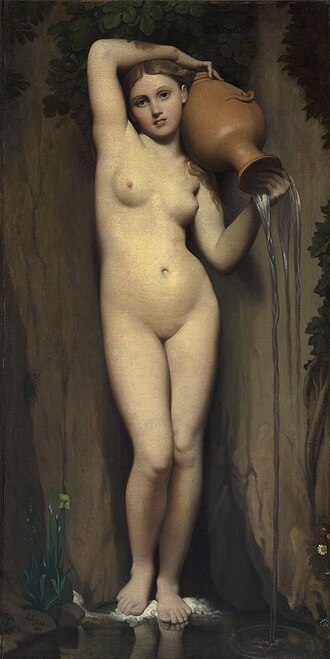 The Source - Jean-Auguste-Dominique Ingres (1856)
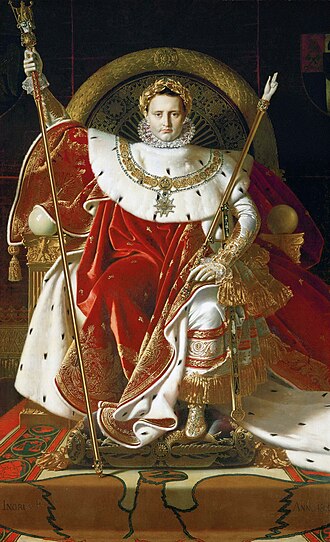 Napoleon I on his Imperial Throne - Jean-Auguste-Dominique Ingres (1806)
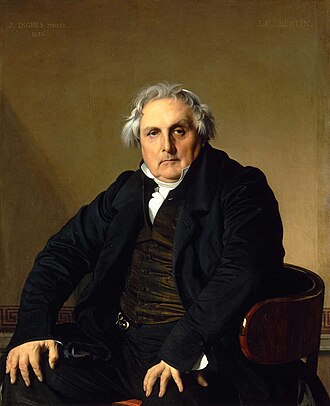 Portrait of Monsieur Bertin - Jean-Auguste-Dominique Ingres (1832)
 The Apotheosis of Homer - Jean-Auguste-Dominique Ingres (1827)
 Mademoiselle Caroline Rivière - Jean-Auguste-Dominique Ingres (1806)
 Jupiter and Thetis - Jean-Auguste-Dominique Ingres (1811)
 The Death of Leonardo da Vinci - Jean-Auguste-Dominique Ingres (1818)
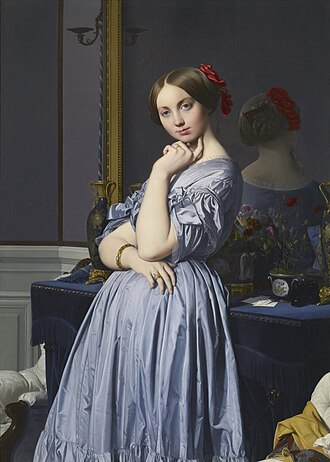 Comtesse d'Haussonville - Jean-Auguste-Dominique Ingres (1845)
Dipinti di artisti collegati
 The Oath of the Horatii - Jacques-Louis David (1784)
.jpg) The Intervention of the Sabine Women - Jacques-Louis David (1799)
The Intervention of the Sabine Women - Jacques-Louis David (1799) The Third of May 1808 - Francisco Goya (1814)
.jpg) La maja nuda - Francisco Goya (1800)
La maja nuda - Francisco Goya (1800)