Portrait of a Lady with a Flower
El Greco · 1600
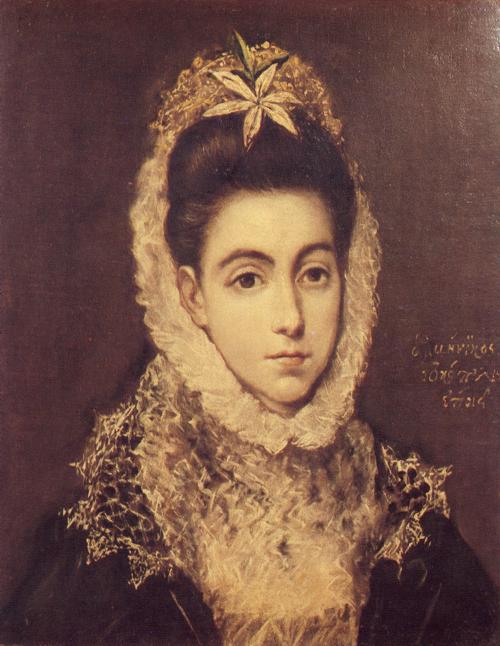
A calm young woman in black, with a single pale flower in her hair, looks straight at us. Of El Greco's few portraits of women, she is the only one he signed and the only one everyone agrees is his.
The story behind the painting
El Greco painted very few portraits of women, and this is the only one that is signed and whose authorship is unanimously accepted. The scholar Sánchez Cantón believed the lady could be Alfonsa de los Morales, the first wife of El Greco's son Jorge Manuel, and the woman embroidering in the painting The Family of El Greco. In that case the picture could be dated to 1603, the year of her marriage to Jorge Manuel. The Spanish Wikipedia dates the work about 1603, while Wikidata gives 1600, so the exact year remains uncertain.
What to look for
The ground layer is reddish brown and the background dark brown. The striking white headdress, the ruff and the white front of the bodice are painted very freely, in an illusionistic style. The dignified face, with slightly red lips, appears never to have been retouched. The face is shown almost frontally, with large dark eyes and a calm expression. Her brown hair is simply combed up, and her only ornament is a greenish-white flower with six petals and a few green leaves. The signature, in Greek cursive letters, sits at the centre right.
Meaning and intent
El Greco presents a young woman who looks intelligent and distinguished, dressed in black, with nothing to distract from her presence except the white linen and the flower. If Sánchez Cantón is right, this is a family portrait, the painter looking at his new daughter-in-law. The source states that only as a possibility, so the woman's identity stays open. What is certain is the signature: by writing his own name in Greek on this canvas, El Greco claimed it plainly, which matters all the more in a field where so many female portraits are doubtful.
Legacy
The canvas, 50 by 42 cm, is in a private collection. Its recorded owners include General Meade, the Stirling-Maxwell collection at Keir in Scotland, and the collection of Viscount Rothermere in London, before it passed through Christie's in London in 1993. It is number 147 in Harold Wethey's catalogue of El Greco and number 81 in Tiziana Frati's. Wikidata places it within Mannerism. Rarely seen in public, it remains a key reference for anyone trying to understand how El Greco painted women.
Lo sapevi?
- The only signed female portrait by El Greco with undisputed authorship.
- Possibly Alfonsa de los Morales, El Greco's daughter-in-law.
- Dated about 1603 by Wikipedia, 1600 by Wikidata.
- Now in a private collection.
L'artista
El Greco (1541-1614)
woman · portrait · Mannerism · flower · gaze towards the viewer
Altre opere di El Greco
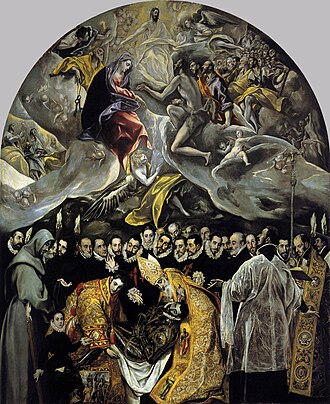 The Burial of the Count of Orgaz - El Greco (1586)
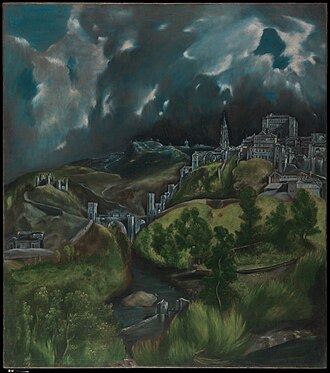 View of Toledo - El Greco (1596)
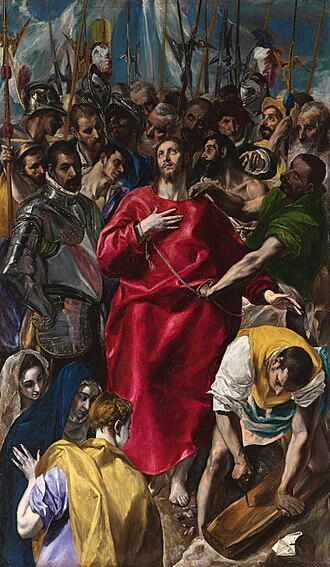 The Disrobing of Christ - El Greco (1570s)
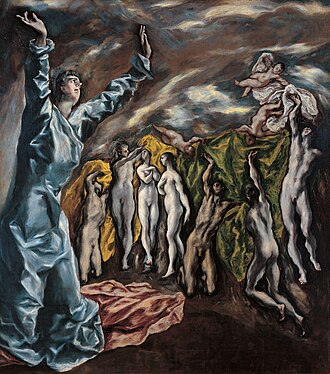 Opening of the Fifth Seal - El Greco (1610)
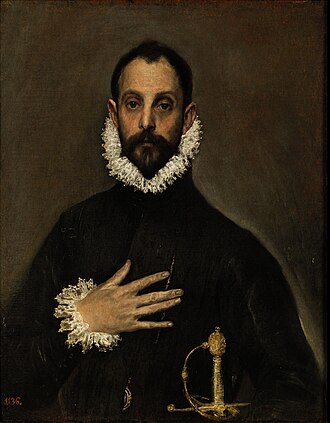 The Nobleman with his Hand on his Chest - El Greco (1580)
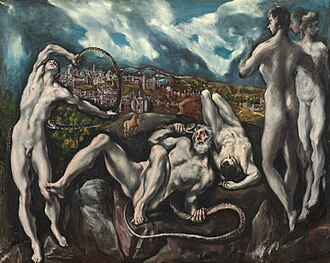 Laocoön - El Greco (1610s)
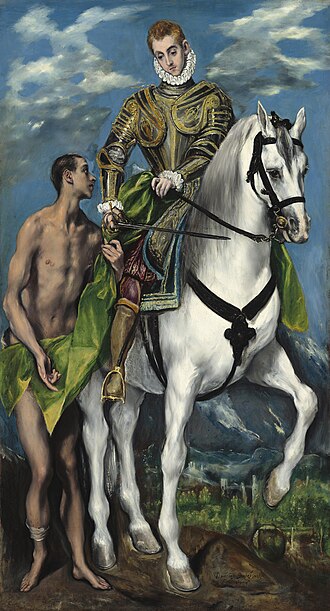 Saint Martin and the Beggar - El Greco (1597)
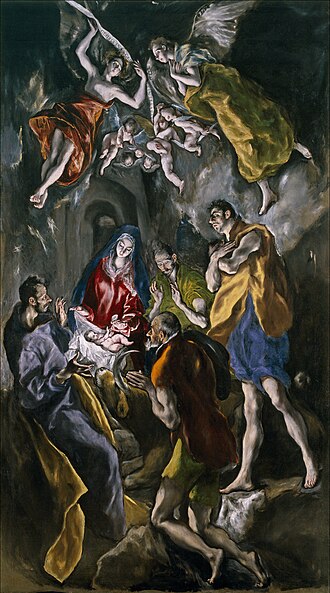 Adoration of the Shepherds - El Greco (1612)
Dipinti di artisti collegati
 The Wedding at Cana - Paolo Veronese (1560s)
 The Feast in the House of Levi - Paolo Veronese (1573)
 Last Supper - Jacopo Tintoretto (1563)
 Miracle of the Slave - Jacopo Tintoretto (1540s)
 Venus of Urbino - Titian (1538)
 Assumption of the Virgin - Titian (1510s)
 Supper at Emmaus - Caravaggio (1601)
 La vocazione di San Matteo - Caravaggio (1609)
 The Ambassadors - Hans Holbein the Younger (1533)
 The Body of the Dead Christ in the Tomb - Hans Holbein the Younger (1520s)