Portrait de Madame de Senonnes
Jean-Auguste-Dominique Ingres · 1814
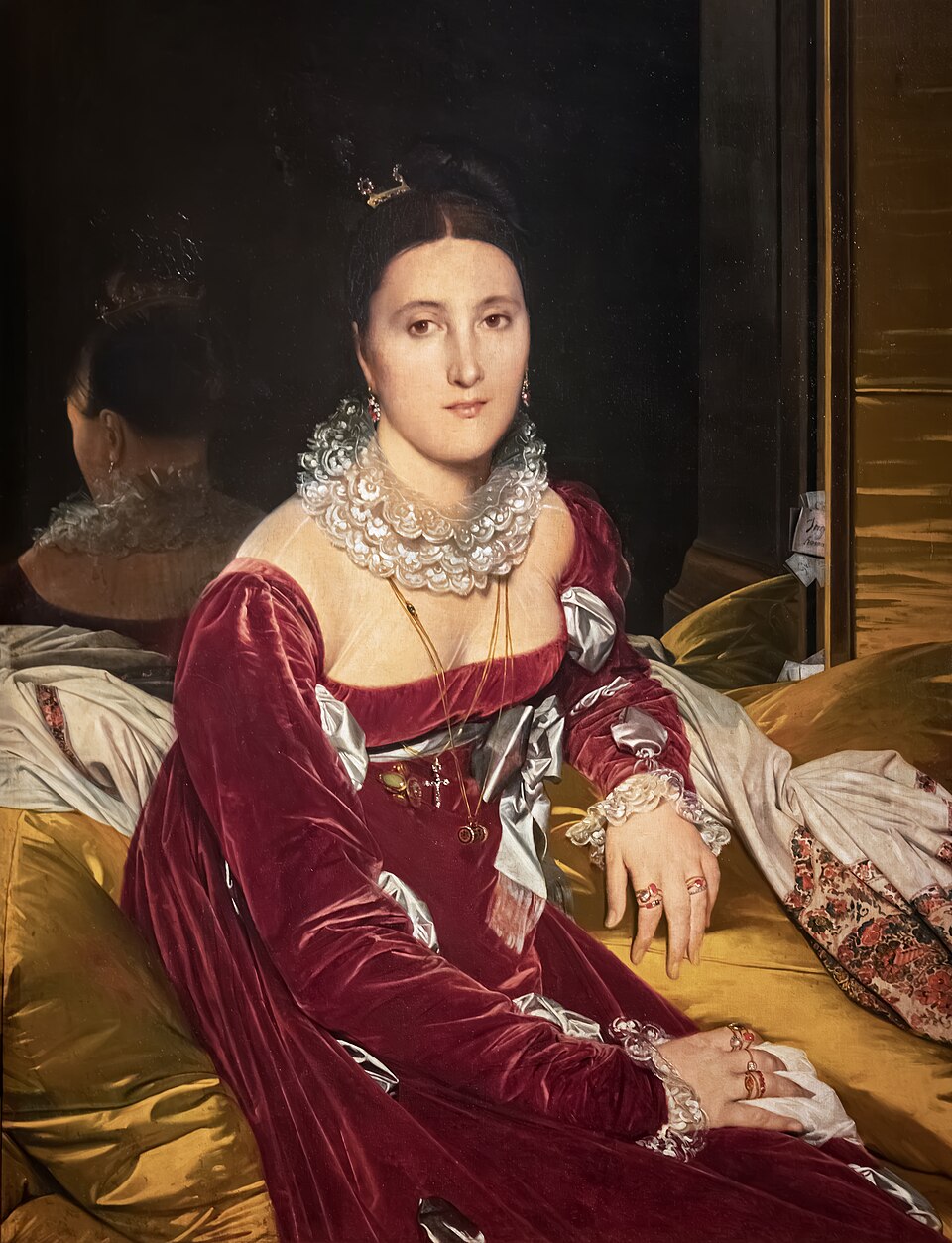
Red velvet, gold, thirteen rings and a dark mirror that holds the curve of her neck. Ingres claimed to look down on portraits, yet he poured his effort into this one.
The story behind the painting
The sitter is Marie-Geneviève-Marguerite Marcoz, viscountess of Senonnes. She married a merchant draper in 1802, moved to Rome in 1803 and had a daughter that year, but the marriage was unhappy and the couple separated in 1809. In Rome she moved in artistic circles, passing herself off as Italian, and the painting was once known as La Trastéverine. She met Alexandre de La Motte-Baracé, Viscount of Senonnes, and married him in 1815. Ingres had already drawn her in 1813. Wikipedia dates the painting 1816, while Wikidata gives 1814.
What to look for
She leans in a languid pose on a sofa, her hair pulled tightly back, in a low-cut velvet gown trimmed with ochre, Indian muslin, blond lace and a white cashmere shawl. Bright reds and golds glow against a large dark mirror lit by candlelight, which reflects the back of her head and the curve of her neck. Her hands, wearing thirteen pale red and green jewelled rings, rest on a white pillow and a handkerchief. Look for the signature on the paper tucked into the edge of the mirror.
Meaning and intent
Ingres professed to disdain portraiture but needed its income. Because his sitter was beautiful and aristocratic, he worked hard on this picture in the hope of attracting more commissions. It is his first work to fully explore a mirror and the extra space it opens, something he had tried less successfully in Mademoiselle Caroline Rivière of 1805. As in all his female portraits, the body seems almost boneless. Early studies show her reclining on the sofa, later ones focus on her upper body. Some historians compare its mood to his Grande Odalisque.
Legacy
Among Ingres's models were David's Portrait of Madame de Verninac of 1799 and Leonardo's La belle ferronnière. After the sitter's death in 1828, her husband kept the portrait until 1831, when, pursued by creditors, he sent it to his elder brother, the Marquis de Senonnes, whose castle at Feneu held it until 1852. It was then sold to a dealer, and in 1853 the Musée des Beaux-Arts de Nantes acquired it. The portrait is considered one of Ingres's finest.
Lo sapevi?
- The sitter was 31 when the portrait was completed.
- Ingres's first full exploration of a mirror in a portrait.
- Dated 1816 by Wikipedia and 1814 by Wikidata.
- In the Musée des Beaux-Arts de Nantes since 1853.
L'artista
Jean-Auguste-Dominique Ingres (1780-1867)
woman · portrait · Nantes Museum of Arts
Altre opere di Jean-Auguste-Dominique Ingres
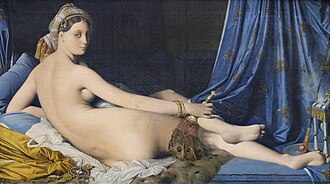 Grande Odalisque - Jean-Auguste-Dominique Ingres (1814)
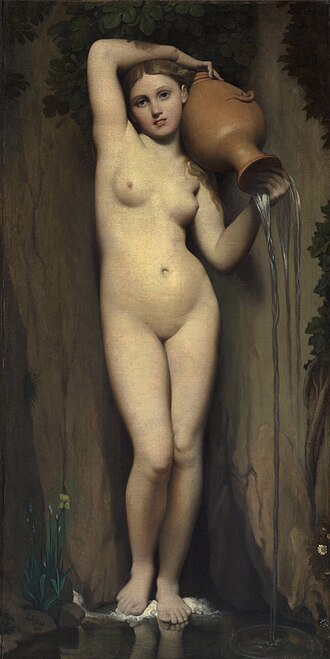 The Source - Jean-Auguste-Dominique Ingres (1856)
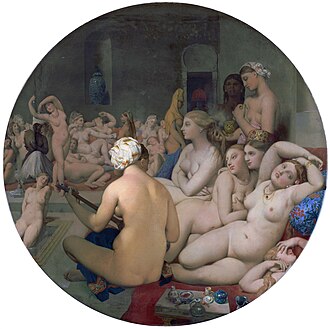 The Turkish Bath - Jean-Auguste-Dominique Ingres (1862)
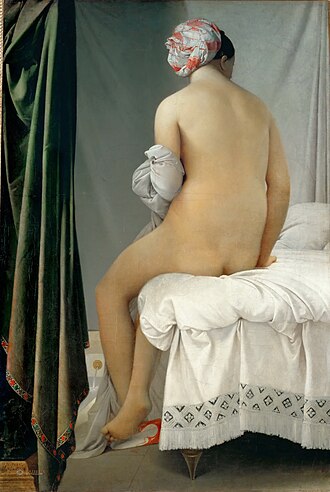 The Valpinçon Bather - Jean-Auguste-Dominique Ingres (1808)
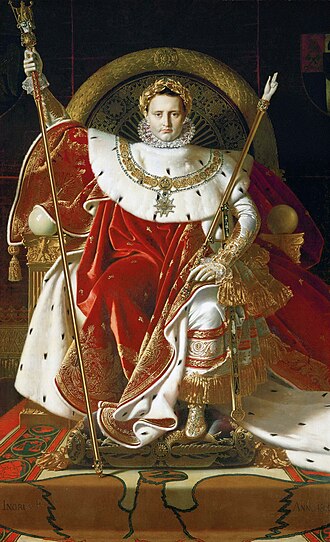 Napoleon I on his Imperial Throne - Jean-Auguste-Dominique Ingres (1806)
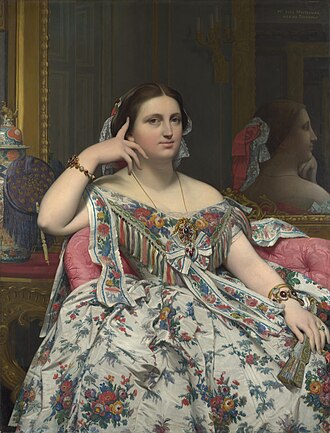 Madame Moitessier - Jean-Auguste-Dominique Ingres (1856)
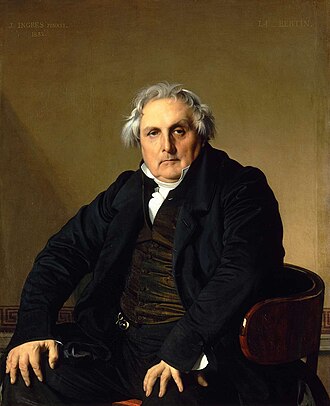 Portrait of Monsieur Bertin - Jean-Auguste-Dominique Ingres (1832)
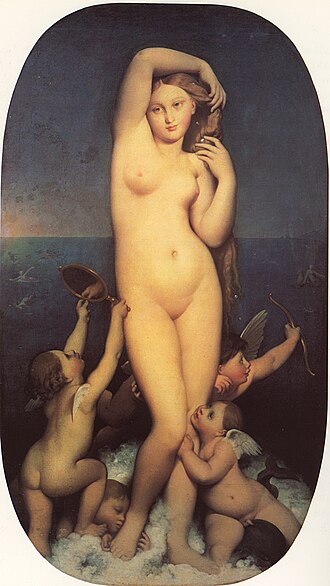 Vénus Anadyomène - Jean-Auguste-Dominique Ingres (1808)
Dipinti di artisti collegati
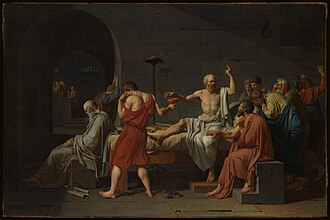 The Death of Socrates - Jacques-Louis David (1787)
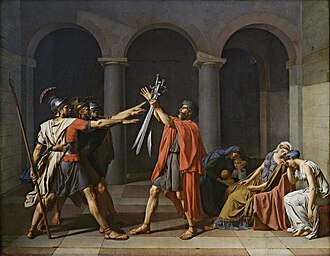 The Oath of the Horatii - Jacques-Louis David (1784)
 The Third of May 1808 - Francisco Goya (1814)
 La maja nuda - Francisco Goya (1800)