Adoration of the Shepherds
El Greco · 1577
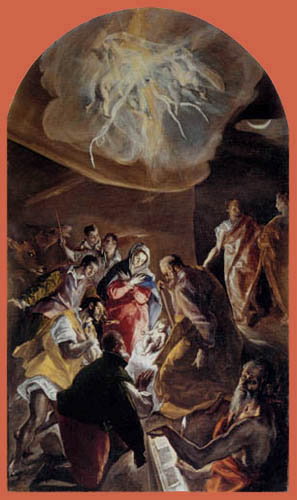
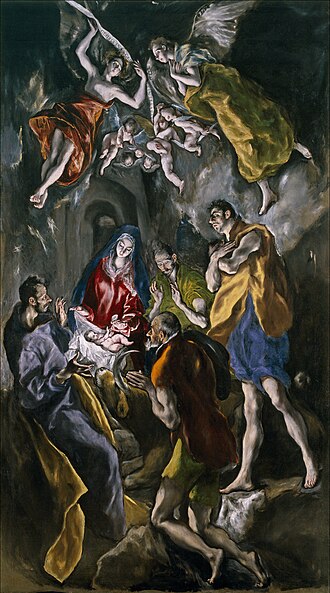
The setting has almost vanished into a dark cave, and the Child glows at the centre while Saint Jerome looks straight at us with a candle and a Bible. El Greco painted it soon after arriving in Spain, for one of his first great Toledo commissions.
The story behind the painting
In a memorandum written in spring 1577, El Greco agreed with Diego de Castilla to paint for the church of the convent of Santo Domingo el Antiguo in Toledo six pictures and models for the sculptures of a great main altarpiece, plus two paintings for two smaller side altars. The side altars were to show the beginning and the end of the life of Jesus. The altar on the Gospel side was to have a Nativity that also included Saint Jerome. The result, with large extra figures beyond the Holy Family, became an Adoration of the Shepherds. It is documented 1577 to 1579.
What to look for
The canvas measures 210 by 128 cm. The Child presides over the composition, radiating a halo of light. Around him are Joseph, the Virgin, the shepherds, other figures, the mule and the ox. At lower right Saint Jerome looks at the viewer, holding a candle and a Bible. Above, angels unfurl a scroll with a line from Luke 2:14 written in Greek letters. The writer Cossío pointed out two elegant youths standing in the doorway, grave and silent, set against the half-light under a night sky and moon.
Meaning and intent
Wethey identified five types of Adoration of the Shepherds in El Greco's work; this is type II, the first of four made in Spain, and the most Italian, balanced and carefully finished, which fits a picture painted soon after his arrival. In his Italian years he had followed the Modena Triptych, with small figures and anecdotal detail. Here the landscape almost disappears into a cave, leaving the spiritual meaning. Jerome belongs because he lived for a time in the cave of Bethlehem, and because Diego de Castilla had been educated in a Hieronymite monastery.
Legacy
The painting shows the lessons of Venice, Titian and Tintoretto, along with the mark of Correggio, Parmigianino and Michelangelo. José Gudiol stressed how the gestures both express feeling and set the rhythmic axes of the composition, contrasting the realistic shepherds with the more idealised figures at back. Originally on the side altar of the Gospel side at Santo Domingo el Antiguo, it now belongs to the Fundación Botín in Santander; Wikidata lists the Colección Santander and the monastery of Santo Domingo de Silos. Wethey catalogued it as number 7.
Lo sapevi?
- Agreed in spring 1577 for Santo Domingo el Antiguo, Toledo.
- Documented 1577 to 1579; 210 by 128 cm.
- Includes Saint Jerome with a candle and a Bible.
- Now with the Fundación Botín, Santander.
L'artista
El Greco (1541-1614)
religious art · Christ Child · Monastery of Saint Dominic of Silos
Altre opere di El Greco
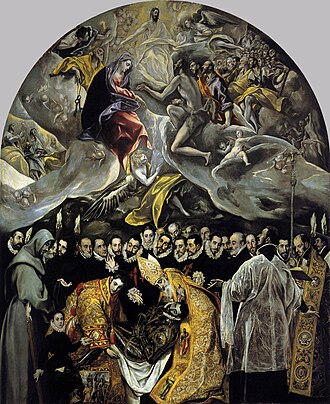 The Burial of the Count of Orgaz - El Greco (1586)
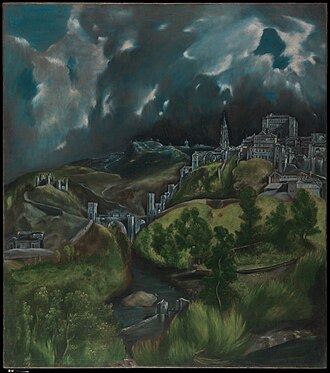 View of Toledo - El Greco (1596)
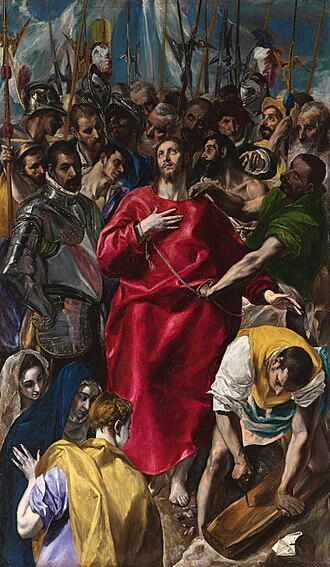 The Disrobing of Christ - El Greco (1570s)
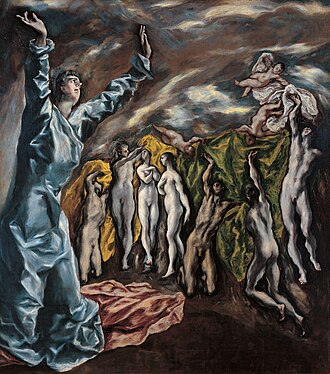 Opening of the Fifth Seal - El Greco (1610)
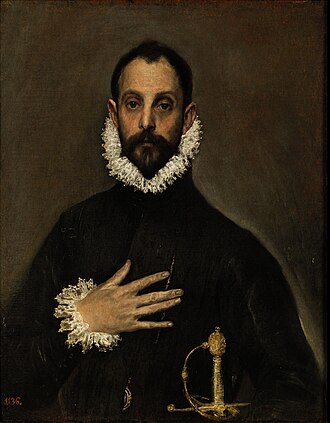 The Nobleman with his Hand on his Chest - El Greco (1580)
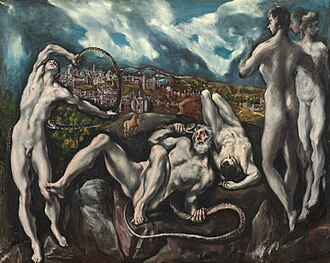 Laocoön - El Greco (1610s)
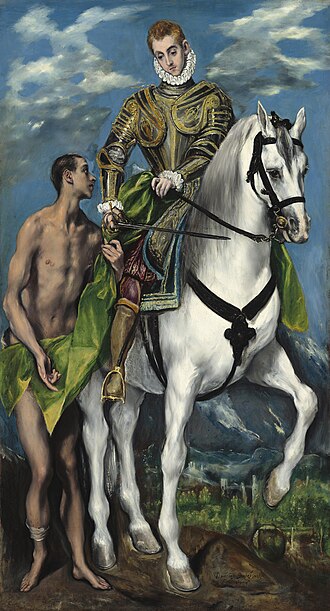 Saint Martin and the Beggar - El Greco (1597)
 Adoration of the Shepherds - El Greco (1612)
Dipinti di artisti collegati
 The Wedding at Cana - Paolo Veronese (1560s)
 The Feast in the House of Levi - Paolo Veronese (1573)
 Last Supper - Jacopo Tintoretto (1563)
 Miracle of the Slave - Jacopo Tintoretto (1540s)
 Venus of Urbino - Titian (1538)
 Assumption of the Virgin - Titian (1510s)
 Supper at Emmaus - Caravaggio (1601)
 La vocazione di San Matteo - Caravaggio (1609)
 The Ambassadors - Hans Holbein the Younger (1533)
 The Body of the Dead Christ in the Tomb - Hans Holbein the Younger (1520s)