Adoration of the name of Jesus
El Greco · 1577
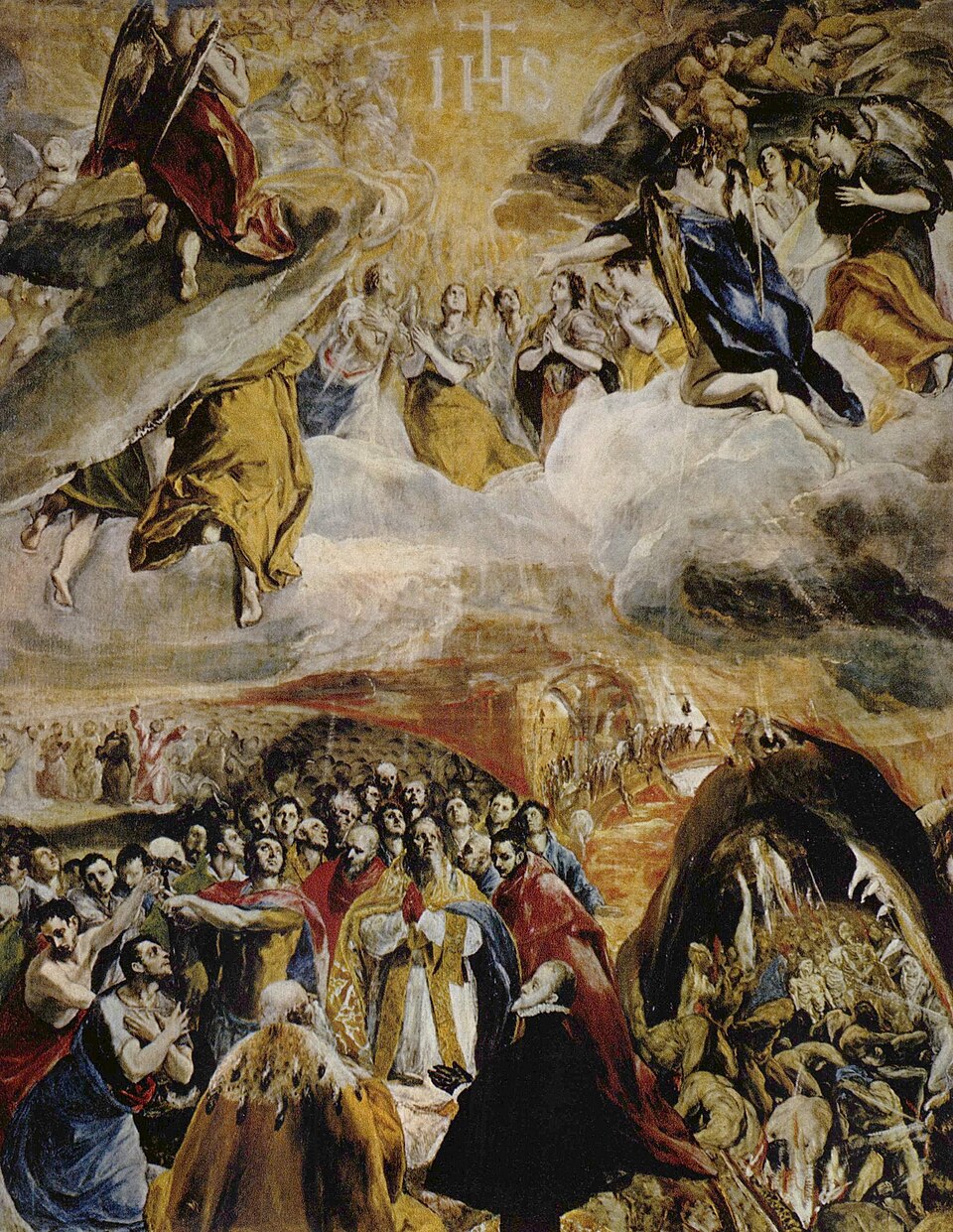
A king in black kneels beside a pope and a doge while the name of Jesus blazes in the sky, and below them gapes the open mouth of a monster. El Greco painted this vision early in his Toledo years.
The story behind the painting
El Greco painted this canvas early in his Toledo period. Wikipedia dates it 1577 to 1579, while Wikidata gives 1577. Modern scholars know it under several names: La Gloria, The Dream of Philip II, and Allegory of the Holy League. Philip II of Spain, who appears in it, probably had some part in commissioning it. It was long kept at the monastery of El Escorial, and since 2023 it has been shown at the Royal Collections Gallery in Madrid. A preparatory sketch is in the National Gallery, London.
What to look for
The canvas is about 140 by 110 cm. In the upper part, the Holy Name of Jesus shines, surrounded by angels. Below, kneeling in worship, are Philip II, Pope Pius V and the Venetian doge Sebastiano Venier, founders of the Holy League, together with Don John of Austria, the victor of Lepanto. At bottom right opens a hell-mouth shaped like the sea monster Leviathan, a motif influenced by Hieronymus Bosch. The colouring shows El Greco's debt to the Venetian school and to Michelangelo.
Meaning and intent
The painting joins earthly power and heavenly glory: the leaders of the alliance that won at Lepanto bow before a name, not a throne. The historian Hugh Trevor-Roper wrote that it is clearly based on Titian's Gloria, the great painting El Greco would have known from his years in Italy. With heaven above, rulers in the middle and the jaws of hell below, it reads as a picture of the whole order of the world as Philip II's court imagined it.
Legacy
The novelist Aldous Huxley, in his essay Meditation on El Greco, saw the Leviathan at lower right as a significantly autobiographical object. For Huxley, everything in El Greco's mature art, from Annunciations to Crucifixions, happened inside the belly of a whale, as if every scene were a visceral, enclosed event, and he concluded that for this painter nothing existed outside the whale. Whether or not one agrees, the monster's mouth in this early work has become a key to how later writers read El Greco.
Lo sapevi?
- Painted early in El Greco's Toledo period, dated 1577 or 1577 to 1579.
- Shows Philip II, Pius V, Venier and Don John of Austria.
- Also known as The Dream of Philip II.
- Shown at the Royal Collections Gallery in Madrid since 2023.
L'artista
El Greco (1541-1614)
religious art · Mannerism · Royal Monastery of San Lorenzo de El Escorial
Altre opere di El Greco
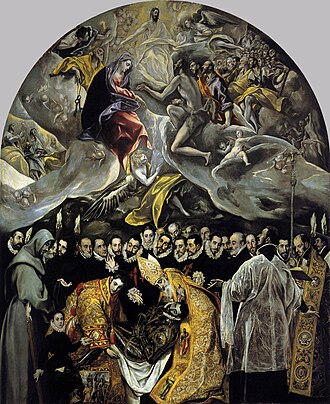 The Burial of the Count of Orgaz - El Greco (1586)
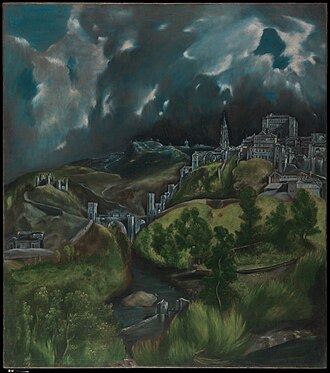 View of Toledo - El Greco (1596)
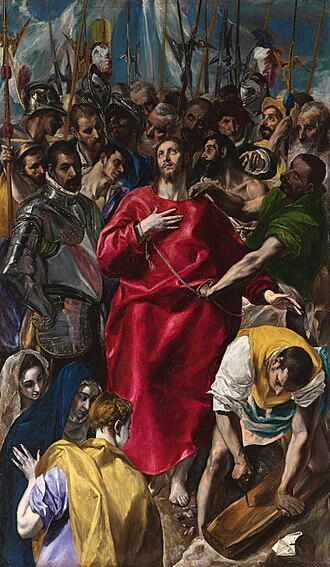 The Disrobing of Christ - El Greco (1570s)
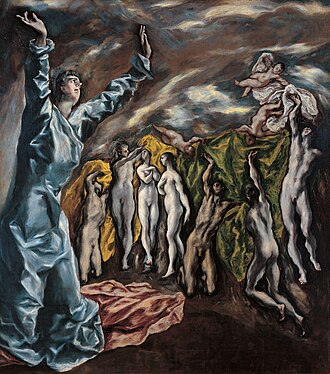 Opening of the Fifth Seal - El Greco (1610)
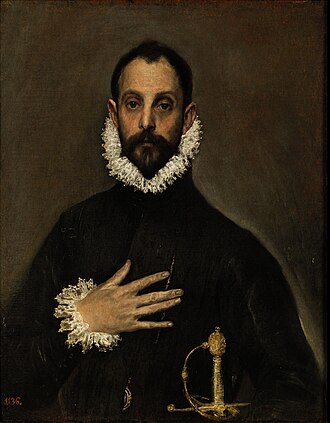 The Nobleman with his Hand on his Chest - El Greco (1580)
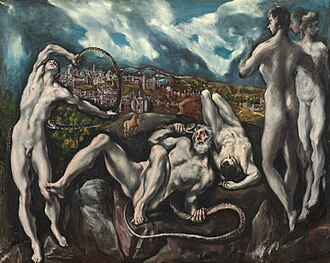 Laocoön - El Greco (1610s)
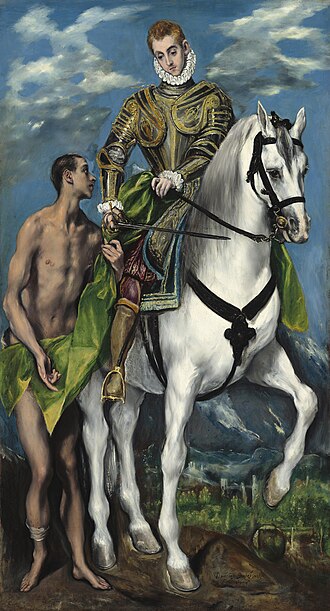 Saint Martin and the Beggar - El Greco (1597)
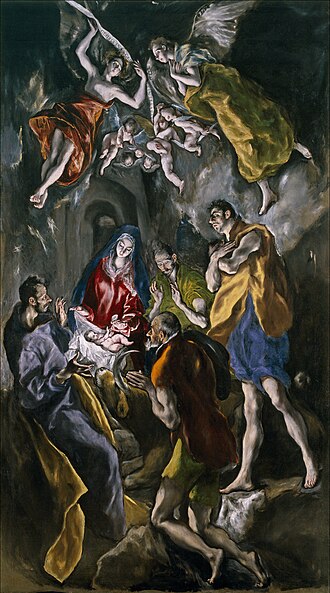 Adoration of the Shepherds - El Greco (1612)
Dipinti di artisti collegati
 The Wedding at Cana - Paolo Veronese (1560s)
 The Feast in the House of Levi - Paolo Veronese (1573)
 Last Supper - Jacopo Tintoretto (1563)
 Miracle of the Slave - Jacopo Tintoretto (1540s)
 Venus of Urbino - Titian (1538)
 Assumption of the Virgin - Titian (1510s)
 Supper at Emmaus - Caravaggio (1601)
 La vocazione di San Matteo - Caravaggio (1609)
 The Ambassadors - Hans Holbein the Younger (1533)
 The Body of the Dead Christ in the Tomb - Hans Holbein the Younger (1520s)