La Nativité
Piero della Francesca · 1480s
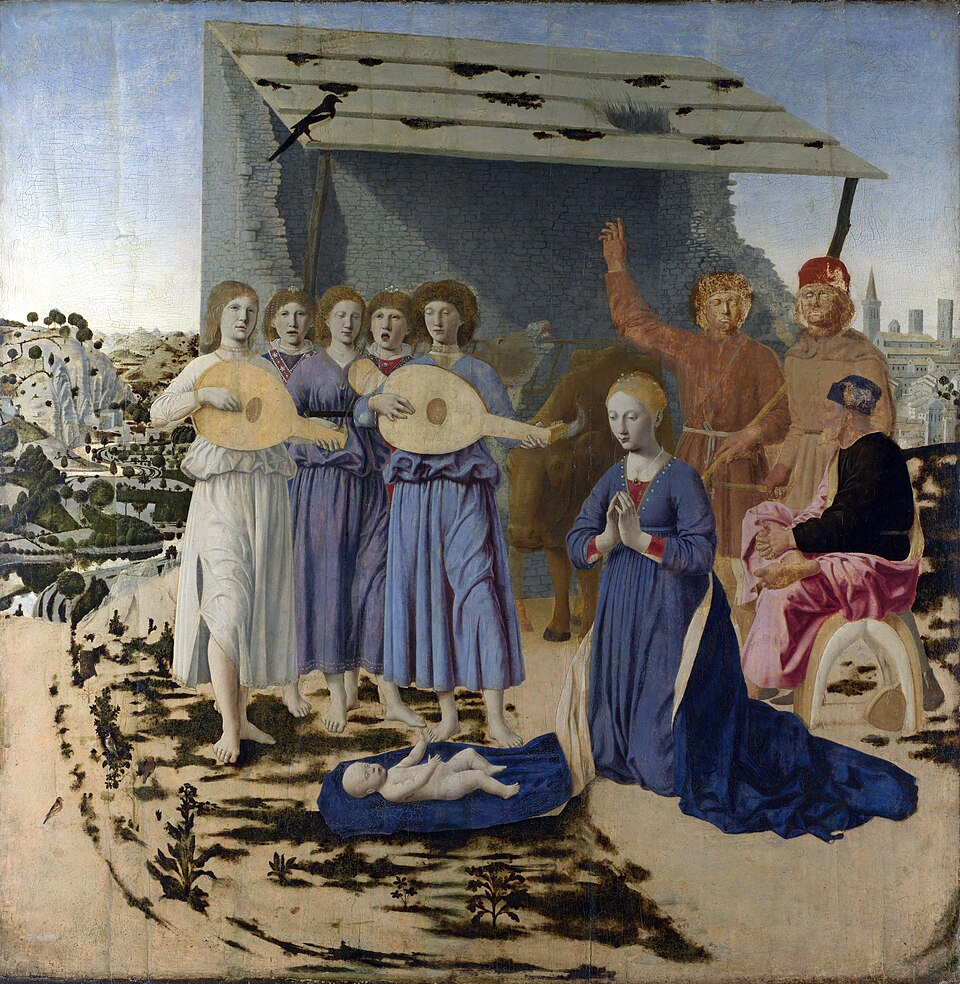
Christ is born not in Bethlehem but on a clear summer day on a Tuscan hill, while five angels sing with lutes. One of Piero della Francesca's last paintings, it was made for his own family home.
The story behind the painting
Piero della Francesca painted this oil on panel late in his life; Wikipedia dates it 1470 to 1475, while Wikidata places it in the 1480s, and it is one of the latest surviving works before his death in 1492. He made it for his family's palace in his home town of Borgo Sansepolcro. It was once thought to be an altarpiece for a private chapel, but is now understood to have hung in the bedchamber. The panel stayed in Sansepolcro until Alexander Barker bought it in 1861 and took it to London.
What to look for
The Nativity is moved to a hill above the Tuscan countryside, with a winding river on the left and a fortified town on the right, perhaps Sansepolcro. A ruined stone stable, set at a skewed angle on the rocks, shelters an ass and an ox. The naked infant lies on the folds of Mary's blue cloak, raising his arms to her as she kneels in prayer. Joseph sits cross legged on a saddle, the sole of his foot turned to us, talking with two shepherds. Five angels stand like classical statues, two playing lutes, two singing. A magpie sits on the roof, a goldfinch in a shrub.
Meaning and intent
The child on his mother's cloak follows a vision of Saint Bridget of Sweden from the fourteenth century, widely known in Piero's time. The shaky stable on its rocky hilltop may reflect the precarious circumstances of Jesus's birth. The goldfinch is a symbol of redemption or the Passion, and the magpie, normally endless in its chatter, seems silenced by the music. Joseph's pose recalls the ancient bronze Spinario. By setting the scene in his own landscape, Piero brings the holy event home to the place where the picture would hang.
Legacy
The National Gallery in London acquired the panel at the Barker sale in 1874, and Prime Minister Benjamin Disraeli defended the purchase in Parliament after concerns about its condition. Once thought unfinished, it is now believed to have been harmed by over enthusiastic restoration: Joseph's pink clothes were thin, and the ass so faint that the wall showed through its leg. After three years of conservation it returned to view in December 2022. Alison Cole praised the result; Jonathan Jones in The Guardian condemned it. It is part of the BBC's 100 Great Paintings and a favourite on Christmas cards.
Le saviez-vous ?
- One of Piero's last surviving paintings, dated 1470-1475 (Wikidata: 1480s).
- Made for his family's home in Sansepolcro.
- In the National Gallery, London, since 1874.
- Restored over three years and shown again in December 2022.
À propos de l'artiste
Piero della Francesca (1415-1492)
art religieux · femme · Marie · Enfant Jésus · National Gallery · garçon · Première Renaissance
Autres œuvres de Piero della Francesca
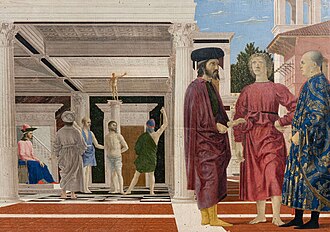 La Flagellation du Christ - Piero della Francesca (1450s)
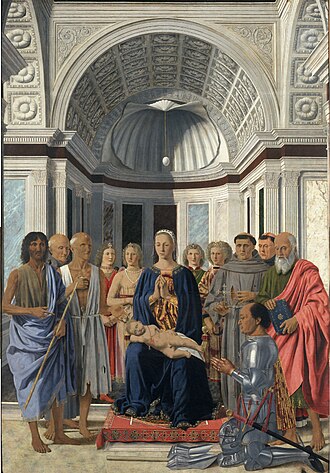 La Conversation sacrée - Piero della Francesca (1472)
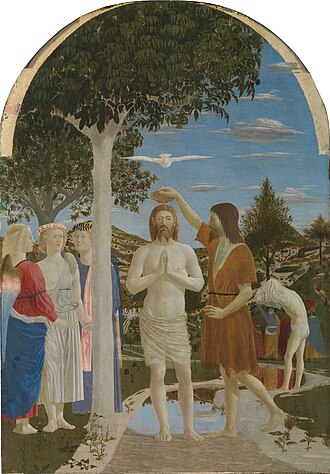 Le Baptême du Christ - Piero della Francesca (1448)
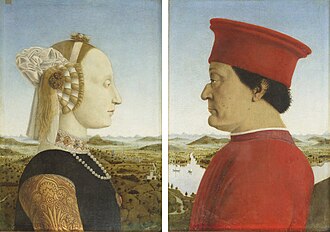 Le Triomphe de la chasteté - Piero della Francesca (1465)
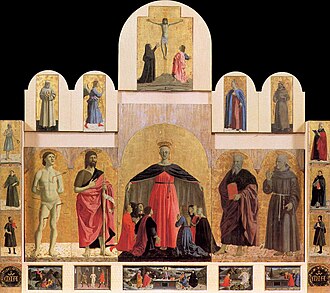 Madonna della Misericordia - Piero della Francesca (1460s)
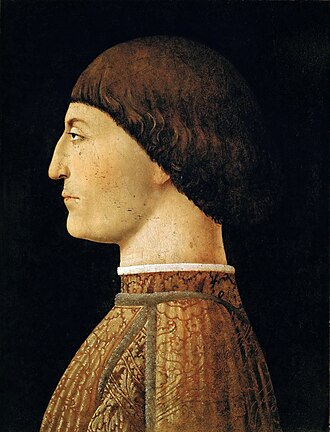 Portrait de Sigismond Malatesta, seigneur de Rimini - Piero della Francesca (1450s)
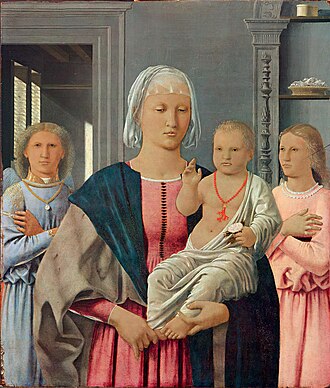 Madonna di Senigallia - Piero della Francesca (1470s)
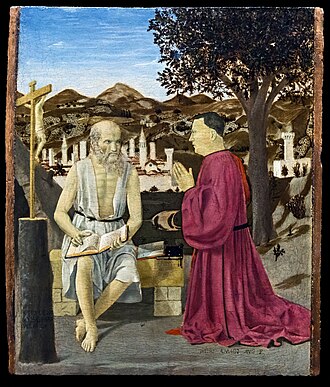 Saint Jérôme et le donateur Girolamo Amadi - Piero della Francesca (1440)
Œuvres d'artistes liés
 La Naissance de Vénus - Sandro Botticelli (c. 1485)
 Le Printemps - Sandro Botticelli (1480s)
 La Joconde - Leonardo da Vinci (1503-1519)
 La Dame à l'hermine - Leonardo da Vinci (1490)
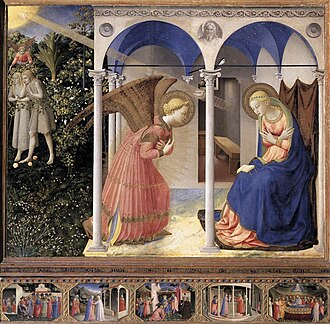 L'Annonciation - Fra Angelico (1425)
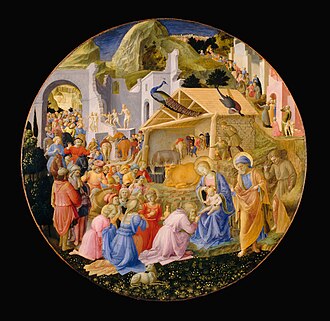 Tondo Cook - Fra Angelico (1430)
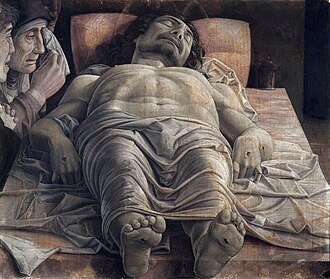 Lamentation sur le Christ mort - Andrea Mantegna (1483)
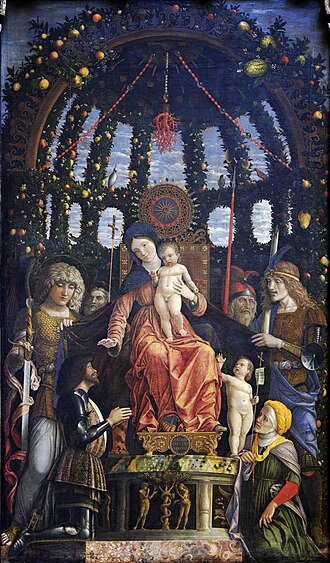 La Vierge de la Victoire - Andrea Mantegna