Le Baptême du Christ
Piero della Francesca · 1448
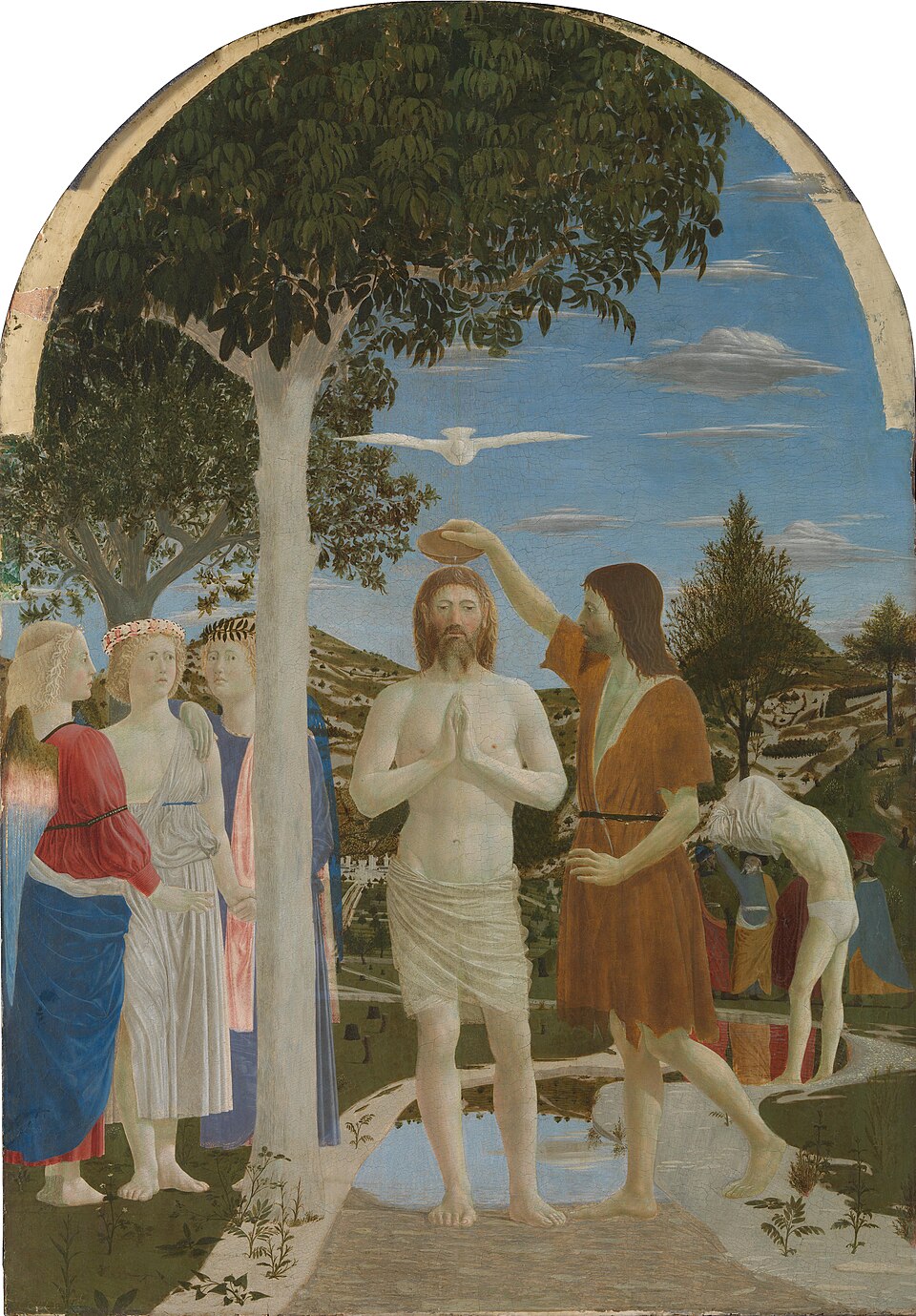
Christ stands in a still river under a white dove, and a pale walnut tree echoes his skin. Piero della Francesca built this calm scene with the precision of a geometer.
The story behind the painting
The panel was probably commissioned around 1440 by the Camaldolese monastery of Sansepolcro in Tuscany, now Sansepolcro Cathedral, in Piero's home town. Its date is disputed: some place it as early as 1439, others around 1460, and Wikidata gives 1448. Its link to the light painting of his master Domenico Veneziano points to his early career. It was the centre of a triptych, with side panels of Saint Peter and Saint Paul and a predella by Matteo di Giovanni from the early 1460s, now in Sansepolcro's civic gallery. The town in the middle distance, to Christ's left, may be Sansepolcro itself.
What to look for
Painted in egg tempera on two poplar panels, the scene centres on Christ baptised in the Jordan by John the Baptist on the right. Christ, John's hand with the bowl, and the dove form one vertical axis that splits the picture into two symmetrical halves. The dove's foreshortened wings look like the clouds. On the left a walnut tree with white bark, echoing Christ's pale skin, divides the picture by the golden ratio. Behind John a man in white briefs, feet already in the water, struggles out of his undershirt. Note how John's arm and leg form two equal angles.
Meaning and intent
Three angels stand on the left in different clothes. Breaking with tradition, they do not hold Christ's garments but hold each other's hands. This may allude to the Council of Florence, 1431 to 1445, which sought to unite the Western and Eastern Churches; the Camaldolese theologian Ambrose Traversari had strongly supported that union. Figures in oriental dress behind the man undressing, usually read as Byzantine dignitaries, support this reading. Alternatively, the three angels may stand for the Holy Trinity. The lost frame may also have held a roundel of God the Father, completing the Trinity with Christ and the dove.
Legacy
Piero was famous in his time as an authority on perspective and geometry, and this panel shows that mind at work in its axes, ratios and matching angles. When the monastery in Sansepolcro was dissolved in the nineteenth century, the painting was sold; the National Gallery in London bought it in 1861, and it has hung there since. The side panels and predella remain in Sansepolcro, so the triptych is split between two countries. The source gives the size as about 168 by 116 cm.
Le saviez-vous ?
- Egg tempera on two poplar panels.
- Date disputed, from about 1439 to around 1460.
- Centre of a triptych made for a monastery in Sansepolcro.
- National Gallery, London, since 1861.
À propos de l'artiste
Piero della Francesca (1415-1492)
art religieux · National Gallery · Jésus-Christ · Première Renaissance · Jean le Baptiste
Autres œuvres de Piero della Francesca
 La Flagellation du Christ - Piero della Francesca (1450s)
 La Conversation sacrée - Piero della Francesca (1472)
 Le Triomphe de la chasteté - Piero della Francesca (1465)
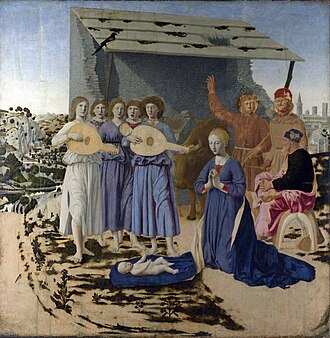 La Nativité - Piero della Francesca (1480s)
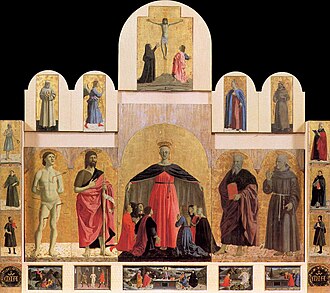 Madonna della Misericordia - Piero della Francesca (1460s)
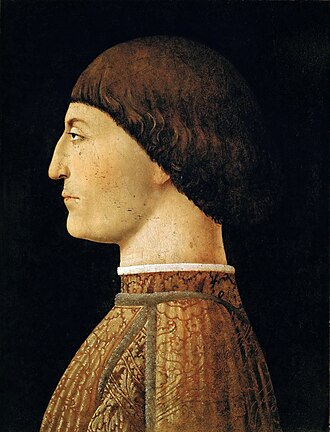 Portrait de Sigismond Malatesta, seigneur de Rimini - Piero della Francesca (1450s)
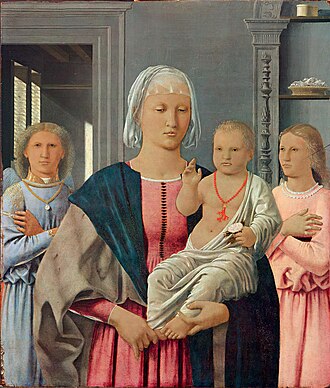 Madonna di Senigallia - Piero della Francesca (1470s)
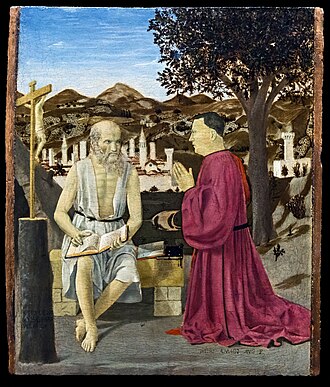 Saint Jérôme et le donateur Girolamo Amadi - Piero della Francesca (1440)
Œuvres d'artistes liés
 La Naissance de Vénus - Sandro Botticelli (c. 1485)
 Le Printemps - Sandro Botticelli (1480s)
 La Joconde - Leonardo da Vinci (1503-1519)
 La Dame à l'hermine - Leonardo da Vinci (1490)
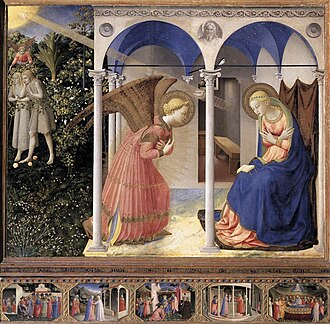 L'Annonciation - Fra Angelico (1425)
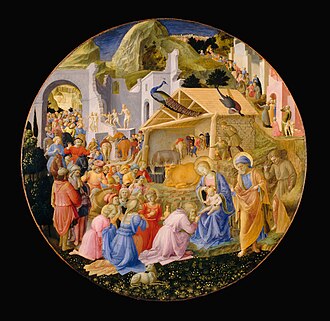 Tondo Cook - Fra Angelico (1430)
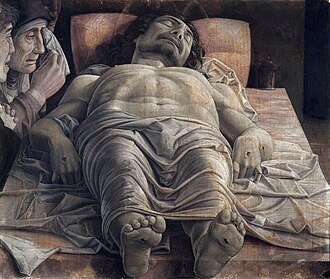 Lamentation sur le Christ mort - Andrea Mantegna (1483)
 La Vierge de la Victoire - Andrea Mantegna