L'Introduction du culte de Cybèle à Rome
Andrea Mantegna · 1500s
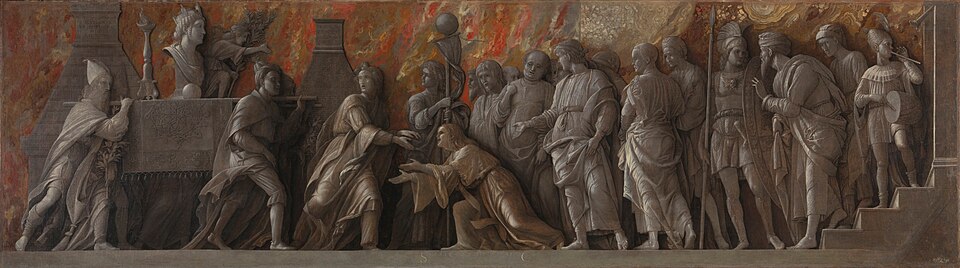
Painted to look like carved marble, a long procession carries the bust of a goddess into Rome. It was one of Mantegna's last works, still unfinished when he died in 1506.
The story behind the painting
In 1505 Cardinal Marco Cornaro commissioned the painting for the study of his brother Francesco, a Venetian patrician. The Cornaro family claimed descent from the ancient Roman Cornelii, and the cardinal even signed himself Marcus Cardinalis Cornelius when asking Francesco II Gonzaga, whose court painter Mantegna was, for a work. The subject came from the Cornelii's own history, told by Ovid, Appian and Livy: during the Second Punic War the image of the goddess Cybele was brought to Rome from Mount Ida, and the senate chose Scipio Nasica, cousin of Scipio Africanus, as the most worthy Roman to receive it.
What to look for
The canvas, in glue tempera and 73.5 by 268 cm, is painted as if carved in marble with two differently mottled layers, one for the figures and one for the background, based on ancient sarcophagi then being rediscovered. Two pyramid tombs on the left bear the names of the Scipios' fathers. The bust of Cybele wears a turreted crown and stands on a sphere on a precious carpet, with a ritual torch behind. Two front bearers wear turbans; the bearded pair behind wear tiara-like hats. Young Nasica kneels before the bust, his words of welcome on the lower border. On the far right a shepherd in a Phrygian cap plays flute and drum on the temple steps.
Meaning and intent
Like much of Mantegna's work after 1495, the painting is monochrome, linked to sculpture and to the taste for illusion and trompe l'oeil favoured at the Mantuan court, especially by Isabella d'Este. Choosing a story about the Cornelii flattered the family's claim to Roman ancestry. Details carry meaning: the sphere stands for universality, laurel branches recall a Roman triumph, and a trumpet pokes out of the temple doors. Mantegna shows the moment after the image has been brought ashore, just as it reaches the temple built for it in Rome.
Legacy
Bembo's letter of 1505 to Isabella mentions a dispute over payment, and the painting was still in Mantegna's studio at his death in 1506, listed as begun but incomplete. It was finished by his son Francesco, by Giovanni Bellini or by another painter. Cardinal Sigismondo Gonzaga acquired it and in 1507 finally delivered it to Francesco Cornaro. Bellini's Continence of Scipio, now in Washington, was painted as its pendant, while two further planned pictures were never made. Roberto Longhi suggested two small monochromes might belong with it, but no documents support this. It is now in the National Gallery, London.
Le saviez-vous ?
- Commissioned in 1505 by Cardinal Marco Cornaro.
- Glue tempera on canvas, 73.5 by 268 cm, painted to imitate marble.
- Unfinished at Mantegna's death in 1506 and completed by another hand.
- Now in the National Gallery, London.
À propos de l'artiste
Andrea Mantegna (1431-1506)
National Gallery · peinture d'histoire
Autres œuvres de Andrea Mantegna
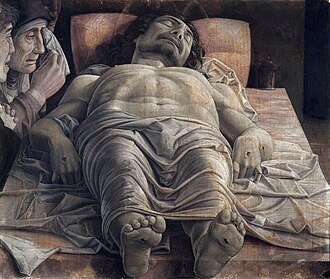 Lamentation sur le Christ mort - Andrea Mantegna (1483)
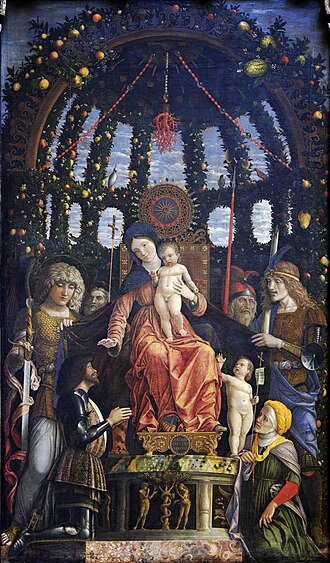 La Vierge de la Victoire - Andrea Mantegna
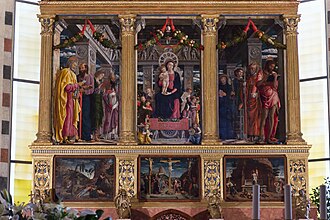 retable de San Zeno - Andrea Mantegna (1457)
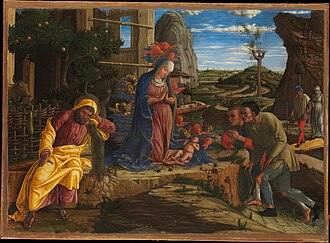 Adoration of the Shepherds - Andrea Mantegna (1450)
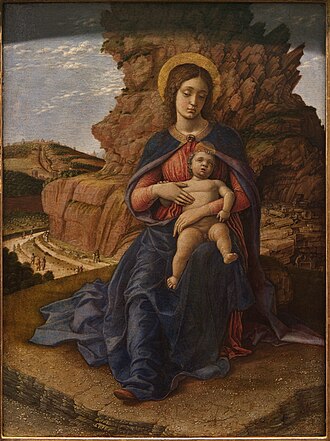 La Madone de la carrière - Andrea Mantegna (1489)
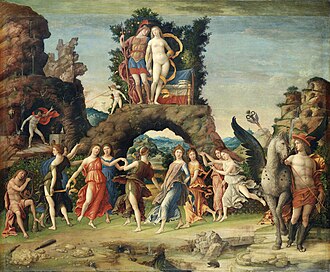 Le Parnasse - Andrea Mantegna
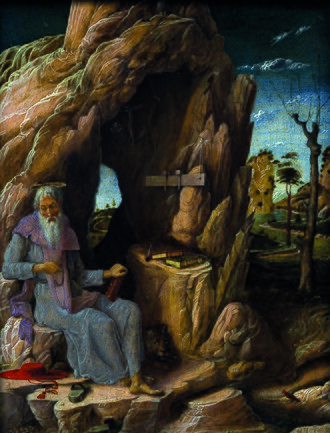 Saint Jérôme dans le désert - Andrea Mantegna
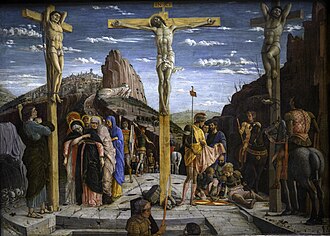 La Crucifixion - Andrea Mantegna (1450s)
Œuvres d'artistes liés
 La Naissance de Vénus - Sandro Botticelli (c. 1485)
 Le Printemps - Sandro Botticelli (1480s)
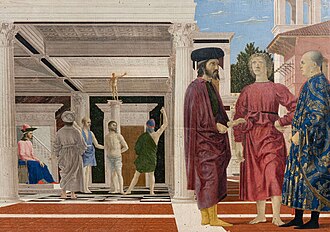 La Flagellation du Christ - Piero della Francesca (1450s)
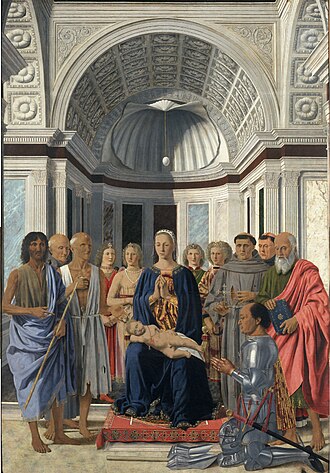 La Conversation sacrée - Piero della Francesca (1472)
 La Joconde - Leonardo da Vinci (1503-1519)
 La Dame à l'hermine - Leonardo da Vinci (1490)
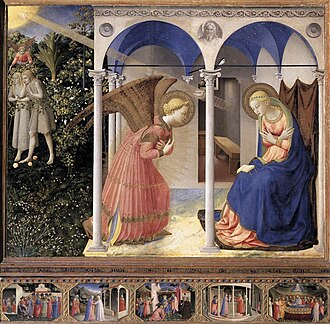 L'Annonciation - Fra Angelico (1425)
 Tondo Cook - Fra Angelico (1430)