La Madone de la carrière
Andrea Mantegna · 1489
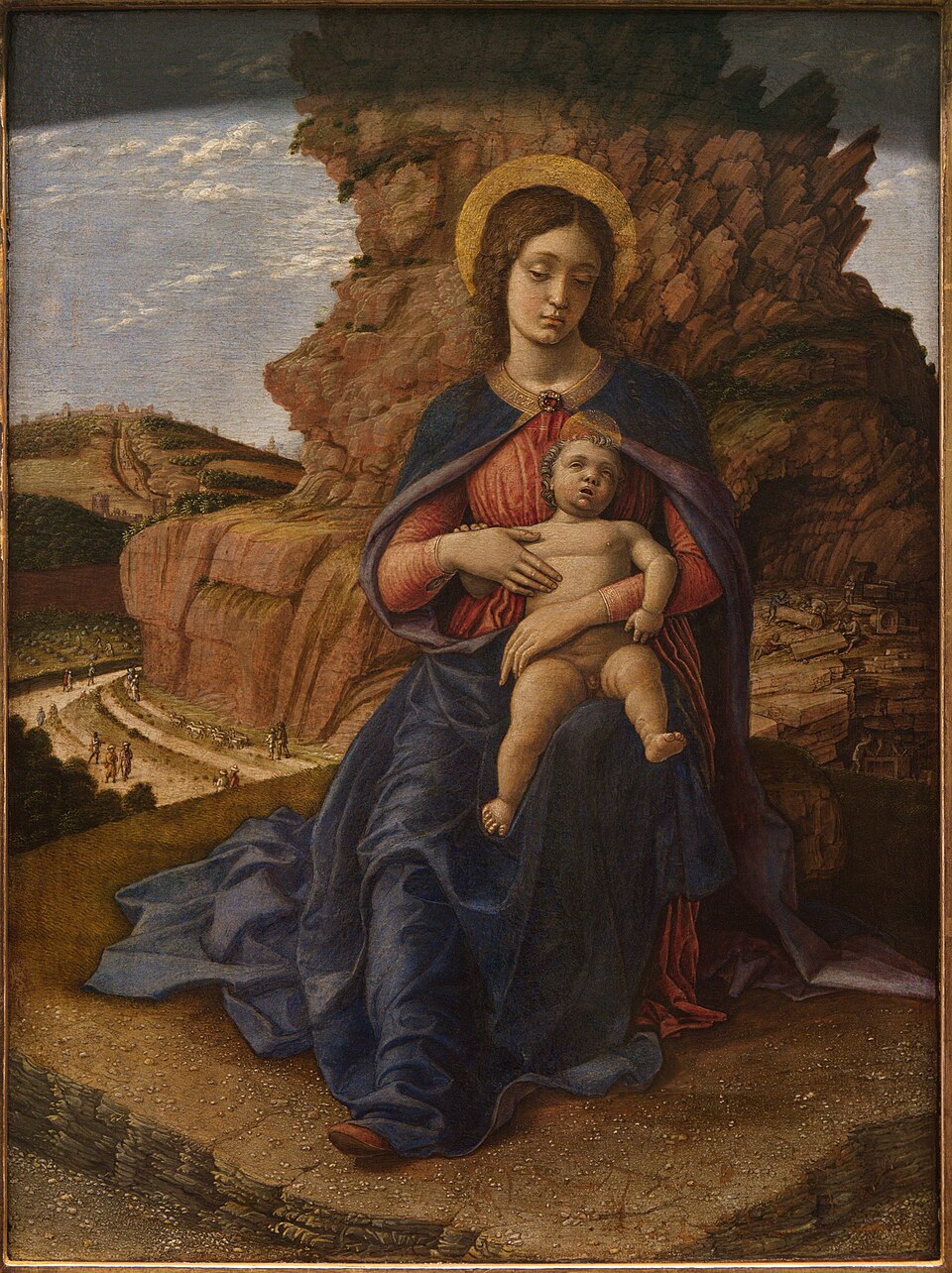
The Virgin sits on a rock with her Child while, behind her, stonecutters carve a column and a sarcophagus out of the mountain. In a panel smaller than a page, Mantegna set tenderness against the hard stone of what lies ahead.
The story behind the painting
Mantegna painted this small tempera panel, now in the Uffizi in Florence. Its usual dating to 1488 to 1490 rests on Giorgio Vasari's description of the collections of Francesco I de' Medici, which places it in Mantegna's time in Rome. Some have linked it to a work Lorenzo de' Medici commissioned from Mantegna and mentioned in a letter. Other historians date it differently because of its style, and since Mantegna reused rocky backgrounds throughout his career, uncertain works are hard to date firmly. Wikidata gives 1489. Its size is also recorded differently: Wikipedia gives 32 by 29.6 cm, Wikidata 29 by 21.5 cm.
What to look for
The Virgin sits on a rock holding the Child. In the right background is the quarry that gives the painting its name, Madonna delle Cave, where workers are cutting a capital, a slab, part of a column shaft and a sarcophagus. In the left background are a shepherd with his flock, farmers gathering hay, a castle, and a road winding toward a distant walled city. Follow the light across the landscape: it moves from dark on the right to light on the left. Scholars disagree about the place: Fiocco saw Carrara in it, while Kristeller identified Monte Bolca between Vicenza and Verona.
Meaning and intent
The quarry is more than scenery. The column and the sarcophagus being carved may allude to Christ's future flagellation and burial, so the work of the stonecutters quietly prepares his Passion. The rock on which Mary sits may stand for the summit of Calvary. Some interpret the shift from dark to light across the background as an allegory of redemption through Christ and the Church, with Mary as mother of both. Around them ordinary life goes on, shepherds, haymakers and travellers, while the mother holds her child at the edge of the stone.
Legacy
The panel belongs to the Uffizi Gallery in Florence, and its presence in the collections of Francesco I de' Medici, described by Vasari, is the main anchor for its history. The open questions about it are part of its story: when exactly it was painted, whether it is the work mentioned by Lorenzo de' Medici, and which real landscape, if any, lies behind its quarry. What is not in doubt is the way Mantegna joined the sharp, carved rock he returned to again and again with an intimate devotional image.
Le saviez-vous ?
- Named after the stone quarry in its background.
- Usually dated 1488 to 1490, from Vasari's account.
- Tempera on panel, in the Uffizi, Florence.
- The landscape has been linked to Carrara or to Monte Bolca.
À propos de l'artiste
Andrea Mantegna (1431-1506)
art religieux · Marie · Enfant Jésus · paysage · galerie des Offices · Vierge à l'Enfant
Autres œuvres de Andrea Mantegna
 Lamentation sur le Christ mort - Andrea Mantegna (1483)
 La Vierge de la Victoire - Andrea Mantegna
 retable de San Zeno - Andrea Mantegna (1457)
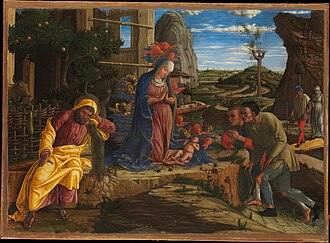 Adoration of the Shepherds - Andrea Mantegna (1450)
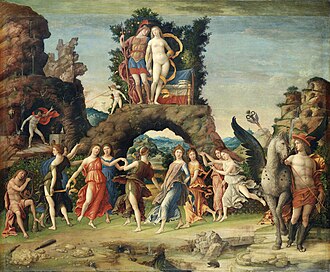 Le Parnasse - Andrea Mantegna
 L'Introduction du culte de Cybèle à Rome - Andrea Mantegna (1500s)
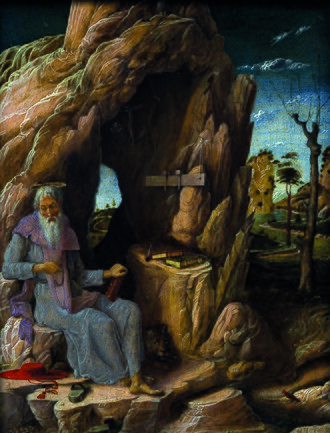 Saint Jérôme dans le désert - Andrea Mantegna
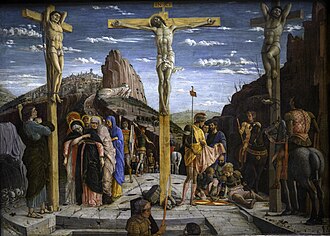 La Crucifixion - Andrea Mantegna (1450s)
Œuvres d'artistes liés
 La Naissance de Vénus - Sandro Botticelli (c. 1485)
 Le Printemps - Sandro Botticelli (1480s)
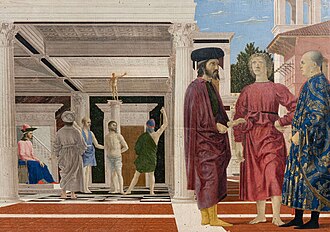 La Flagellation du Christ - Piero della Francesca (1450s)
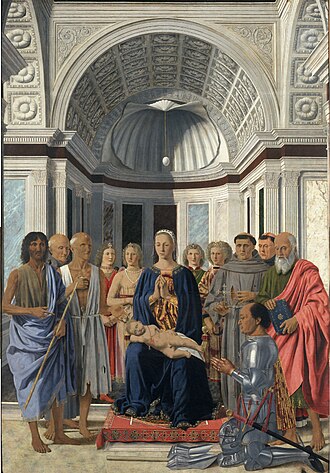 La Conversation sacrée - Piero della Francesca (1472)
 La Joconde - Leonardo da Vinci (1503-1519)
 La Dame à l'hermine - Leonardo da Vinci (1490)
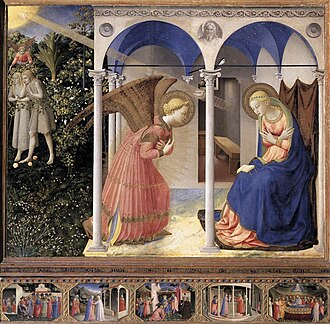 L'Annonciation - Fra Angelico (1425)
 Tondo Cook - Fra Angelico (1430)