Adoration des mages
Andrea Mantegna · 1500
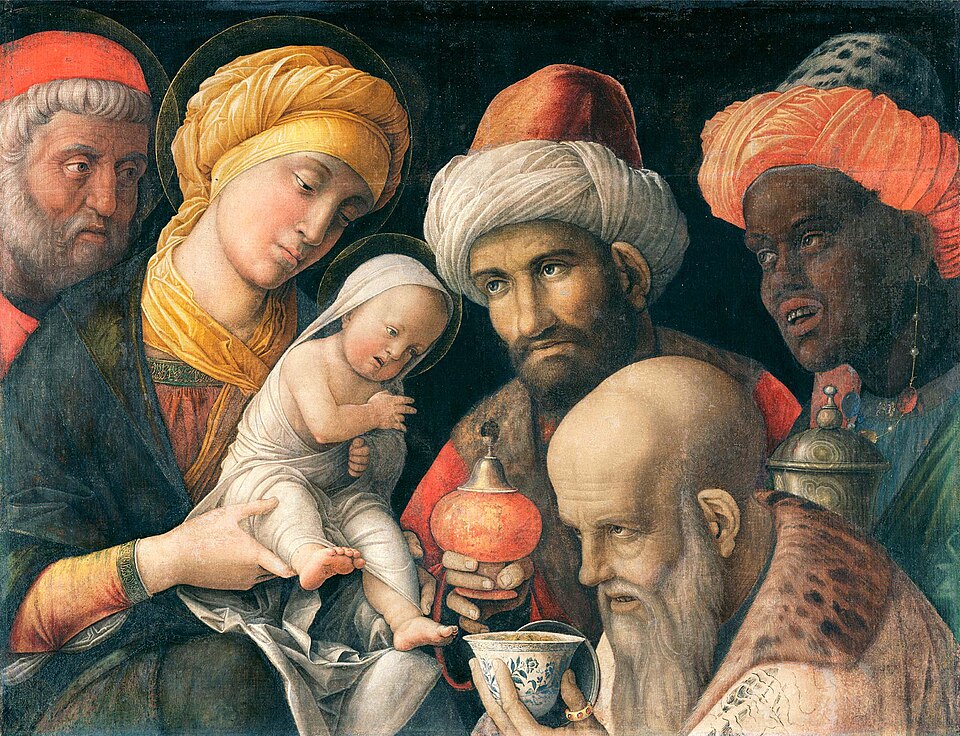
Heads crowd together in the dark: the Virgin, the Child, and three kings holding out a Ming porcelain cup, a jasper censer and an agate vessel. Mantegna stripped away the procession and kept only the meeting.
The story behind the painting
Andrea Mantegna painted this Adoration of the Magi around 1495 to 1505; Wikidata gives the year 1500. It is painted in glue tempera and gold on linen and was made for private devotion. The story is the Epiphany: three kings come to honour the newborn Christ. In Renaissance Italy the magi were hugely popular, especially in Florence, where a Confraternity of the Magi organised Epiphany processions, and painters such as Botticelli even showed the Medici as kings. Since 1985 the work has belonged to the J. Paul Getty Museum in Los Angeles.
What to look for
The Holy Family is on the left, haloed and simply dressed; the Virgin is gentle and serene, and the Child seems curious about the gifts. On the right, Caspar, bald and bearded, offers a Ming dynasty Chinese porcelain cup filled with gold coins. Behind him Melchior holds a Turkish jasper censer. Farthest away, Balthazar carries a covered agate cup for myrrh. Look for the leopard patterns, turbans, furs and jewels, the dark, bare background, the earthy palette, and the soft light from the left. The figures are arranged like a frieze, recalling Roman reliefs.
Meaning and intent
The kings stand for the Three Ages of Life and the three continents then known: Caspar for Europe and old age, Melchior for Asia and maturity, Balthazar for Africa and youth. In the Renaissance the magi let artists show distant worlds and the submission of earthly power to Christ. Unlike his crowded Adoration of 1461, Mantegna here keeps the scene spare and close, half-length figures pressed into the frame. Attention goes to the looks, the gestures and the gifts, placing the viewer right beside the adoration and inviting a personal response.
Legacy
The French source suggests that Mantegna most probably drew on live models at the court of Mantua, especially in the circle of Isabella d'Este, who showed keen curiosity about black servants, for his figure of Balthazar. The painting's exotic objects, from Chinese porcelain to Turkish stone, show the European taste of the time for faraway things. Yet what makes it last is its intimacy: a quiet meeting rather than a parade. It entered the Getty's collection in 1985, where its tight composition still draws the eye straight to the Child.
Le saviez-vous ?
- Painted around 1495-1505 in glue tempera and gold on linen.
- Made for private devotion, with half-length figures.
- Caspar offers a Ming porcelain cup full of gold coins.
- In the J. Paul Getty Museum since 1985.
À propos de l'artiste
Andrea Mantegna (1431-1506)
art religieux · femme · Marie · Enfant Jésus · garçon · musée J. Paul Getty · Rois mages · adoration
Autres œuvres de Andrea Mantegna
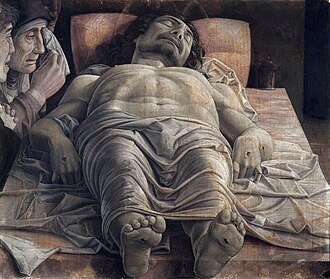 Lamentation sur le Christ mort - Andrea Mantegna (1483)
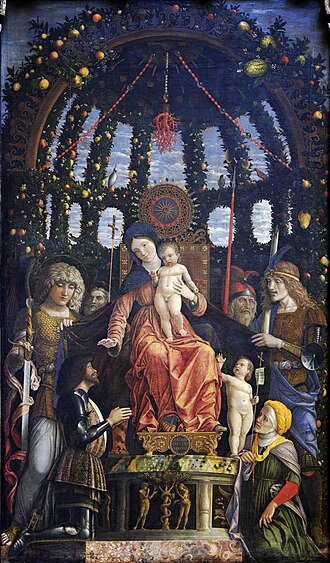 La Vierge de la Victoire - Andrea Mantegna
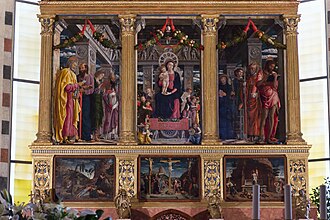 retable de San Zeno - Andrea Mantegna (1457)
 Adoration of the Shepherds - Andrea Mantegna (1450)
 La Madone de la carrière - Andrea Mantegna (1489)
 Le Parnasse - Andrea Mantegna
 L'Introduction du culte de Cybèle à Rome - Andrea Mantegna (1500s)
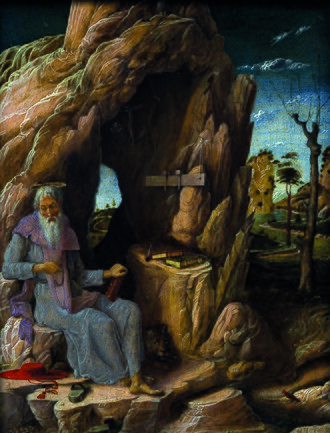 Saint Jérôme dans le désert - Andrea Mantegna
Œuvres d'artistes liés
 La Naissance de Vénus - Sandro Botticelli (c. 1485)
 Le Printemps - Sandro Botticelli (1480s)
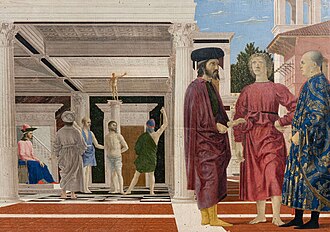 La Flagellation du Christ - Piero della Francesca (1450s)
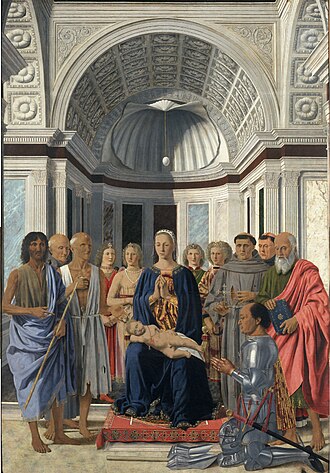 La Conversation sacrée - Piero della Francesca (1472)
 La Joconde - Leonardo da Vinci (1503-1519)
 La Dame à l'hermine - Leonardo da Vinci (1490)
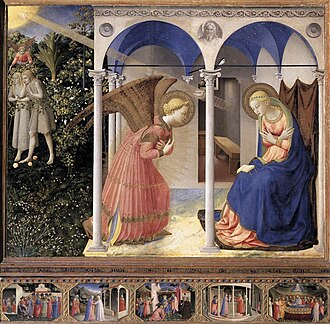 L'Annonciation - Fra Angelico (1425)
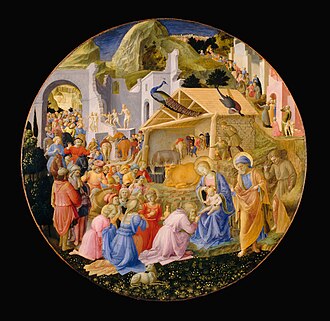 Tondo Cook - Fra Angelico (1430)