Didon
Andrea Mantegna · 1495
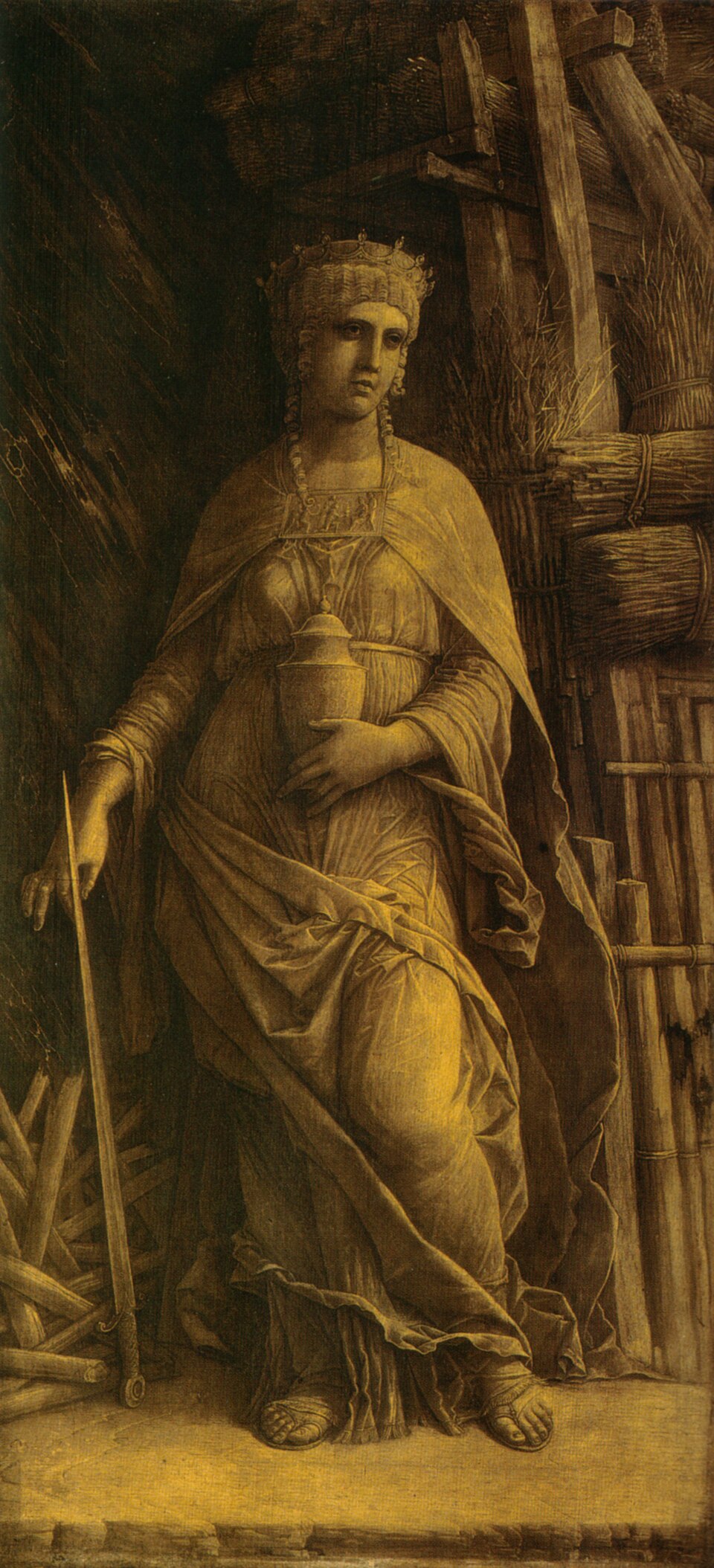
A queen stands like a statue of gilded bronze, sword in one hand and her husband's ashes in the other, while behind her the wood for her pyre is piled high. Mantegna painted this illusion in his last years.
The story behind the painting
Dido is a late work by Andrea Mantegna, painted near the end of his life. The French Wikipedia article places it between 1495 and 1500, while Wikidata gives 1495. By then Mantegna was court painter to the Gonzaga family in Mantua, where he painted subjects drawn from classical antiquity for the studiolo of Isabella d'Este. The painting belonged to the Gonzaga collection, then to the John W. Tempest fund, and entered the Montreal Museum of Fine Arts through a bequest in 1892. It is a tall, narrow canvas of about 65 by 31 cm.
What to look for
The work is painted in grisaille, shades of grey, on linen, and it imitates sculpture. The French article explains this illusion partly by how hard it was to obtain marble at the Mantuan court. Touches of gold make the figure read as gilded bronze. Dido stands upright with her mythological attributes: a queen's crown, a sword and a cinerary urn. Behind her the background is not plain but filled with heaps of branches, beams and pieces of wood, gathered to feed the pyre on which she will die.
Meaning and intent
Dido, founder of Carthage, is the heroine whose story the Roman poet Virgil retold in the Aeneid. She is traditionally shown with a sword in one hand and in the other the urn holding the ashes of her husband Sychaeus, killed by her brother Pygmalion. In a dream her husband revealed the murder to her, which drove her into the exile in which she founded Carthage. Mantegna keeps these signs but adds the waiting pyre, so that the calm, statue-like queen already stands at the edge of her own end.
Legacy
This painting belongs to a group of works in the same grisaille technique. Its companion in Montreal is Judith with the Head of Holofernes, which, like the others in the group, is set against painted coloured marble rather than a figurative background. A variant in egg tempera on wood panels, also with painted marble backgrounds, includes Tuccia, the Roman vestal with her sieve, and Sophonisba, the noble woman of Carthage, both in the National Gallery in London. Dido is set apart from them by the stacked wood behind her.
Le saviez-vous ?
- Painted by Andrea Mantegna in his late years, around 1495-1500.
- Grisaille on linen imitating gilded bronze sculpture.
- Shows Dido with crown, sword and urn before her pyre.
- In the Montreal Museum of Fine Arts since a bequest of 1892.
À propos de l'artiste
Andrea Mantegna (1431-1506)
Autres œuvres de Andrea Mantegna
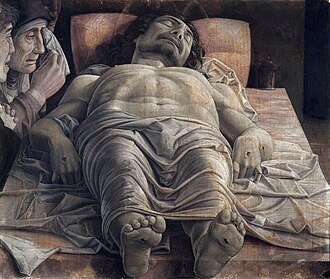 Lamentation sur le Christ mort - Andrea Mantegna (1483)
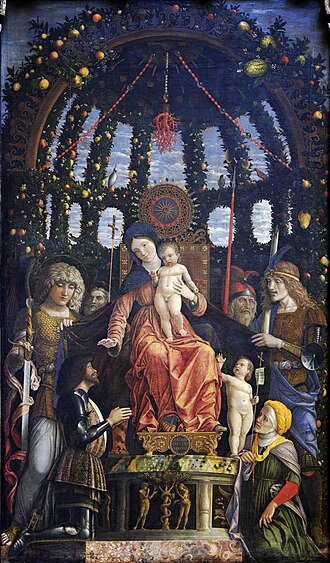 La Vierge de la Victoire - Andrea Mantegna
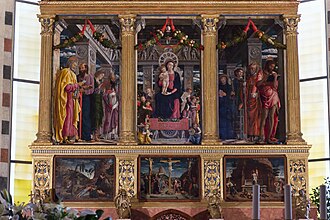 retable de San Zeno - Andrea Mantegna (1457)
 Adoration of the Shepherds - Andrea Mantegna (1450)
 La Madone de la carrière - Andrea Mantegna (1489)
 Le Parnasse - Andrea Mantegna
 L'Introduction du culte de Cybèle à Rome - Andrea Mantegna (1500s)
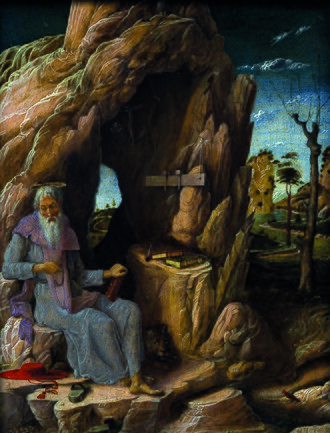 Saint Jérôme dans le désert - Andrea Mantegna
Œuvres d'artistes liés
 La Naissance de Vénus - Sandro Botticelli (c. 1485)
 Le Printemps - Sandro Botticelli (1480s)
 La Flagellation du Christ - Piero della Francesca (1450s)
 La Conversation sacrée - Piero della Francesca (1472)
 La Joconde - Leonardo da Vinci (1503-1519)
 La Dame à l'hermine - Leonardo da Vinci (1490)
 L'Annonciation - Fra Angelico (1425)
 Tondo Cook - Fra Angelico (1430)