La boda campesina
Pieter Bruegel the Elder · 1560s
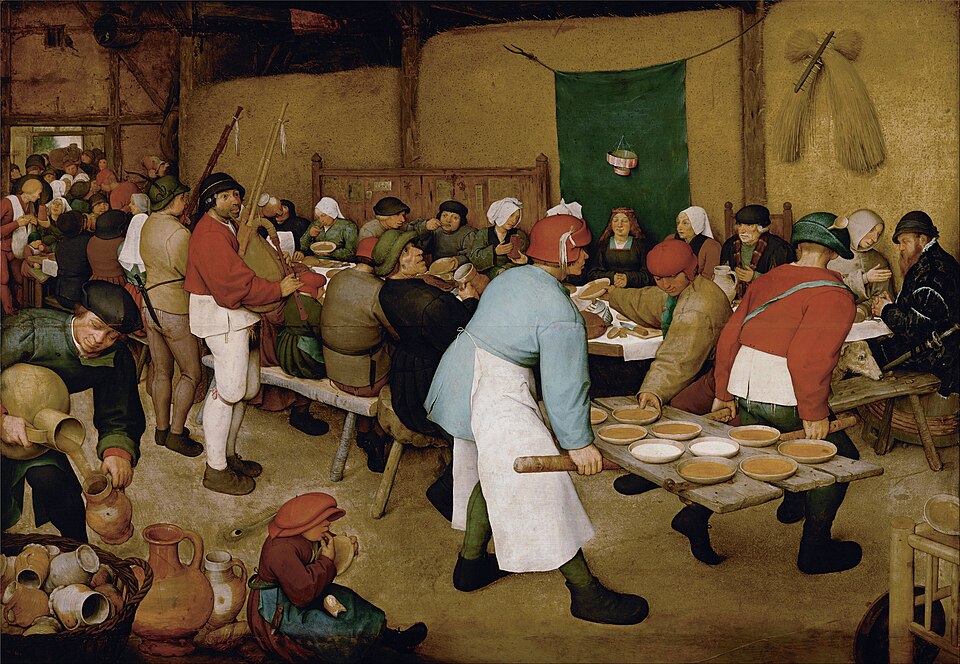
A barn full of hungry guests, bagpipes playing, porridge carried in on an unhinged door, and a bride sitting quietly beneath a paper crown. But where is the groom?
The story behind the painting
Pieter Bruegel the Elder painted The Peasant Wedding in 1567, according to Wikipedia; Wikidata gives the broader date of the 1560s. It is one of his many pictures of peasant life, a subject he returned to so often that he has been called Peasant-Bruegel. Yet the sources stress that he was an intellectual, and that many of his paintings carry symbolic meaning and a moral side as well. Here he turned to a village wedding feast, said to depict sixteenth-century peasant wedding customs accurately. Nothing grand is on the table, only bread, porridge and soup, but Bruegel gives the occasion all the bustle and warmth of a real celebration, set in a barn in summertime.
What to look for
Find the bride first. She sits in front of a green wall-hanging, a paper crown hung above her head and a crown on her own, calm and passive amid the hearty eating and drinking. In the foreground, two porters carry plates of food on a door taken off its hinges. Two pipers play the bagpipe. A small boy in the front licks a plate clean, a dog pokes out from under the table to snatch bread from the bench, and at the far right a wealthy man talks with a Franciscan friar. On the back wall, two sheaves of grain and a rake recall the harvest and the hard work of peasant life. Now look at the red-clad servant on the right: he appears to have three feet.
Meaning and intent
The groom is the painting's great riddle. Gilbert Highet and Gustav Glück suggested he might be the man in the centre in a dark coat, seen in profile, or the young man eating with a spoon against the far wall. By contemporary custom he might not be seated at all, but pouring beer, or handing plates to guests while wearing a red cap. Rudy Rucker offered a Freudian reading built around the man in the red hat. Van der Elst proposed that the groom is absent, illustrating a Flemish proverb about a poor man who cannot be at his own wedding. Some link the scene to the biblical Wedding at Cana, and Lindsay and Bernard Huppé read it as an allegory of a corrupt Church awaiting a groom who never comes.
Legacy
The mysterious third foot puzzled even Bruegel's son, Pieter Brueghel the Younger. In his 1620 copy of his father's painting, he simply removed it. Later analysis by Claudine Majzels suggested the extra foot actually belongs to the brown-clad man in a half-crouch, passing plates to the table. The painting's fame has reached far beyond museums: it was parodied in the comic Asterix in Belgium and on the postcard for Belgium's entry in the Eurovision Song Contest of 1979. Today The Peasant Wedding hangs in the Kunsthistorisches Museum in Vienna, where visitors still lean in to hunt for the groom.
¿Sabías que…?
- Dated 1567 by Wikipedia; Wikidata gives the 1560s
- Size: 113 × 164 cm
- Brueghel the Younger's 1620 copy removed the puzzling third foot
- Now in the Kunsthistorisches Museum, Vienna
Sobre el artista
Pieter Bruegel the Elder (1525-1569)
escena de género · Museo de Historia del Arte de Viena · ser humano
Más obras de Pieter Bruegel the Elder
%20-%20Google%20Art%20Project.jpg) Cazadores en la nieve - Pieter Bruegel the Elder (1565)
Cazadores en la nieve - Pieter Bruegel the Elder (1565)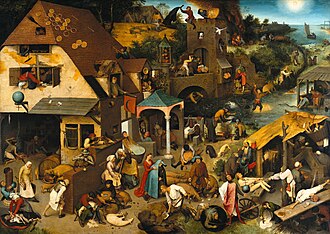 Los proverbios flamencos - Pieter Bruegel the Elder (1551)
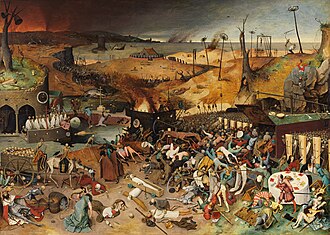 El triunfo de la muerte - Pieter Bruegel the Elder (1560s)
%20-%20Blind%20leading%20the%20blind%20Google%20Art%20Project.jpeg) La parábola de los ciegos - Pieter Bruegel the Elder (1568)
La parábola de los ciegos - Pieter Bruegel the Elder (1568)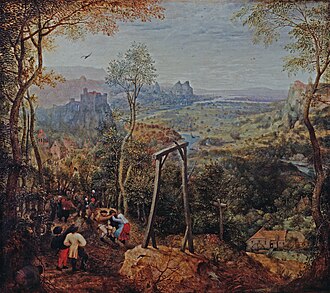 La urraca sobre el cadalso - Pieter Bruegel the Elder (1568)
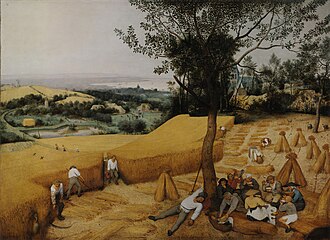 La cosecha - Pieter Bruegel the Elder (1565)
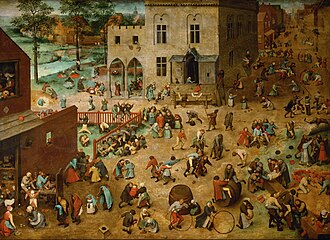 Juego de niños - Pieter Bruegel the Elder (1560)
%20-%20Christ%20and%20the%20woman%20taken%20in%20adultery.jpg) Cristo y la adúltera - Pieter Bruegel the Elder (1565)
Cristo y la adúltera - Pieter Bruegel the Elder (1565)
Obras de artistas relacionados
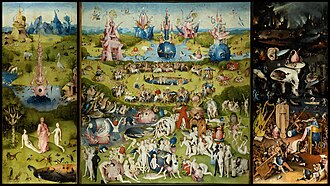 El jardín de las delicias - Hieronymus Bosch
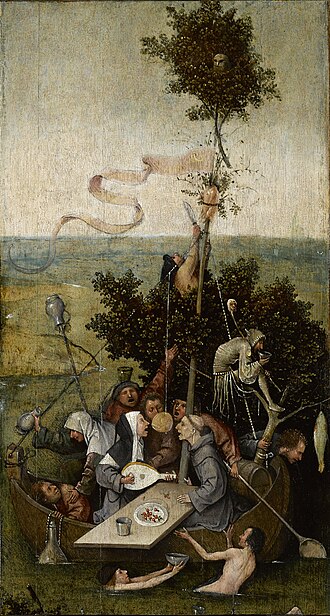 La nave de los locos - Hieronymus Bosch (1500s)