La cosecha
Pieter Bruegel the Elder · 1565
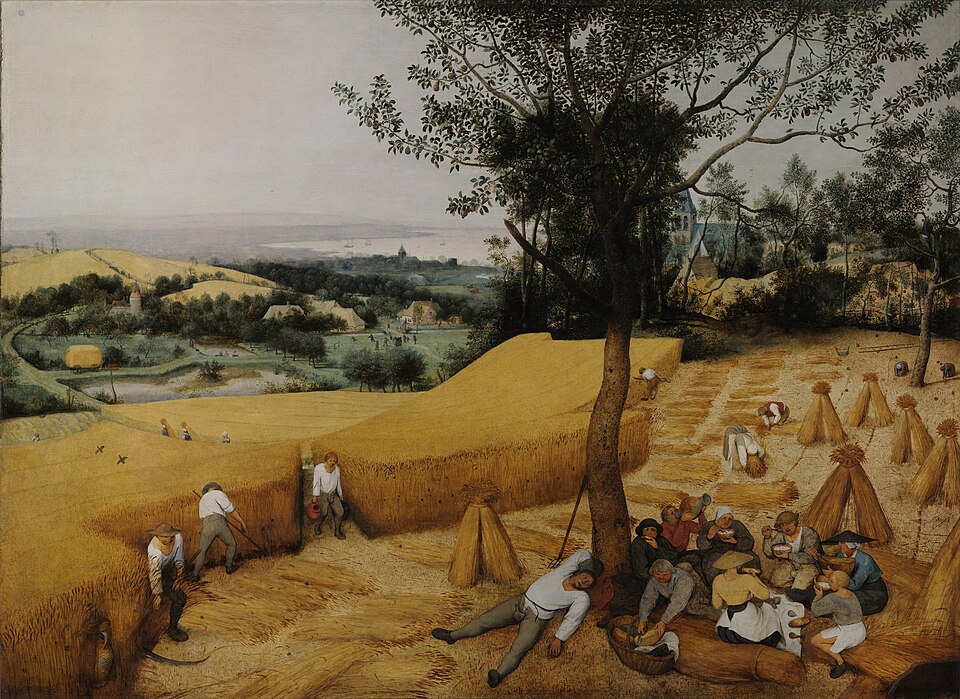
Golden wheat, a shady pear tree, tired workers sharing bread and cheese: Bruegel opens a whole summer day before you, stretching all the way to distant ships on the sea.
The story behind the painting
Pieter Bruegel the Elder completed The Harvesters, an oil painting on wood, in 1565. It was commissioned by Nicolaes Jonghelinck, a merchant banker and art collector from Antwerp, as part of a cycle showing the changing seasons of the year. The cycle is described as six, or perhaps twelve, works, and five survive today. This one shows harvest time in late summer, around July and August. As in many of Bruegel's paintings, the focus is on peasants and their work, without the religious themes common in landscape paintings of his time. Instead of saints or stories from scripture, the subject is simply the labor and rhythm of country life at the height of the year.
What to look for
Start with the group resting under the tree. On a white cloth lie pears, and an upright seated woman eats bread and cheese. Nearby others keep cutting the wheat, so you see food being grown and eaten in a single glance. Look to the far right: one figure up in a tree picks pears, and another shakes apples from a tree. In the center left, villagers take part in the cruel sport of cock throwing. Then let your eye travel back into the distance, past workers carrying sheaves through a clearing, people bathing in a pond, children playing, and finally ships far away. Each step back deepens the sense of space.
Meaning and intent
By showing both harvesting and eating, Bruegel presents the full circle of food, from the field to the mouth. The many small activities, work, rest, sport, bathing and play, together build a portrait of sixteenth century rural life in the region of present-day Belgium. Placing ordinary peasants at the heart of a large landscape, rather than religious figures, was itself a statement about what deserved to be painted. Within the seasonal cycle, this canvas stands for the fullness of late summer, the moment when the year's labor turns into nourishment. It invites us to see the landscape not as a backdrop, but as a living place shaped by the people who work it.
Legacy
The Harvesters has been at the Metropolitan Museum of Art in New York since 1919. The museum calls it a watershed in the history of Western art and the first modern landscape. Its companions from the cycle are now spread across Europe: The Gloomy Day, The Hunters in the Snow and The Return of the Herd are in the Kunsthistorisches Museum in Vienna, and The Hay Harvest is in the Lobkowicz Palace in Prague. The painting's reach extends even into animation: the director Hayao Miyazaki drew inspiration from it for his short film Mr. Dough and the Egg Princess. More than four centuries on, its sunlit fields still feel generous and alive.
¿Sabías que…?
- Oil on wood, completed in 1565
- Commissioned by Antwerp banker and collector Nicolaes Jonghelinck for a seasonal cycle
- At the Metropolitan Museum of Art since 1919
- Hayao Miyazaki drew on it for the short film Mr. Dough and the Egg Princess
Sobre el artista
Pieter Bruegel the Elder (1525-1569)
escena de género · Museo Metropolitano de Arte · campo · planifolio · campesino · medio rural
Más obras de Pieter Bruegel the Elder
%20-%20Google%20Art%20Project.jpg) Cazadores en la nieve - Pieter Bruegel the Elder (1565)
Cazadores en la nieve - Pieter Bruegel the Elder (1565)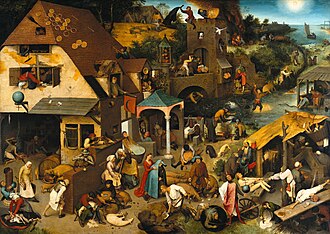 Los proverbios flamencos - Pieter Bruegel the Elder (1551)
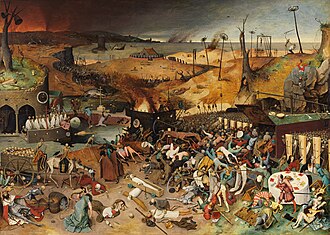 El triunfo de la muerte - Pieter Bruegel the Elder (1560s)
%20-%20Blind%20leading%20the%20blind%20Google%20Art%20Project.jpeg) La parábola de los ciegos - Pieter Bruegel the Elder (1568)
La parábola de los ciegos - Pieter Bruegel the Elder (1568)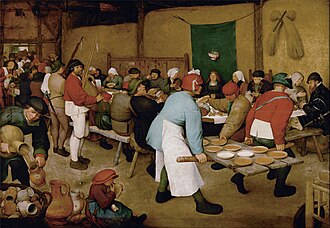 La boda campesina - Pieter Bruegel the Elder (1560s)
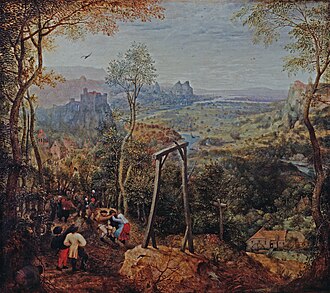 La urraca sobre el cadalso - Pieter Bruegel the Elder (1568)
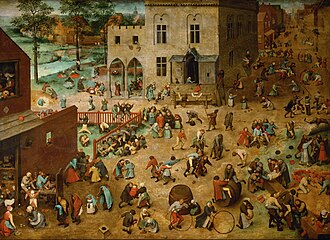 Juego de niños - Pieter Bruegel the Elder (1560)
%20-%20Christ%20and%20the%20woman%20taken%20in%20adultery.jpg) Cristo y la adúltera - Pieter Bruegel the Elder (1565)
Cristo y la adúltera - Pieter Bruegel the Elder (1565)
Obras de artistas relacionados
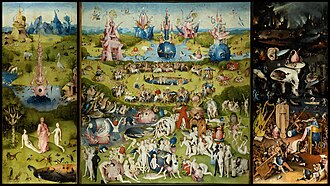 El jardín de las delicias - Hieronymus Bosch
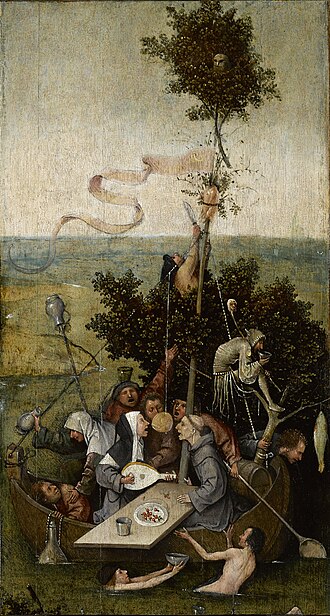 La nave de los locos - Hieronymus Bosch (1500s)