La sirena y el poeta
Gustave Moreau · 1895
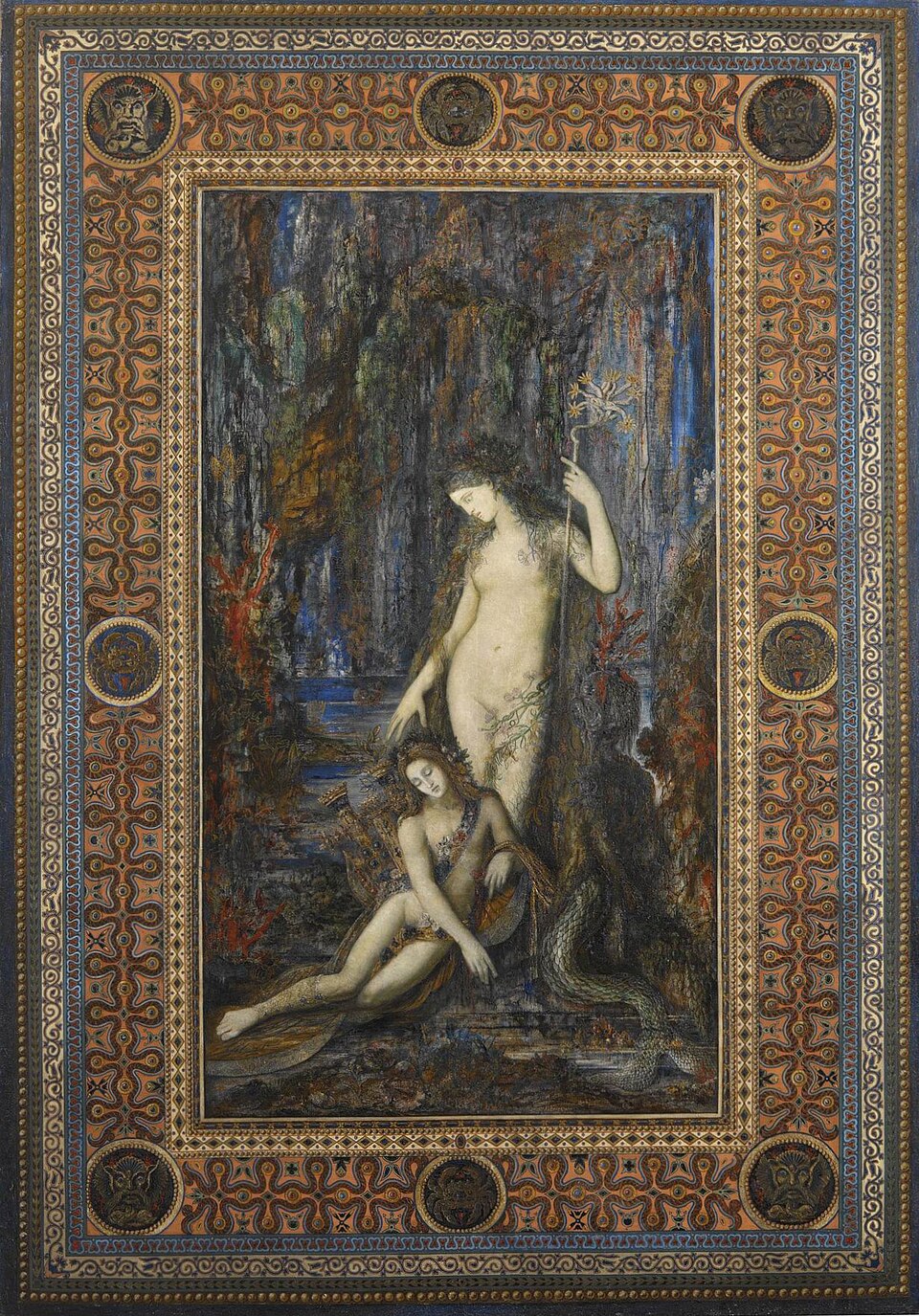
A mermaid rests her hand above a sleeping poet, guarding rather than devouring him. Moreau painted this huge canvas as his only design for a tapestry, and died before the weavers could finish it.
The story behind the painting
At the World's Fair of 1889 the critic Roger Marx hoped the Gobelins manufactory would renew the art of tapestry, and commissions went to Puvis de Chavannes, Cazin and Gustave Moreau. Only Moreau accepted the state commission, dated 14 June 1894, and the new administrator Jules Guiffrey chose the Siren as the subject. Moreau adapted an earlier painting, The Poet and the Siren of 1892, retouched in 1893. Guiffrey grew impatient at the delay and wrote again and again; the barely dry canvas was finally delivered on 24 February 1896.
What to look for
The scene is framed by wide borders with antique patterns and medallions. The poet holds his lyre at his hip, his eyes and mouth closed, as if asleep, and his legs are no longer drowned under water. The standing mermaid is smaller than in the earlier picture, her eye less threatening, her left hand raised. The bright openings onto the sky are gone, replaced by a rock wall. The paint is laid on freely, with an unfinished look, and lines of marine plants drawn over the colour, a late technique Moreau also used in his Tattooed Salome.
Meaning and intent
The new background answered a practical need, since a luminous sky would have been too hard to weave. The change of attitude changes the meaning. In the 1893 painting the mermaid is a giant at the top of a pyramid, part of a late nineteenth century image of the giant woman as a terrifying, dominating figure, her gaze hypnotic. Here she becomes kind and protective of the sleeping poet: from predator to guardian. Studies show the poet's pose borrows from Adam in Michelangelo's Creation of Eve, which Moreau had studied in the Sistine Chapel.
Legacy
Those allowed to see the canvas at the Gobelins were delighted. In April 1896 Guiffrey even proposed a second tapestry design from Moreau's Leda, but Moreau died before the first tapestry was finished, its weaving slowed by technical complexity. Émile Jean Sulpis engraved the design in 1898. The tapestry was completed on 15 February 1900 and shown at that year's World's Fair, where Bouguereau called it a true masterpiece of professional skill. Model and tapestry hung side by side at the Musée du Luxembourg from 1901; the painting went to the Louvre in 1934 and is now in Poitiers.
¿Sabías que…?
- Moreau's only design for a tapestry, for the Gobelins.
- Delivered on 24 February 1896.
- The tapestry was finished in 1900, after Moreau's death.
- Now in the Musée Sainte-Croix, Poitiers.
Sobre el artista
Gustave Moreau (1826-1898)
pintura mitológica · Museo de Orsay
Más obras de Gustave Moreau
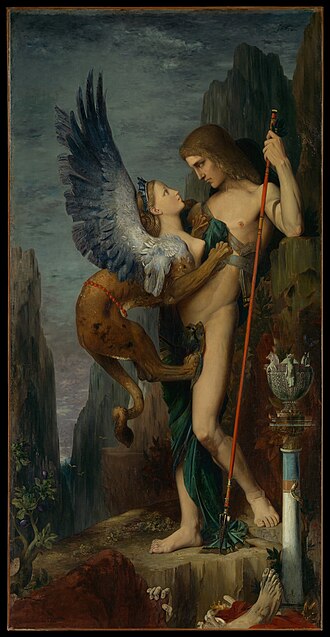 Edipo y la esfinge - Gustave Moreau (1864)
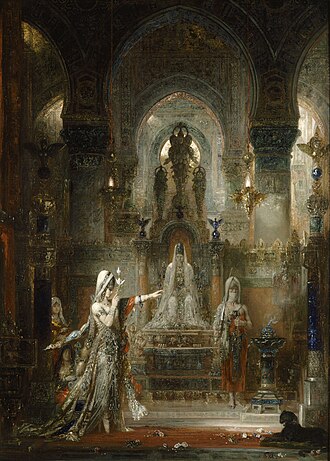 Salomé bailando ante Herodes - Gustave Moreau (1876)
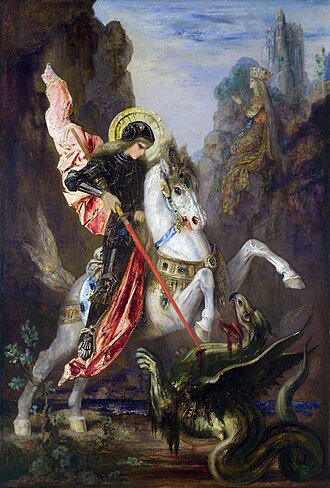 San Jorge - Gustave Moreau (1880s)
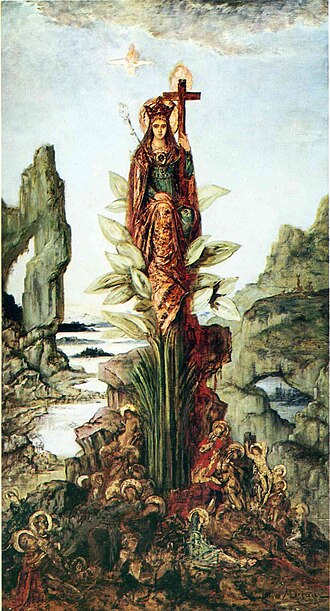 Flor Mística - Gustave Moreau (1890)
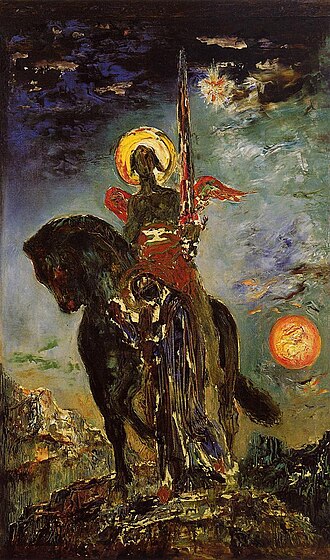 La Parca y el Ángel de la Muerte - Gustave Moreau (1890)
 Athenians being Delivered to the Minotaur in the Cretan Labyrinth - Gustave Moreau (1855)
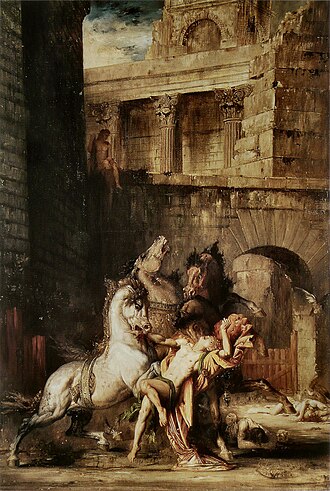 Diomedes devorado por sus caballos - Gustave Moreau (1865)
 Jasón y Eros - Gustave Moreau (1891)
Obras de artistas relacionados
 Pollice verso - Jean-Léon Gérôme (1872)
 El mercado de esclavos - Jean-Léon Gérôme (1866)
 Almuerzo sobre la hierba - Édouard Manet (1863)
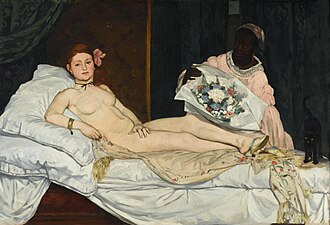 Olympia - Édouard Manet (1863)
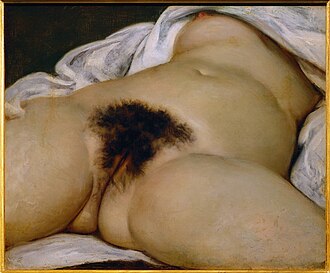 El origen del mundo - Gustave Courbet (1866)
 Entierro en Ornans - Gustave Courbet (2020)
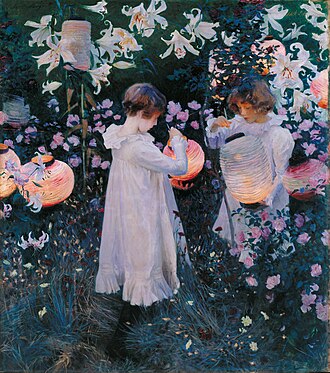 Clavel, lirio, lirio, rosa - John Singer Sargent (1885-1886)
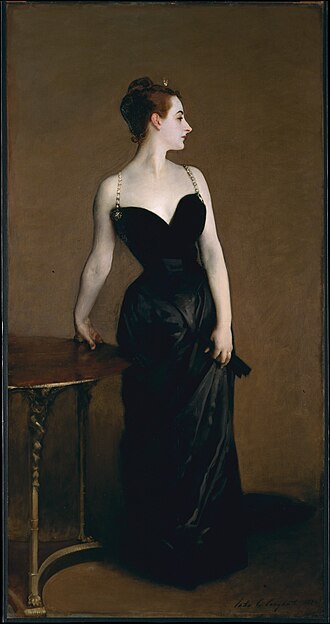 Retrato de Madame X - John Singer Sargent (1884)
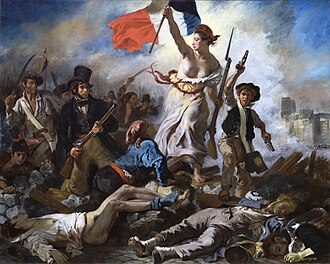 La Libertad guiando al pueblo - Eugène Delacroix (1830)
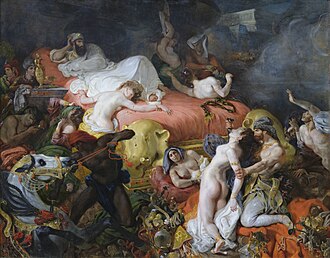 La muerte de Sardanápalo - Eugène Delacroix (1827)
 La muerte de Sócrates - Jacques-Louis David (1787)
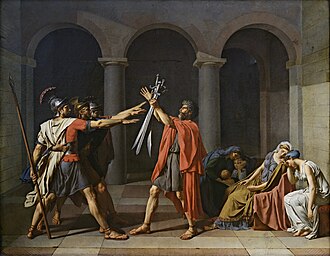 Juramento de los Horacios - Jacques-Louis David (1784)