Jasón y Eros
Gustave Moreau · 1891
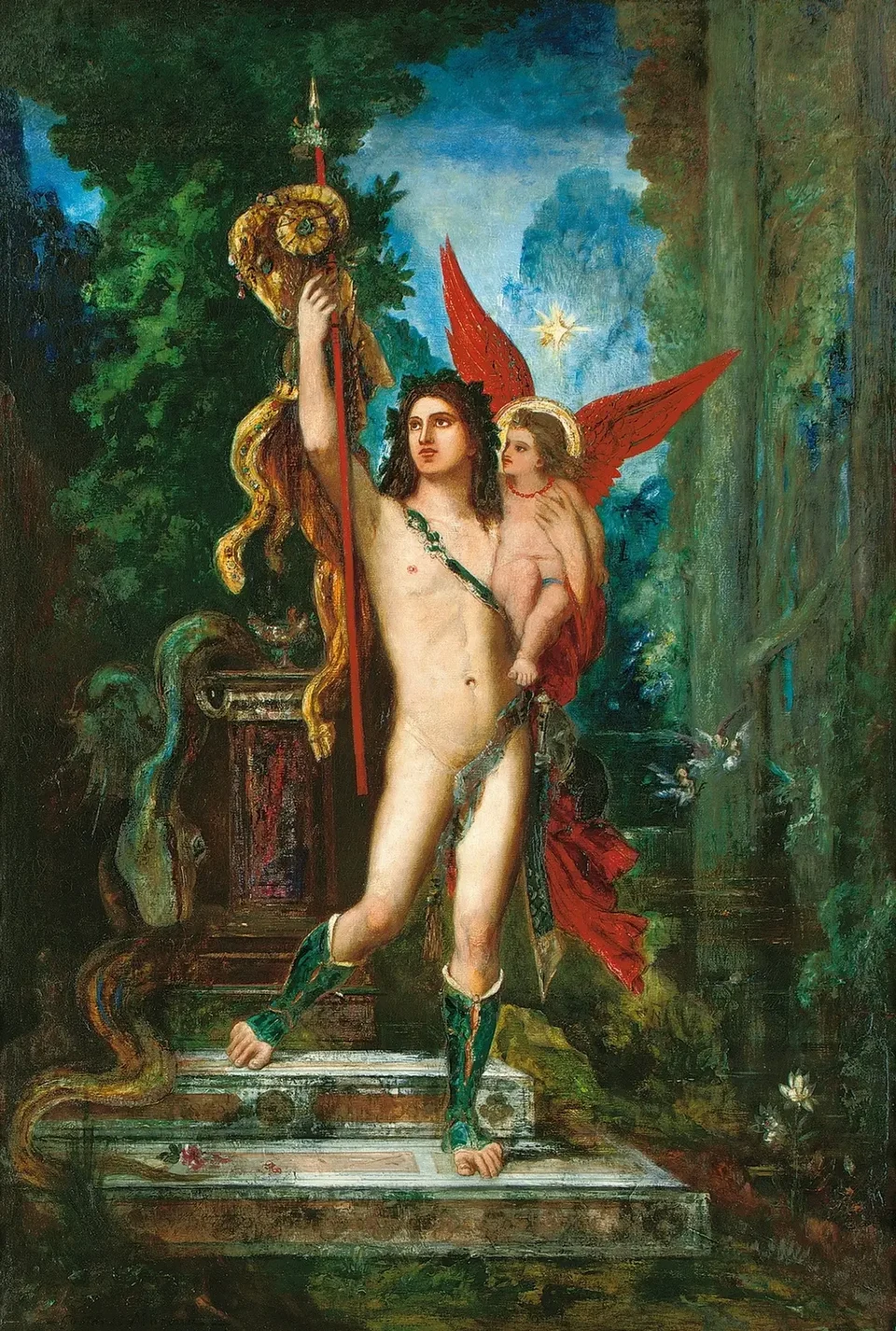
A young hero walks down from the altar where the dragon lies dead, and beside him is not Medea but Eros. Gustave Moreau finished few of his late Jason pictures, but this one he completed.
The story behind the painting
Twenty years after painting Jason and Medea, Moreau returned again and again to the winner of the Golden Fleece between 1885 and 1897, almost always on canvases he never finished. Jason and Eros, oil on canvas, painted between 1890 and 1891, is the exception. It was commissioned by the collector Antoni Roux. Placed side by side, the two Jason pictures show how Moreau's style changed over a quarter of a century: the soft line and colour of 1865 recall Ingres and the English Pre-Raphaelites, while the later canvas shows his Symbolist side in full.
What to look for
Jason descends the steps of the altar where he has left the body of the guardian dragon and moves towards us. That forward step strengthens the feeling of victory already given by his classic triumphant pose, a device Moreau had used for Hercules entering the women's quarters in The Daughters of Thespius. At his side stands Eros. To the right, tiny harpies flutter next to the central pair. The elaborate frame is the original one, made by Marchand, a craftsman who regularly supplied both Moreau and Roux.
Meaning and intent
The Medea of 1865 has disappeared and been replaced by Eros, a symbolic figure for what the sorceress was meant to stand for: love. Without the ambiguous Medea, the threat of future dangers hinted at in the earlier canvas fades. Yet Moreau does not let the triumph stand unchallenged. The small harpies near the couple still suggest the idea of death always lying in wait, even at the moment of victory.
Legacy
Roux later sold the work to the dealer Georges Petit, around 1900. In 1906 it hung in the large retrospective organised by Elisabeth, Countess Greffulhe, at Petit's gallery, and then it was considered lost for decades. It reappeared in 1992 in the exhibition Gustave Moreau, in praise of the poet, in Spoleto, and was shown again in Italy in 1996 in Gustave Moreau and Italy at the Villa Medici in Rome. It was auctioned at Christie's on 14 June 2006 and is now in a private collection.
¿Sabías que…?
- Painted in 1890 to 1891, oil on canvas.
- Commissioned by the collector Antoni Roux.
- Considered lost for decades after 1906, it reappeared in 1992.
- The original frame was made by Marchand.
Sobre el artista
Gustave Moreau (1826-1898)
Más obras de Gustave Moreau
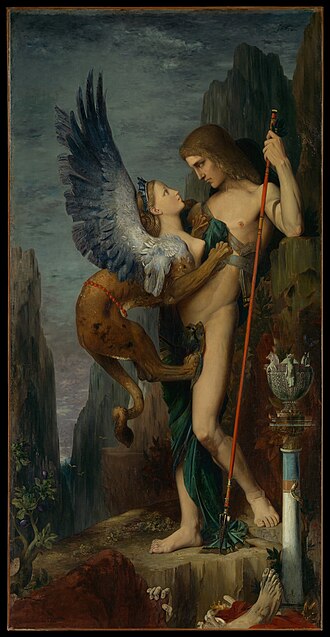 Edipo y la esfinge - Gustave Moreau (1864)
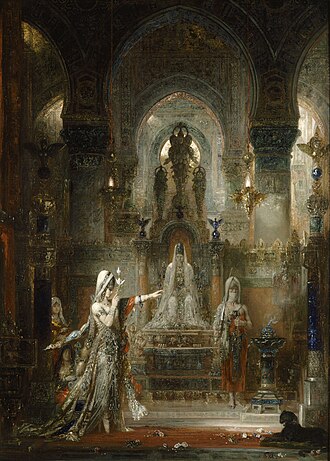 Salomé bailando ante Herodes - Gustave Moreau (1876)
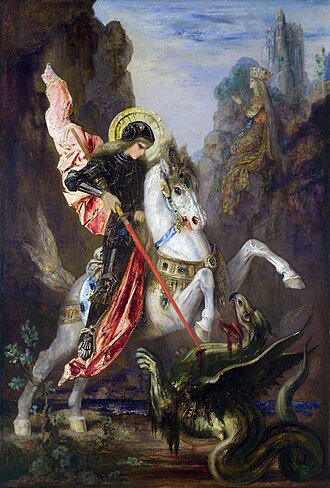 San Jorge - Gustave Moreau (1880s)
 Flor Mística - Gustave Moreau (1890)
 La Parca y el Ángel de la Muerte - Gustave Moreau (1890)
 Athenians being Delivered to the Minotaur in the Cretan Labyrinth - Gustave Moreau (1855)
 Diomedes devorado por sus caballos - Gustave Moreau (1865)
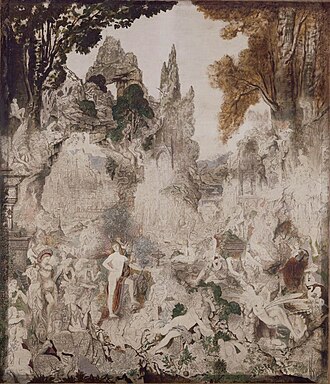 Les Chimères - Gustave Moreau (1884)
Obras de artistas relacionados
 Pollice verso - Jean-Léon Gérôme (1872)
 El mercado de esclavos - Jean-Léon Gérôme (1866)
 Almuerzo sobre la hierba - Édouard Manet (1863)
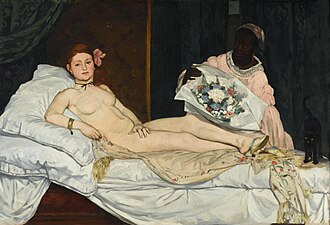 Olympia - Édouard Manet (1863)
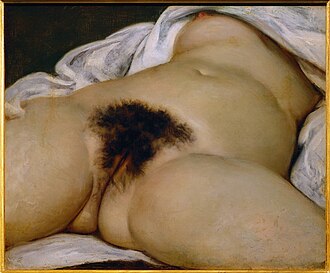 El origen del mundo - Gustave Courbet (1866)
 Entierro en Ornans - Gustave Courbet (2020)
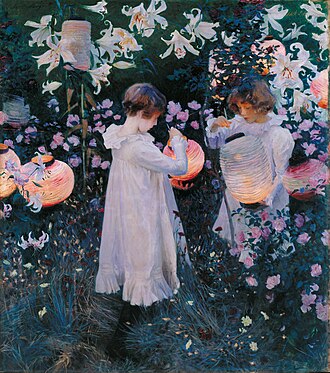 Clavel, lirio, lirio, rosa - John Singer Sargent (1885-1886)
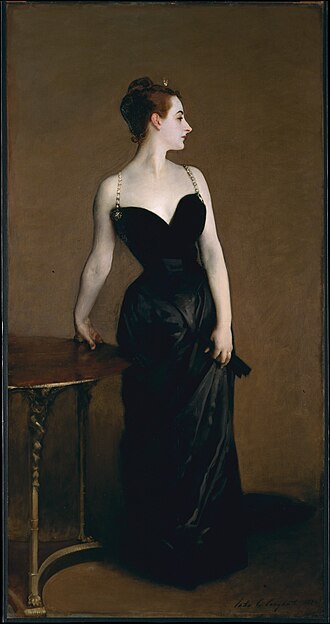 Retrato de Madame X - John Singer Sargent (1884)
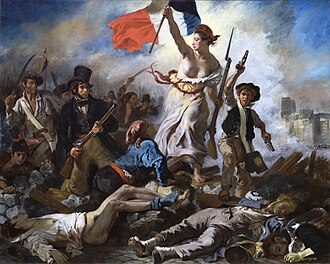 La Libertad guiando al pueblo - Eugène Delacroix (1830)
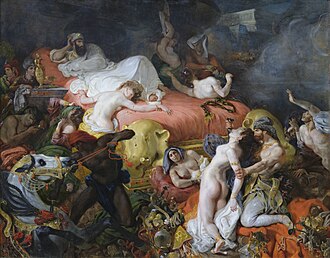 La muerte de Sardanápalo - Eugène Delacroix (1827)
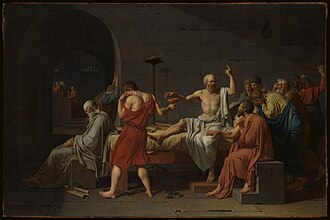 La muerte de Sócrates - Jacques-Louis David (1787)
 Juramento de los Horacios - Jacques-Louis David (1784)