El origen del mundo
Gustave Courbet · 1866
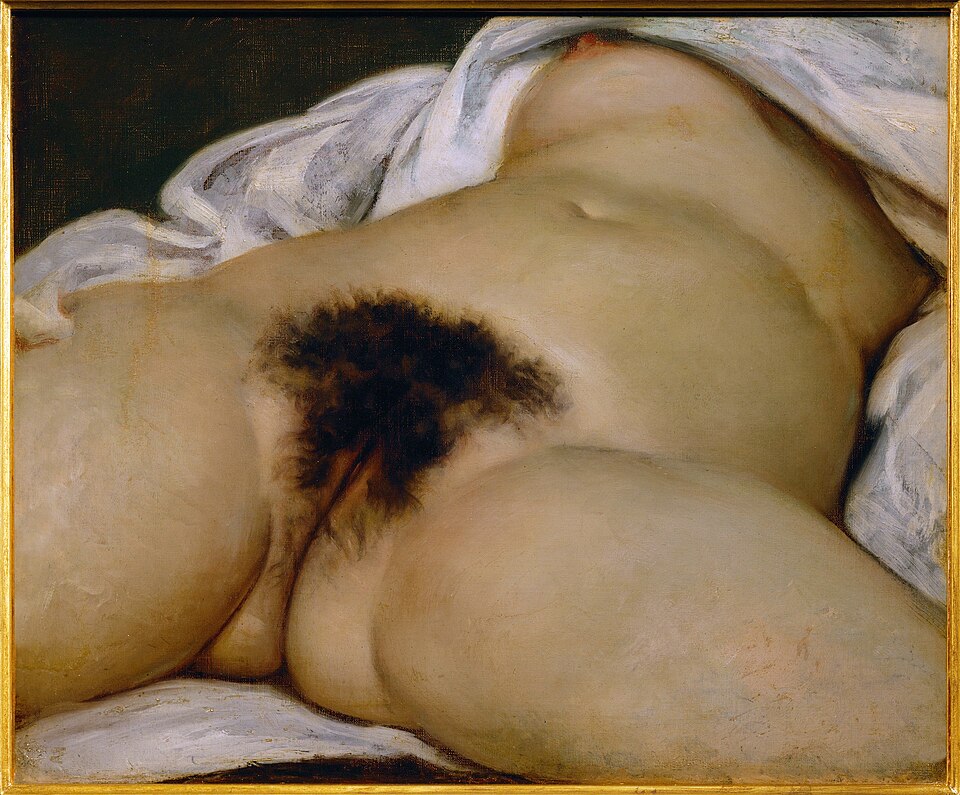
In 1866 Gustave Courbet painted a small canvas so frank that for more than a century it was kept hidden behind other pictures, before it finally took its place in a public museum.
The story behind the painting
Courbet painted L'Origine du monde in oil on canvas in 1866. It is believed to have been commissioned by Halil Şerif Pasha, known as Khalil Bey, an Ottoman diplomat newly arrived in Paris, for his private collection of erotic pictures, which already held Ingres's Turkish Bath and Courbet's own Le Sommeil. The model's identity is uncertain. Historians long proposed Joanna Hiffernan, Courbet's favourite model, but documents in letters between Alexandre Dumas fils and George Sand point to Constance Quéniaux, a former Paris Opera dancer; Marie-Anne Detourbay has also been suggested. A 2013 claim that a painted head belonged to the same canvas was rejected by the Musée d'Orsay, which says the work was never part of a larger picture.
What to look for
The painting, 46 by 55 cm according to Wikidata, is a close-up view of the abdomen and genitals of a naked woman lying on a bed with her legs apart. The frame cuts the body sharply: there is no face, no story and no mythological disguise, only skin, a bed sheet and dark hair rendered with Courbet's direct realism. The closeness of the view and the cropping are what make the image so startling. Some critics have even read the pale skin and surrounding cloth as suggesting a corpse rather than a living figure, a reminder that the image has never had a single reading.
Meaning and intent
In the nineteenth century Courbet and Manet led a revolution in how the nude was shown. Courbet rejected the smooth, idealised nudes of academic painting and attacked the hypocrisy of a society that accepted eroticism when it was dressed as myth or dream. He insisted he never lied in his paintings, and here his realism went further than Manet's Olympia. The writer Maxime Du Camp, after seeing the work at its owner's home, called it realism's last word. The title, The Origin of the World, turns what could be a private image into a statement about life itself.
Legacy
For decades the painting lived in hiding. Edmond de Goncourt found it in 1889 behind a panel painted with a snowy landscape. Baron Ferenc Hatvany took it to Budapest; looted by Soviet troops near the end of the Second World War, it was ransomed by him and taken to Paris in 1947. The psychoanalyst Jacques Lacan then kept it at his country house in a double frame that hid it behind another picture painted by André Masson. After Lacan's death it passed to the Musée d'Orsay, finalised in 1995. It still provokes debate, and is linked to later works by artists such as Marcel Duchamp, Orlan and Anish Kapoor.
¿Sabías que…?
- Oil on canvas, 1866; 46 × 55 cm (Wikidata).
- Believed commissioned by the Ottoman diplomat Khalil Bey.
- Owned by Jacques Lacan before entering the Musée d'Orsay in 1995.
- The model's identity remains debated.
Sobre el artista
Gustave Courbet (1819-1877)
Museo de Orsay · desnudo · desnudo · alegoría · cama · mama · sábana
Más obras de Gustave Courbet
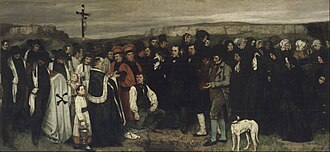 Entierro en Ornans - Gustave Courbet (2020)
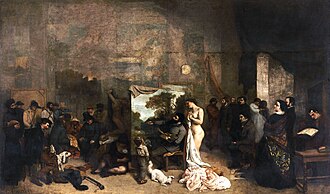 El taller del pintor - Gustave Courbet (1855)
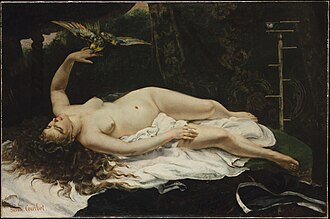 Mujer con loro - Gustave Courbet (1866)
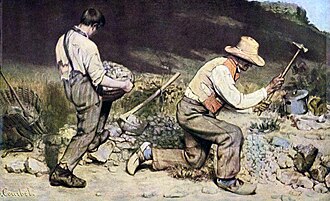 Los rompe piedras - Gustave Courbet (1850)
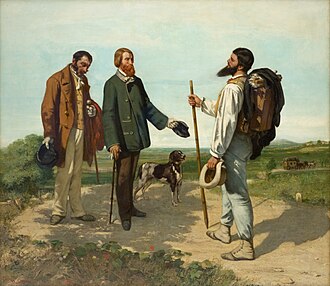 El encuentro - Gustave Courbet (1854)
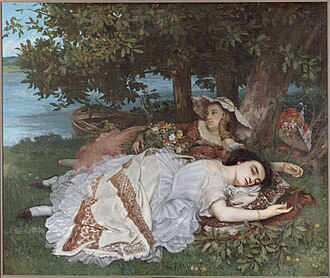 Cortesanas al borde del Sena - Gustave Courbet (1857)
.jpg) La fuente - Gustave Courbet (1862)
La fuente - Gustave Courbet (1862)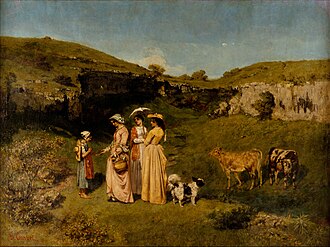 Señoritas del pueblo - Gustave Courbet (1850s)
Obras de artistas relacionados
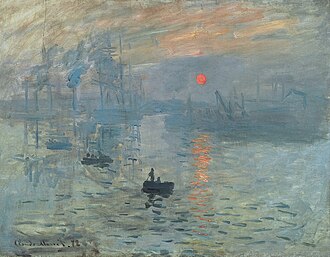 Impresión, sol naciente - Claude Monet (1872)
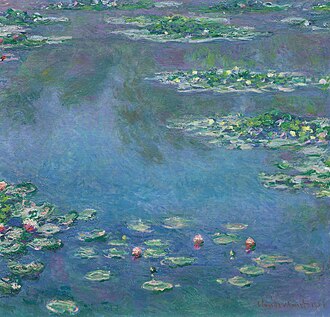 Nenúfares - Claude Monet (1906)
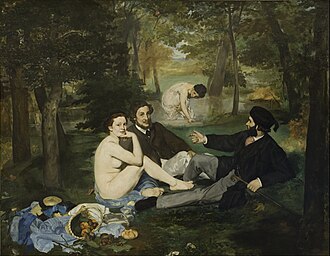 Almuerzo sobre la hierba - Édouard Manet (1863)
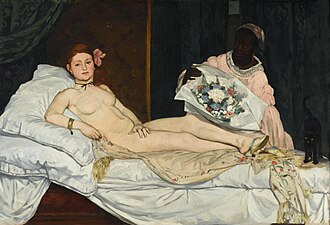 Olympia - Édouard Manet (1863)
 La noche estrellada - Vincent van Gogh (1889)
.jpg) Terraza de café por la noche - Vincent van Gogh (1888)
Terraza de café por la noche - Vincent van Gogh (1888)