El cacharrero
Francisco Goya · 1779
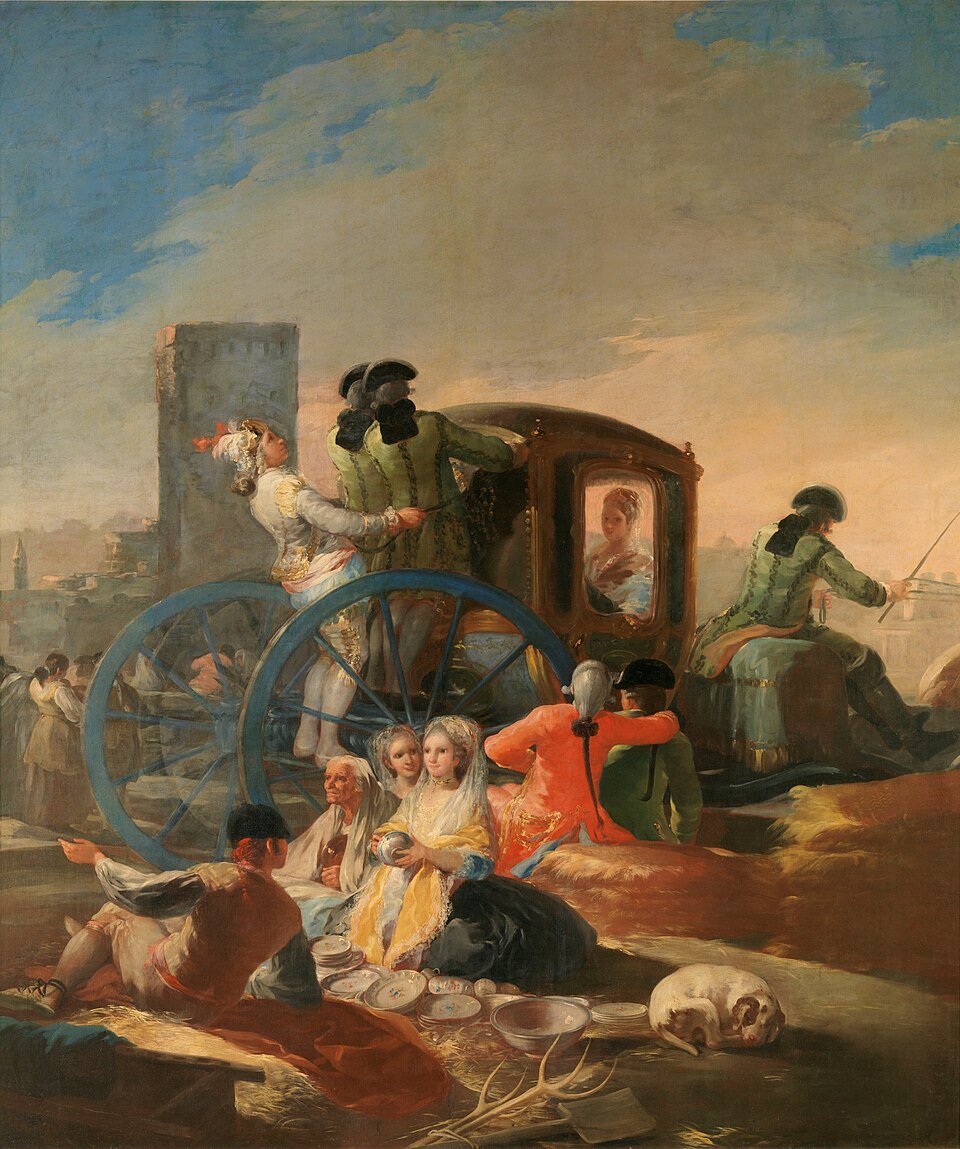
Women bend over plates and jugs spread on the ground while a carriage pulls away behind them, its lady a blur behind the glass. Goya painted this street scene in 1779 as a design for a royal tapestry.
The story behind the painting
The Crockery Vendor is a tapestry cartoon Goya made in 1779 for the third series destined for the bedroom of the Prince of Asturias, the future Charles IV, and his wife Maria Luisa of Parma, at the Pardo Palace. It was delivered to the Royal Tapestry Factory on 6 January 1779. Two tapestries were woven from it, one for the Pardo and one for the Escorial. The series also included The Fair of Madrid, The Soldier and the Lady, The Haw Seller and The Game of Pelota.
What to look for
In the foreground sits a man Goya himself described as a Valencian selling crockery, half in shadow, while two young women and an old woman inspect his wares in the light. The old woman with a frying pan, and the still life of ceramics, recall Velazquez's Christ in the House of Martha and Mary, a painter Goya admired. Behind, a carriage sets off with a lady seen blurred through the glass door, watched by two seated figures. Look for the first position of the rear wheel, still visible beside the one Goya finally painted.
Meaning and intent
Here appear constants of Goya's later style: people of high rank in the carriage beside humble street sellers, in a scene of everyday life in the light of the setting sun. The brushwork is loose, with touches of light laid on with a palette knife. The movement of the carriage is well caught, notably in the footman leaning back from the jolt of departure. The colour harmony of coppery golds, greys and sky blue is remarkable, and the faience, porcelain, metal and fabrics are rendered with a fine sense of touch.
Legacy
The cartoon was considered lost until 1869, when Gregorio Cruzada Villaamil found the canvas in the basement of the Royal Palace of Madrid. It was handed to the Prado in 1870 by orders of 19 January and 9 February, and first appears in the museum's catalogue in 1876. The French Wikipedia article places it in room 92. At 259 by 220 cm, a working design for a weaver has become one of the museum's lively windows onto the streets of eighteenth century Madrid.
¿Sabías que…?
- Tapestry cartoon painted in 1779.
- Made for the Prince of Asturias's bedroom at the Pardo Palace.
- Rediscovered in 1869 in the basement of the Royal Palace.
- In the Museo del Prado since 1870.
Sobre el artista
Francisco Goya (1746-1828)
Más obras de Francisco Goya
 El tres de mayo de 1808 - Francisco Goya (1814)
.jpg) La Maja desnuda - Francisco Goya (1800)
La Maja desnuda - Francisco Goya (1800).jpg) Saturno devorando a su hijo - Francisco Goya (1819)
Saturno devorando a su hijo - Francisco Goya (1819) La familia de Carlos IV - Francisco Goya (1800)
 La maja vestida - Francisco Goya (1800)
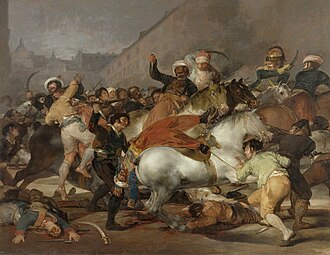 El dos de mayo de 1808 en Madrid - Francisco Goya (1814)
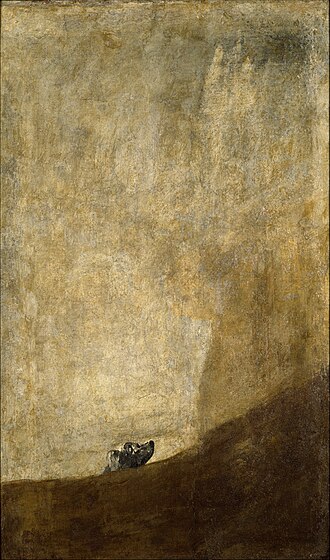 Perro semihundido - Francisco Goya (1819)
 El aquelarre - Francisco Goya (1820s)
Obras de artistas relacionados
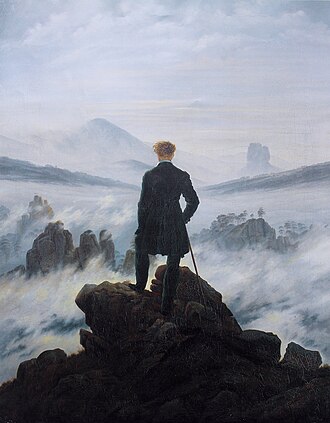 El caminante sobre el mar de nubes - Caspar David Friedrich (c. 1818)
 Abadía en el robledal - Caspar David Friedrich (1800s)
 El Temerario remolcado - J. M. W. Turner (1839)
 Lluvia, vapor y velocidad. El gran ferrocarril del Oeste - J. M. W. Turner (1844)
 La Libertad guiando al pueblo - Eugène Delacroix (1830)
 La muerte de Sardanápalo - Eugène Delacroix (1827)