Perro semihundido
Francisco Goya · 1819
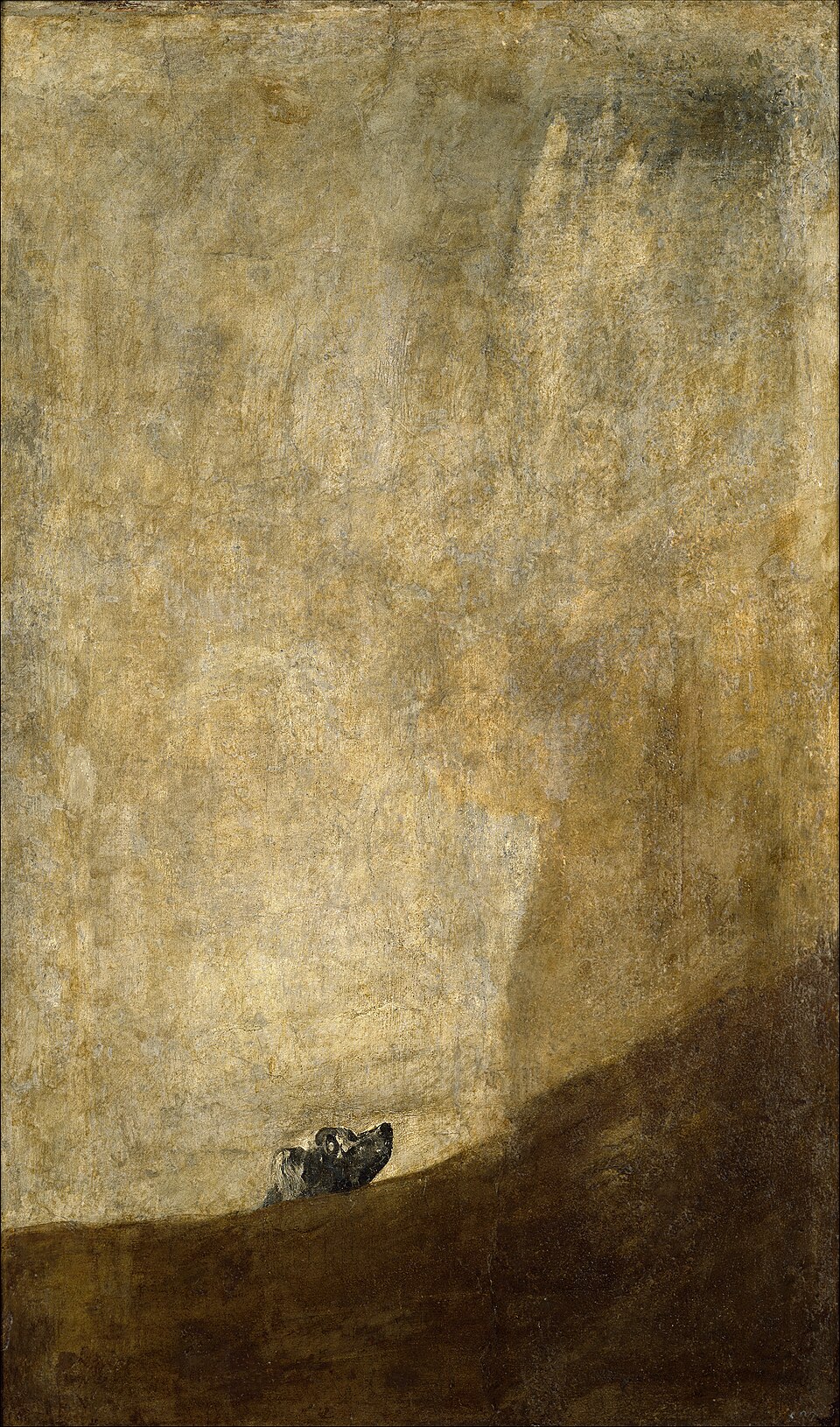
A small dog's head peers upward over a dark slope, almost swallowed by an immense, empty ochre sky. Nothing else is there, and yet painters have called it the most beautiful picture in the world.
The story behind the painting
In 1819 Francisco Goya bought a small two-storey house near Madrid, on the banks of the Manzanares, called the Quinta del Sordo, the Villa of the Deaf Man. It was named after an earlier occupant, but Goya himself was functionally deaf after an illness in 1792. Now in his seventies, having survived two life-threatening illnesses, and embittered by the conflicts that had engulfed Spain, he painted fourteen works in oil directly onto the walls between 1819 and 1823. He first decorated the rooms with more inspiring images, then overpainted them all with the haunting scenes now called the Black Paintings. The Dog was among them, on the second floor. Uncommissioned, these works were never meant for public view, and Goya never revealed any titles.
What to look for
The picture is divided into two unequal parts. Most of it is an upper, dirty ochre sky. Below, a smaller dark brown slope curves upward to the right, fading into black. Over its edge appears the dog's head: snout lifted, ears pulled back, eyes looking up and toward the right. The rest of the animal is hidden by the unidentifiable mass. Look also for a faint dark shape looming above the dog. It is sometimes taken as damage or as intentional, but is generally seen as a trace of the earlier painting Goya covered. The Prado's label describes the dog as being in distress, apparently drowning.
Meaning and intent
No one knows exactly what Goya intended, and the image has inspired many readings. It is often seen as a symbol of the futile struggle against malevolent forces: the black mass becomes quicksand or earth in which the dog is buried, and having failed to free itself, it can only look skyward for help that will never come. The vast sky deepens its isolation. Others see a dog cautiously lifting its head, afraid of something beyond the frame, or an image of abandonment and loneliness. Its many names, The Half-Drowned Dog, The Buried Dog, Perro semihundido, record these guesses. As the critic Robert Hughes put it, its pathos moves us on a level below narrative.
Legacy
When Goya went into exile in France in 1823, the house passed to his grandson Mariano. In 1874 it came to the French banker Baron Émile d'Erlanger, who had the deteriorating murals transferred to canvas under Salvador Martínez Cubells, curator at the Prado. After showing them at the 1878 Exposition Universelle in Paris, he donated them to the Spanish state. The Dog now hangs in the Museo del Prado. Antonio Saura called it the world's most beautiful picture; Rafael Canogar named it the first Symbolist painting of the West. Joan Miró asked to see it, with Las Meninas, on his last Prado visit, and Pierre Bonnard echoed its dog in 1910.
¿Sabías que…?
- One of Goya's 14 Black Paintings, made on the walls of the Quinta del Sordo, 1819-1823.
- Transferred to canvas after 1874 and later donated to the Spanish state.
- Now in the Museo del Prado, Madrid; 131 × 79 cm.
- Goya gave it no known title; names were assigned after his death.
Sobre el artista
Francisco Goya (1746-1828)
pintura del paisaje · Museo del Prado · cielo · perro · animalística
Más obras de Francisco Goya
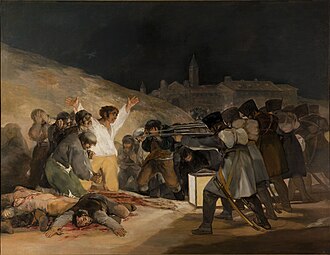 El tres de mayo de 1808 - Francisco Goya (1814)
.jpg) La Maja desnuda - Francisco Goya (1800)
La Maja desnuda - Francisco Goya (1800).jpg) Saturno devorando a su hijo - Francisco Goya (1819)
Saturno devorando a su hijo - Francisco Goya (1819)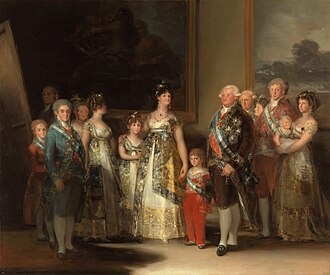 La familia de Carlos IV - Francisco Goya (1800)
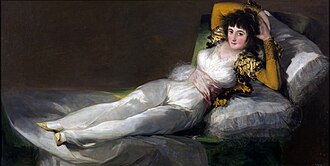 La maja vestida - Francisco Goya (1800)
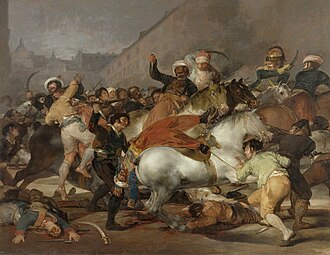 El dos de mayo de 1808 en Madrid - Francisco Goya (1814)
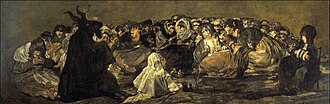 El aquelarre - Francisco Goya (1820s)
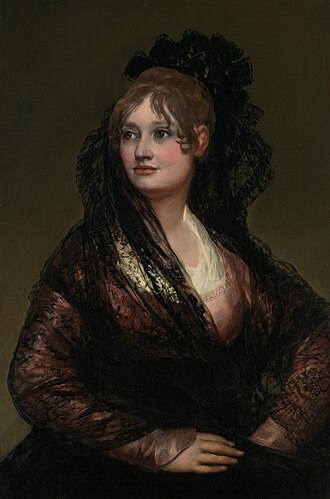 Retrato de Isabel Porcelana - Francisco Goya (1800s)