La era
Francisco Goya · 1787
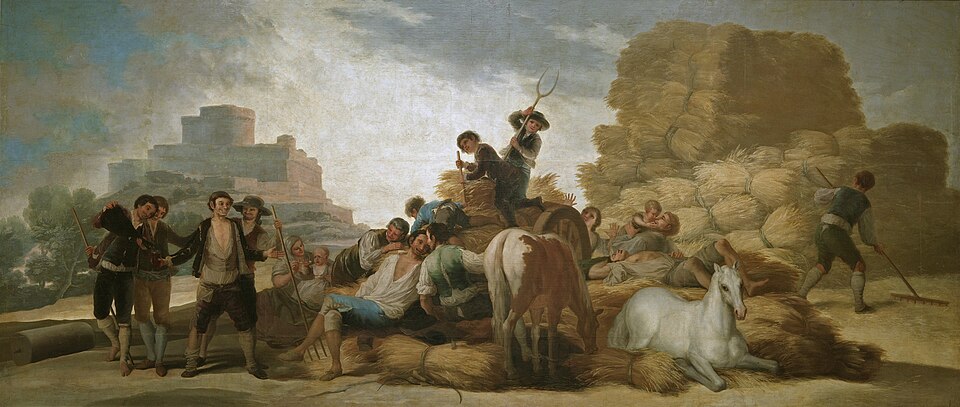
Harvesters rest on a mountain of fresh wheat sheaves in the midday heat, some dozing, some laughing. It is the largest cartoon Goya ever painted for a royal tapestry, and it lay forgotten in a palace basement for decades.
The story behind the painting
Summer, also called The Threshing Floor, was painted between 1786 and 1787 as a design for Spain's Royal Tapestry Factory. Goya, asked by the painter Anton Raphael Mengs to work on such preparatory paintings, made sixty-three large cartoons on commission for Charles III. Twelve form the fifth series, devoted to traditional themes and intended for the dining room of the Prince and Princess of Asturias, the future Charles IV and Maria Luisa of Parma, at the Pardo Palace. Summer is the largest of them all. Wikipedia says it was painted in the autumn of 1786, while Wikidata gives 1787.
What to look for
Goya avoided the usual emblem of summer, the goddess Ceres crowned with wheat, and painted a working scene instead. Harvesters take a break from the heat beside or on top of a pile of newly harvested sheaves, some men lying down as if for a siesta. On the right, others carry on their hard work. On the left, a group of peasants try to get another man drunk; his clothes and posture suggest Goya meant him as the village idiot. Take in the scale: Wikidata gives about 277 by 642 cm, a whole wall of rural life.
Meaning and intent
The scene was meant to hang as a woven tapestry in a royal dining room, a festive image of the countryside at its richest moment. Many scholars see Goya's early work as light and idyllic, full of happiness and tranquillity. Others argue that hints of darker themes are already present in these early pieces, and that his Four Seasons in the fifth series carry critical and satirical notes. Here the humour of the prank and the exhaustion of the workers sit side by side with the golden abundance of the harvest.
Legacy
The painting was considered lost until 1869, when Gregorio Cruzada Villaamil found the canvas in the basement of the Royal Palace of Madrid. By orders of January and February 1870 it went to the Museo del Prado, which first mentioned it in its catalogue in 1876. It still hangs there. A smaller sketch for the work, known as The Threshing Floor, is in the Lázaro Galdiano Museum in Madrid. Goya's cartoons have often been overlooked in scholarship, but this one, with its sleeping, working and laughing figures, is the grandest of his fifth series.
¿Sabías que…?
- Painted 1786 to 1787 for the Royal Tapestry Factory.
- The largest of Goya's tapestry cartoons.
- Lost until 1869, found in the Royal Palace basement.
- In the Museo del Prado since 1870.
Sobre el artista
Francisco Goya (1746-1828)
varón · Museo del Prado · caballo · carreta
Más obras de Francisco Goya
 El tres de mayo de 1808 - Francisco Goya (1814)
.jpg) La Maja desnuda - Francisco Goya (1800)
La Maja desnuda - Francisco Goya (1800).jpg) Saturno devorando a su hijo - Francisco Goya (1819)
Saturno devorando a su hijo - Francisco Goya (1819) La familia de Carlos IV - Francisco Goya (1800)
 La maja vestida - Francisco Goya (1800)
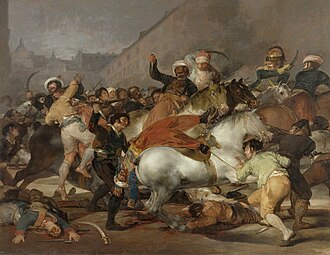 El dos de mayo de 1808 en Madrid - Francisco Goya (1814)
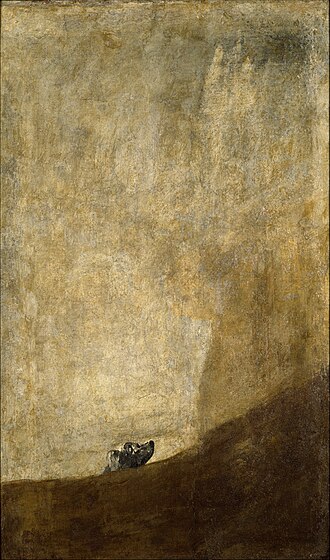 Perro semihundido - Francisco Goya (1819)
 El aquelarre - Francisco Goya (1820s)
Obras de artistas relacionados
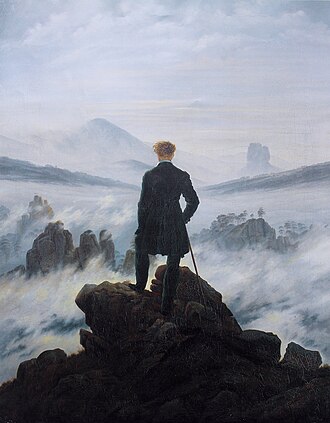 El caminante sobre el mar de nubes - Caspar David Friedrich (c. 1818)
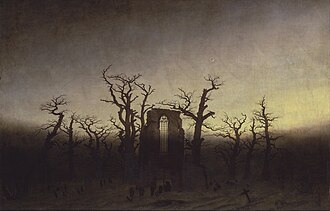 Abadía en el robledal - Caspar David Friedrich (1800s)
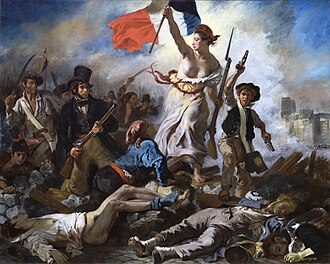 La Libertad guiando al pueblo - Eugène Delacroix (1830)
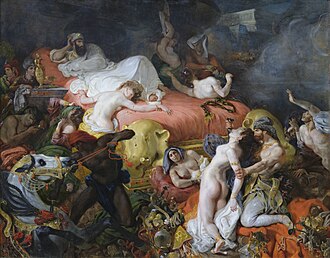 La muerte de Sardanápalo - Eugène Delacroix (1827)
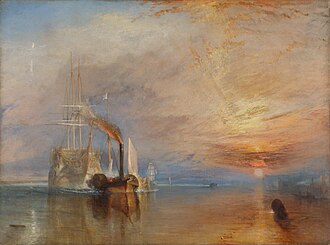 El Temerario remolcado - J. M. W. Turner (1839)
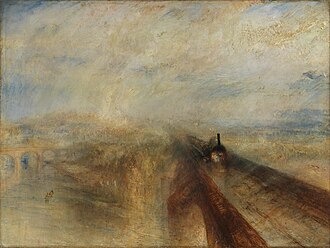 Lluvia, vapor y velocidad. El gran ferrocarril del Oeste - J. M. W. Turner (1844)
.jpg) El joven azul - Thomas Gainsborough (1770)
El joven azul - Thomas Gainsborough (1770).jpg) El Señor y la Señora Andrews - Thomas Gainsborough (1748)
El Señor y la Señora Andrews - Thomas Gainsborough (1748)