Paisaje con la huida a Egipto
Pieter Bruegel the Elder · 1563
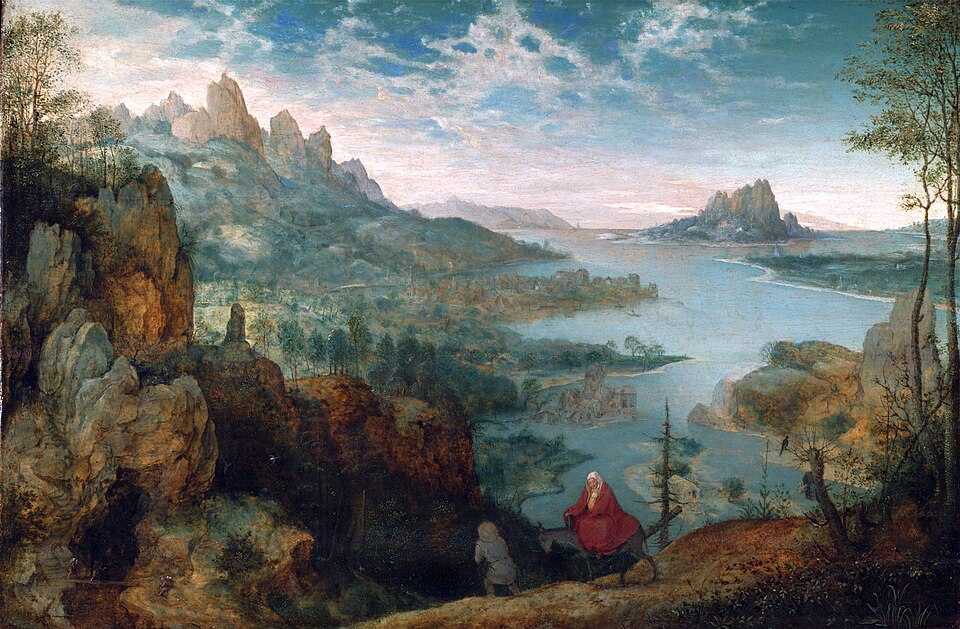
A tiny family picks its way down a mountain slope above a vast river valley. Mary rides a donkey in a red cloak, Joseph leads. Look closely and a pagan idol is tumbling from its shrine as they pass.
The story behind the painting
Bruegel painted this small oil on panel in 1563 and signed it BRVEGEL MDLXIII. It shows the Flight into Egypt, when Mary and Joseph fled with the infant Jesus. The subject had long been popular in Netherlandish art, and more so after Joachim Patinir created the world landscape: a wide imaginary panorama seen from above, with mountains, lowlands, water and towns, in which the holy figures are small. Bruegel follows that tradition, but makes the world itself the main event, and asks us to find the family within it.
What to look for
The panel is only about 37 by 56 cm. Joseph leads a donkey carrying Mary, who holds the baby wrapped tight for the journey; his white head shows on her chest. They descend a slope above an Alpine valley with a broad river. Mary wears an unusual red cloak instead of her traditional blue, so she stands out against the blue river, while Joseph's greyish clothes blend into green and brown hills. Towns appear faintly on both banks. Near the bottom edge, look for two tiny salamanders, symbols of evil.
Meaning and intent
Bruegel fills the margins with meaning. On the tree stump at the right, a pagan statue has fallen out of its shrine as the family passes, a miracle added to the brief Bible story by medieval legend and a sign of Christ's triumph over paganism. A branch fallen against a tree forms a cross, foretelling the crucifixion. The danger of the journey is never shown directly; instead, the family is small and exposed in an enormous, beautiful world, and the signs of what is to come are hidden in plain sight.
Legacy
The painting belonged to Bruegel's patron Cardinal Antoine Perrenot de Granvelle, a leading administrator in the Habsburg Netherlands; it is listed in a 1607 inventory and is the only painting that can be certainly identified as his. It later belonged to Peter Paul Rubens, who owned ten or eleven other Bruegels. Little known by 1939, it was auctioned at Christie's in London and bought by Count Antoine Seilern. In 1978 it went with his other Bruegel to the Courtauld Institute in the Princes Gate bequest, and it hangs in the Courtauld Gallery in London.
¿Sabías que…?
- Signed and dated BRVEGEL MDLXIII (1563).
- Owned by Cardinal Granvelle and later by Rubens.
- Bought by Count Antoine Seilern in 1939.
- Held by the Courtauld Gallery, London.
Sobre el artista
Pieter Bruegel the Elder (1525-1569)
arte religioso · mujer · Virgen María · Niño Jesús · niño · Courtauld Gallery
Más obras de Pieter Bruegel the Elder
%20-%20Google%20Art%20Project.jpg) Cazadores en la nieve - Pieter Bruegel the Elder (1565)
Cazadores en la nieve - Pieter Bruegel the Elder (1565)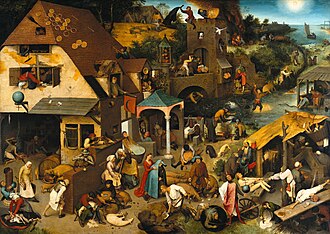 Los proverbios flamencos - Pieter Bruegel the Elder (1551)
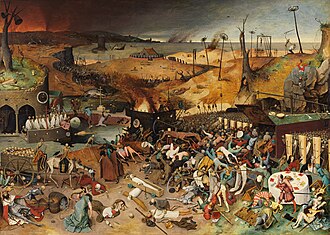 El triunfo de la muerte - Pieter Bruegel the Elder (1560s)
%20-%20Blind%20leading%20the%20blind%20Google%20Art%20Project.jpeg) La parábola de los ciegos - Pieter Bruegel the Elder (1568)
La parábola de los ciegos - Pieter Bruegel the Elder (1568)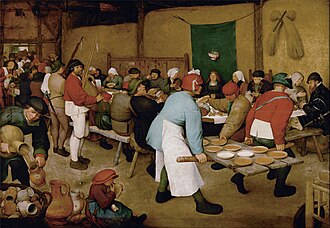 La boda campesina - Pieter Bruegel the Elder (1560s)
 La urraca sobre el cadalso - Pieter Bruegel the Elder (1568)
 La cosecha - Pieter Bruegel the Elder (1565)
 Juego de niños - Pieter Bruegel the Elder (1560)
Obras de artistas relacionados
 El jardín de las delicias - Hieronymus Bosch
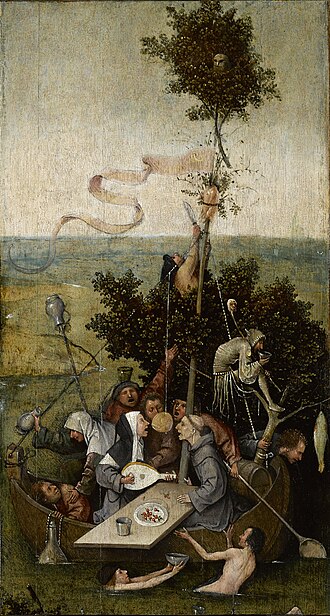 La nave de los locos - Hieronymus Bosch (1500s)
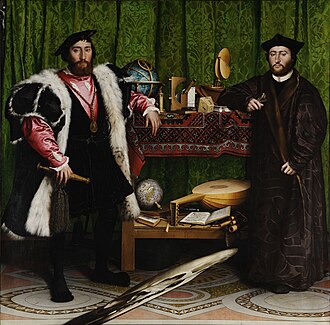 Los embajadores - Hans Holbein the Younger (1533)
 El cuerpo de Cristo en la tumba - Hans Holbein the Younger (1520s)