Judith y Holofernes
Francisco Goya · 1819
.jpg)
In the dark of his own house, an old and disillusioned Goya painted Judith raising her blade by torchlight. No head, no blood, only her lit face and a praying servant in the shadows.
The story behind the painting
This is one of the fourteen Black Paintings that Goya made between 1819 and 1823, when he was in his mid seventies and deeply disillusioned. In mental and physical despair, he painted them in oil directly on the plaster walls of the Quinta del Sordo, the House of the Deaf Man, which he bought in 1819. Judith and Holofernes was probably on the first floor, beside Saturn Devouring His Son. Wikidata dates it 1819, the start of that period. The picture is a personal retelling of the Book of Judith, in which a woman saves Israel from the general Holofernes by seducing and beheading him.
What to look for
The palette is black, ochre and red, laid on with free, broad and energetic strokes. The light is focused and theatrical, as if from a torch at night: it catches Judith's face and outstretched arm, while the old serving woman beside her is left in half darkness, her outline bent in prayer. Notice what is missing. Unlike most versions of this story, Goya shows neither Holofernes nor the blood streaming from his neck. Judith is also the only figure among all the Black Paintings who can be identified with certainty as a historical person.
Meaning and intent
Goya was bitter about the second restoration of King Ferdinand VII, whom he privately despised, and Holofernes may stand for the king. Holofernes' death was often painted as a symbol of tyranny defeated, so the allusion would have been daring for an artist so tied to the crown. But Goya did not expect anyone but himself ever to see these walls, which gave him freedom. He had hidden harsh political views before: his Disasters of War etchings, commenting on the Peninsular War and the Bourbon Restoration, were published only 35 years after his death.
Legacy
The Black Paintings did not stay on the walls. In 1873 to 1874 they were transferred to canvas for Baron Émile d'Erlanger, under the supervision of Salvador Martínez Cubells, a curator at the Museo del Prado. In 1881 d'Erlanger donated all fourteen canvases to the Prado in Madrid, where this Judith now hangs. The canvas measures 148 by 84 cm. What began as a private image on the wall of a deaf, aging painter is now seen by visitors from all over the world.
¿Sabías que…?
- One of Goya's 14 Black Paintings, 1819 to 1823.
- Painted in oil directly on plaster at the Quinta del Sordo.
- Holofernes and his blood are not shown.
- Transferred to canvas in 1873-1874, given to the Prado in 1881.
Sobre el artista
Francisco Goya (1746-1828)
arte religioso · mujer · varón · Museo del Prado · noche · Judit · Holofernes · cuchillo
Más obras de Francisco Goya
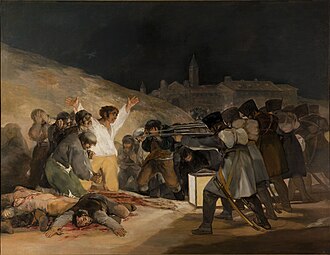 El tres de mayo de 1808 - Francisco Goya (1814)
.jpg) La Maja desnuda - Francisco Goya (1800)
La Maja desnuda - Francisco Goya (1800).jpg) Saturno devorando a su hijo - Francisco Goya (1819)
Saturno devorando a su hijo - Francisco Goya (1819)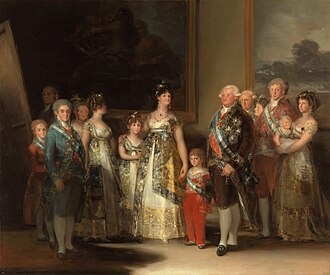 La familia de Carlos IV - Francisco Goya (1800)
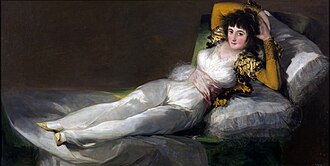 La maja vestida - Francisco Goya (1800)
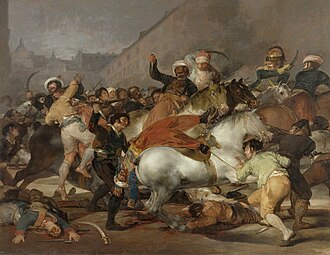 El dos de mayo de 1808 en Madrid - Francisco Goya (1814)
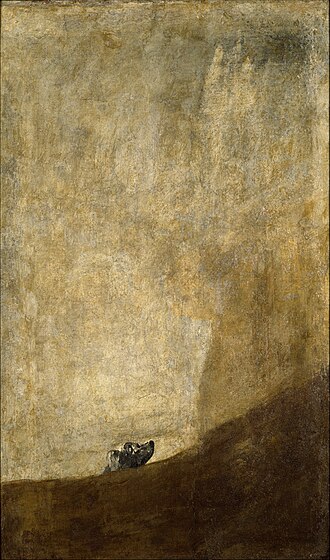 Perro semihundido - Francisco Goya (1819)
 El aquelarre - Francisco Goya (1820s)
Obras de artistas relacionados
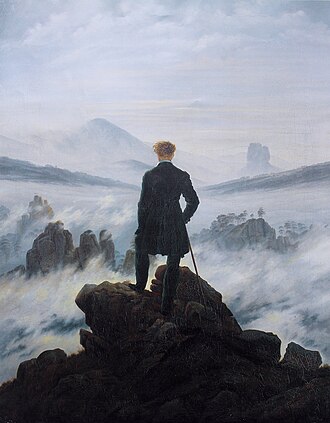 El caminante sobre el mar de nubes - Caspar David Friedrich (c. 1818)
 Abadía en el robledal - Caspar David Friedrich (1800s)
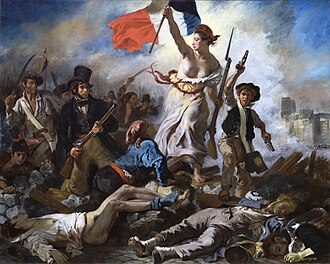 La Libertad guiando al pueblo - Eugène Delacroix (1830)
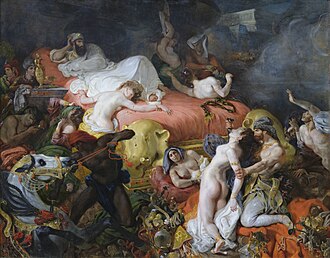 La muerte de Sardanápalo - Eugène Delacroix (1827)
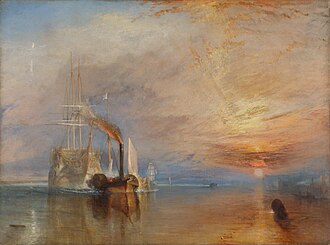 El Temerario remolcado - J. M. W. Turner (1839)
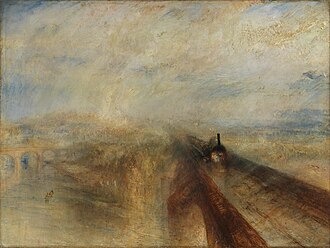 Lluvia, vapor y velocidad. El gran ferrocarril del Oeste - J. M. W. Turner (1844)
.jpg) El joven azul - Thomas Gainsborough (1770)
El joven azul - Thomas Gainsborough (1770).jpg) El Señor y la Señora Andrews - Thomas Gainsborough (1748)
El Señor y la Señora Andrews - Thomas Gainsborough (1748)