Muerte de la Virgen
Pieter Bruegel the Elder · 1564
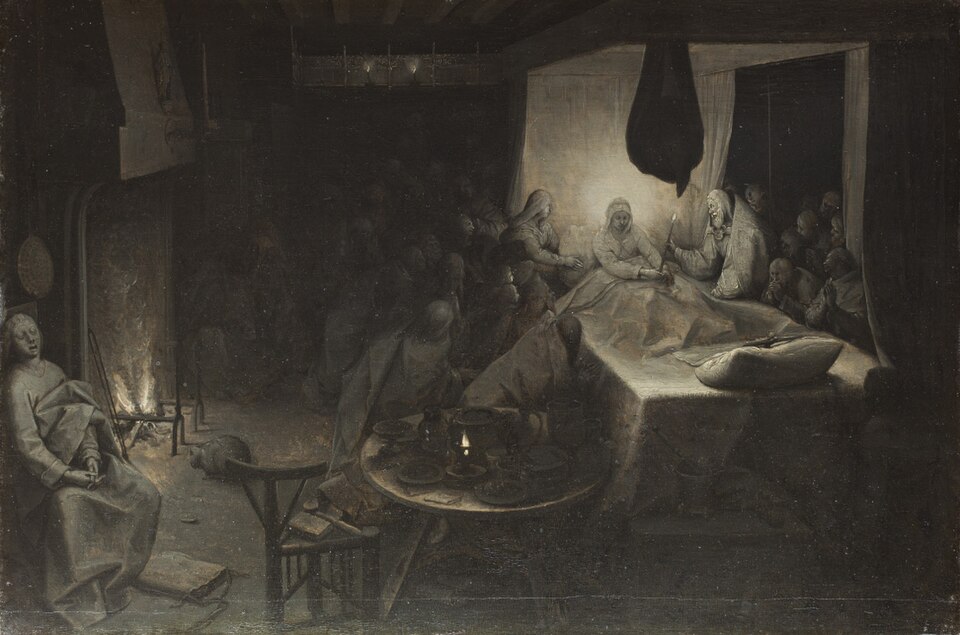
In shades of grey alone, Bruegel filled a dim room with mourners around the dying Mary. A small panel made for a friend, it passed through the hands of Rubens and moved its viewers to speak of piety.
The story behind the painting
The death of the Virgin Mary is told as an apocryphal story in the Golden Legend by Jacobus de Voragine, and it inspired many artists. Bruegel painted his version in 1564 as a grisaille, a painting in shades of grey. It was first owned by Abraham Ortelius, who may have commissioned it. In 1574 Ortelius asked Philips Galle to make engravings of it, wrote an inscription for them, and gave the prints to friends, among them Dirck Volkertszoon Coornhert, who wrote a poem for Bruegel and Galle in thanks. It is a picture made to be shared among friends.
What to look for
This is a small panel, about 36 by 55 cm, so come close. Most depictions of the scene show only the apostles at Mary's bedside, but Bruegel fills the room with other figures as well, which makes his version unusual. Look for a cat and for a woman plumping the pillow. Infrared studies show a light underdrawing made with a brush, and reveal that the cat was first placed a little more to the right, the woman with the pillow too, and that the bed may once have been smaller. Without colour, everything depends on light and shadow.
Meaning and intent
The choice of grey is a choice of intimacy. Without colour, the scene feels like a quiet devotion rather than a display. Scholars have compared the composition with engravings of the same subject by Martin Schongauer and Albrecht Dürer, and Charles de Tolnay saw its source in a miniature by Simon Bening in the Grimani Breviary, painted between 1505 and 1510; Walter S. Gibson also noted the resemblance. In 1590 Benito Arias Montano, who had seen the panel, wrote to Ortelius that it was painted in the most skilful manner and with the greatest piety.
Legacy
After Ortelius died, the panel went to Isabella Brant and then to her husband, Peter Paul Rubens. The inventory made after Rubens's death in 1640 lists it as white and black by Bruegel the Elder. It appears in the inventory of Jean-Baptiste Anthoine in 1691, and in 1930 Lord Lee of Fareham bought it from a London dealer. Pieter Bruegel the Younger made several copies, one in colour. Today it hangs at Upton House, in the care of the National Trust. In 2016 it was reunited with Bruegel's two other surviving grisailles in the exhibition Bruegel in Black and White.
¿Sabías que…?
- A 1564 grisaille, painted only in shades of grey.
- First owned by Abraham Ortelius, later by Peter Paul Rubens.
- One of three surviving grisailles by Bruegel.
- Now at Upton House, in the care of the National Trust.
Sobre el artista
Pieter Bruegel the Elder (1525-1569)
arte religioso · mujer · Virgen María
Más obras de Pieter Bruegel the Elder
%20-%20Google%20Art%20Project.jpg) Cazadores en la nieve - Pieter Bruegel the Elder (1565)
Cazadores en la nieve - Pieter Bruegel the Elder (1565)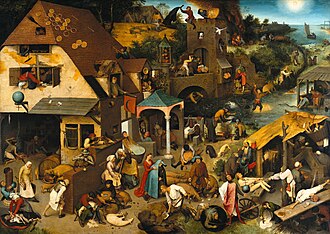 Los proverbios flamencos - Pieter Bruegel the Elder (1551)
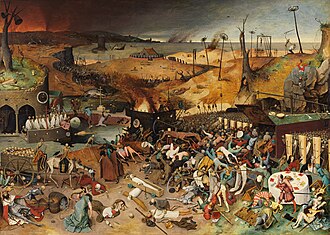 El triunfo de la muerte - Pieter Bruegel the Elder (1560s)
%20-%20Blind%20leading%20the%20blind%20Google%20Art%20Project.jpeg) La parábola de los ciegos - Pieter Bruegel the Elder (1568)
La parábola de los ciegos - Pieter Bruegel the Elder (1568)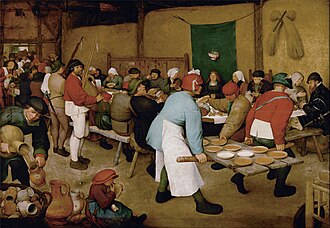 La boda campesina - Pieter Bruegel the Elder (1560s)
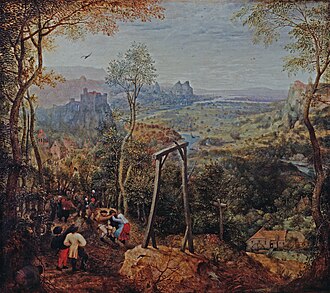 La urraca sobre el cadalso - Pieter Bruegel the Elder (1568)
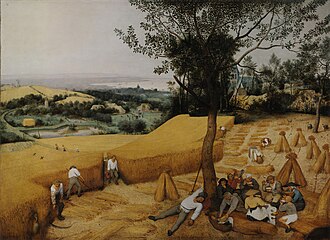 La cosecha - Pieter Bruegel the Elder (1565)
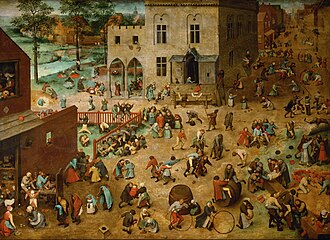 Juego de niños - Pieter Bruegel the Elder (1560)
Obras de artistas relacionados
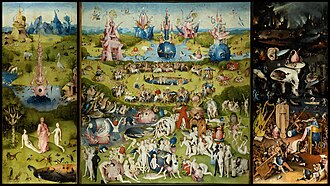 El jardín de las delicias - Hieronymus Bosch
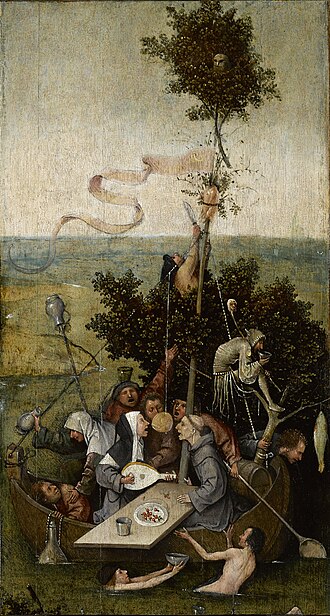 La nave de los locos - Hieronymus Bosch (1500s)
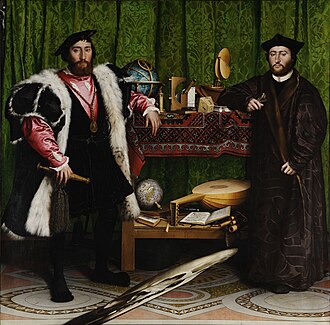 Los embajadores - Hans Holbein the Younger (1533)
 El cuerpo de Cristo en la tumba - Hans Holbein the Younger (1520s)