Díptico: La Crucifixión y el Juicio Final
Jan van Eyck · 1430s
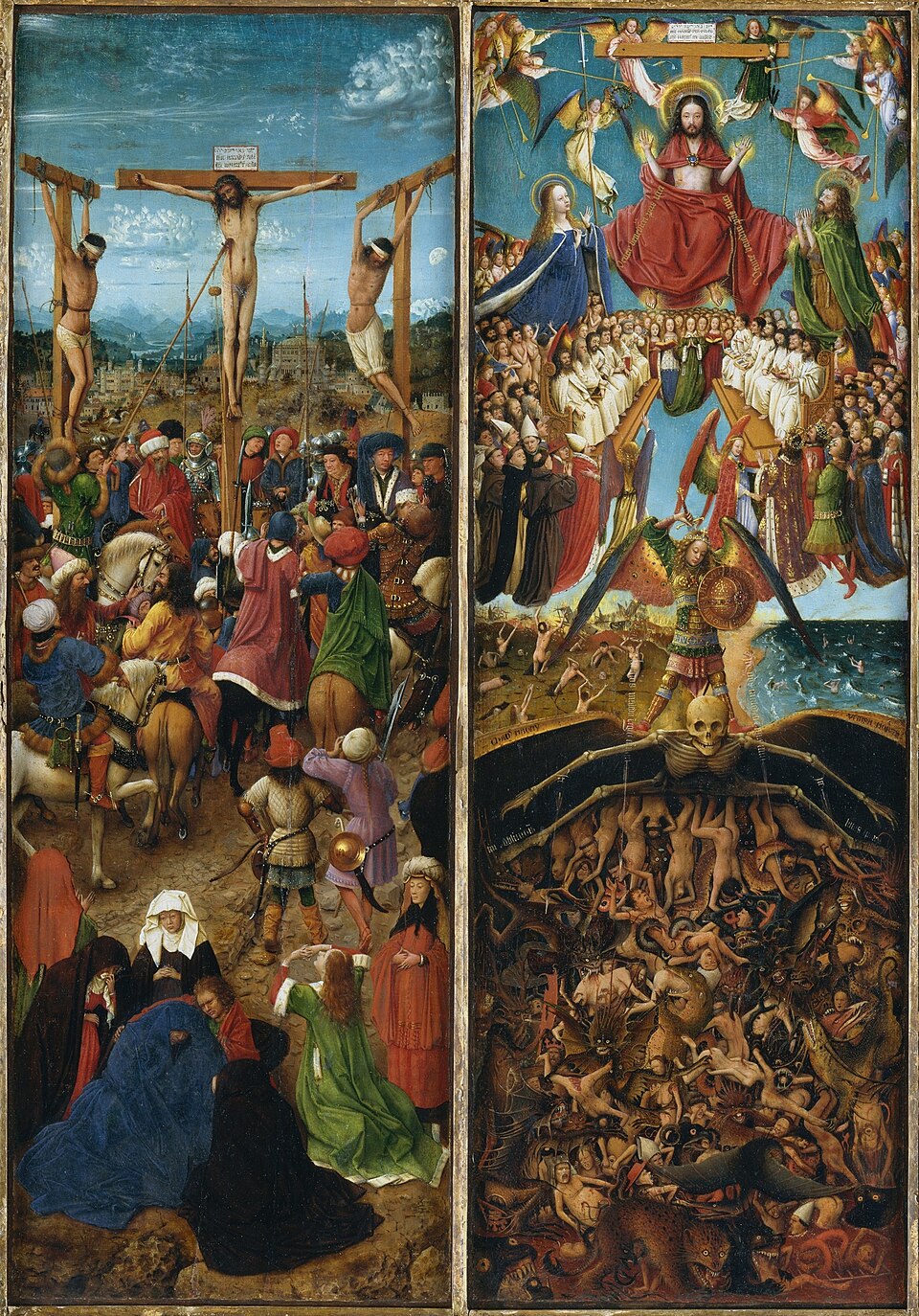
Two narrow panels, barely 57 cm high, hold the whole world: Calvary on one, heaven and hell on the other. And in the sky above the crosses, the first known realistic Moon in painting.
The story behind the painting
The two small panels are attributed to Jan van Eyck, with some areas finished by unidentified followers or workshop members. They were probably made for private devotion. Most scholars, judging by technique and the figures' dress, see them as late works painted in the early 1430s and finished after his death, while others date them to the early 1420s and blame the weaker passages on a younger painter's inexperience. When the Metropolitan Museum of Art acquired them in 1933 they were given to his brother Hubert.
What to look for
Each panel is just 56.5 by 19.7 cm. On the left, read from bottom to top: John holds the swooning Virgin wrapped in blue, Mary Magdalene raises her arms with clenched fingers and is the only one of the group looking at Christ, then a packed crowd of soldiers and onlookers, then three crosses high against a foreboding sky with Jerusalem beyond. Find the waning Moon: it is the first known naturalistic Moon, with features such as the Mare Imbrium. On the right, hell at the base, the resurrected in the middle, Christ in Majesty with saints above. Greek, Latin and Hebrew inscriptions appear, and the original gilt frames carry Bible passages.
Meaning and intent
Crucifixions were usually horizontal, so van Eyck had to redesign the scene to fit the tall format of the Judgement, stacking episodes in a continuous slope like a medieval tapestry. The historian Jeffrey Chipps Smith says the episodes appear simultaneous, not sequential. Otto Pächt called it the whole world in one painting. Scholars still disagree whether these were wings of a lost triptych or a true diptych: Panofsky argued for a diptych, and technical examination supports that, but Pächt thinks the evidence is not enough to decide.
Legacy
The earliest surviving mention dates from 1841, when scholars thought the panels were wings of a lost triptych. According to a date written in Russian on the back, they were transferred to canvas in 1867. The Metropolitan Museum of Art bought them in 1933. Along with Robert Campin and Rogier van der Weyden, van Eyck changed Northern European painting, and this diptych is counted among the early oil masterpieces of the Northern Renaissance.
¿Sabías que…?
- Each panel measures 56.5 by 19.7 cm.
- Dated early 1430s by most scholars, early 1420s by others.
- Shows the first known naturalistic depiction of the Moon.
- In the Metropolitan Museum of Art since 1933.
Sobre el artista
Jan van Eyck (1390-1441)
arte religioso · mujer · varón · Virgen María · Jesús de Nazaret · Museo Metropolitano de Arte · Primitivo flamenco · Museo del Hermitage
Más obras de Jan van Eyck
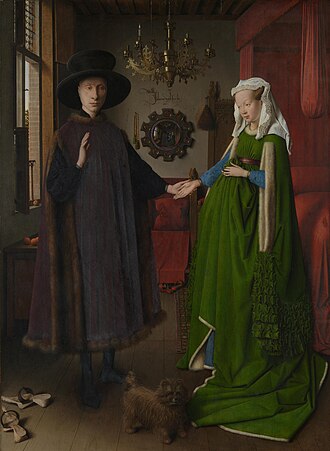 Retrato de Arnolfini y su esposa - Jan van Eyck (1434)
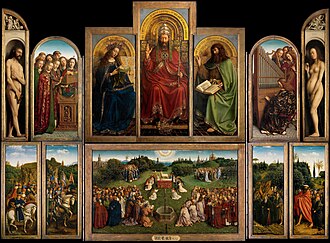 Políptico de Gante - Jan van Eyck (1432)
.webp) Virgen del canciller Rolin - Jan van Eyck
Virgen del canciller Rolin - Jan van Eyck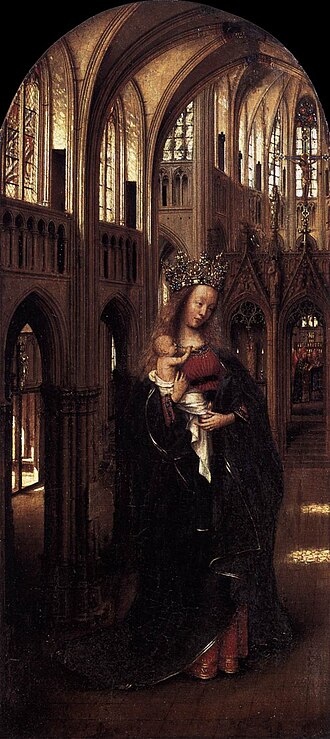 La Virgen en una iglesia - Jan van Eyck (1440)
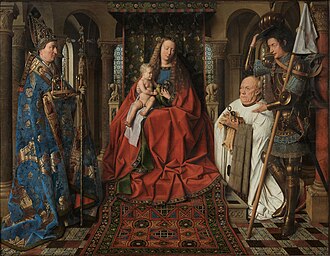 Virgen del canónigo Van der Paele - Jan van Eyck (1436)
.png) Virgen de Lucca - Jan van Eyck (1437)
Virgen de Lucca - Jan van Eyck (1437)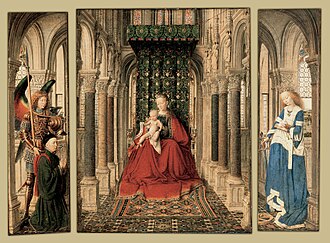 Tríptico de Dresden - Jan van Eyck (1437)
%201433.jpg) Retrato de hombre con turbante - Jan van Eyck (1433)
Retrato de hombre con turbante - Jan van Eyck (1433)
Obras de artistas relacionados
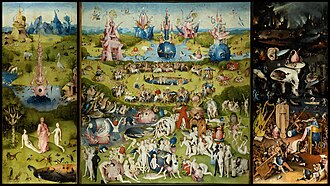 El jardín de las delicias - Hieronymus Bosch
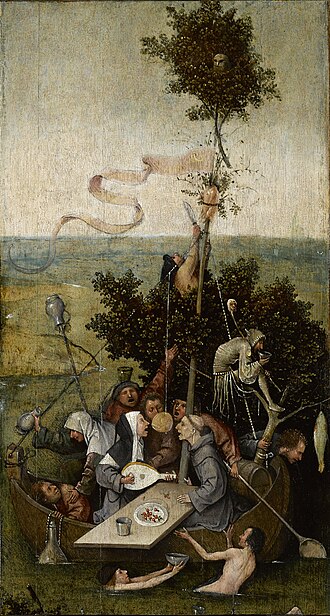 La nave de los locos - Hieronymus Bosch (1500s)
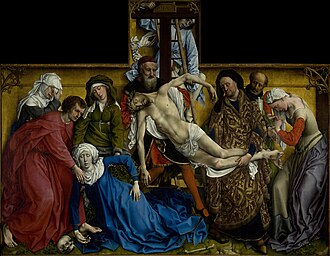 Descendimiento de la cruz - Rogier van der Weyden (1440s)
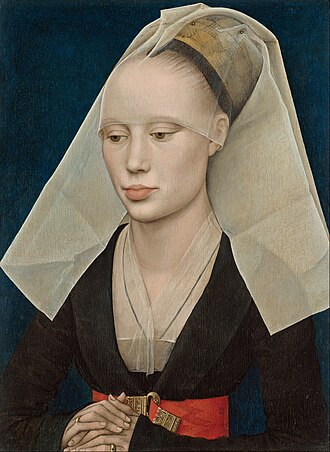 Retrato de una dama - Rogier van der Weyden (1460)
%20-%20Google%20Art%20Project.jpg) Cazadores en la nieve - Pieter Bruegel the Elder (1565)
Cazadores en la nieve - Pieter Bruegel the Elder (1565)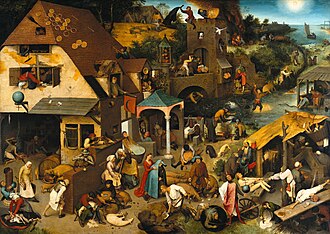 Los proverbios flamencos - Pieter Bruegel the Elder (1551)