Átropos o Las Parcas
Francisco Goya · 1819
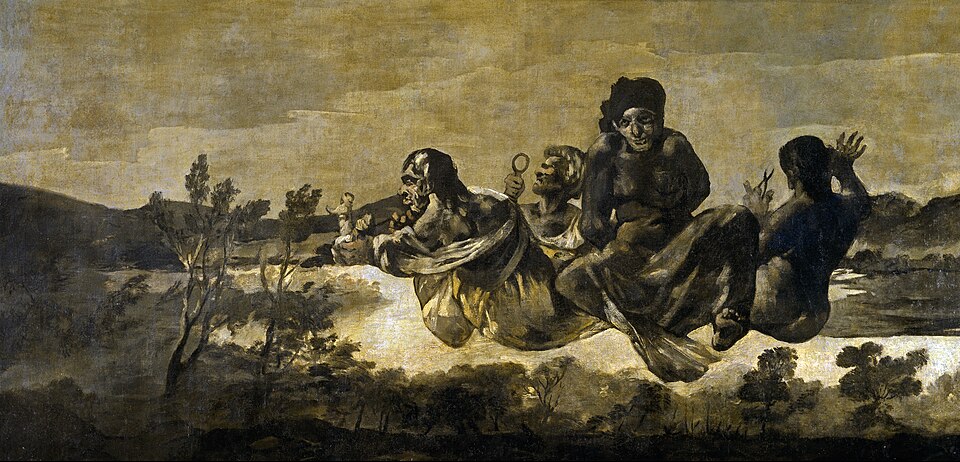
Three ancient goddesses of fate drift through a darkened sky, and below them a figure waits with his hands bound. Goya painted this vision on the wall of his own house.
The story behind the painting
Atropos, also called The Fates, is one of the fourteen Black Paintings that Francisco de Goya created between 1819 and 1823. Goya, then 75 and in mental and physical despair, painted the series directly onto the interior walls of the house known as the Quinta del Sordo, the "House of the Deaf Man", which he bought in 1819. This scene probably occupied a place on the upper floor, beside Fight with Cudgels and across from Fantastic Vision. These were not commissions or works for display, but images living on the walls of the rooms where he spent his days. Wikidata dates this painting to 1819, while the Wikipedia account places the whole series between 1819 and 1823.
What to look for
The canvas is wide and low, about 123 by 266 cm, and the figures seem to float. Three women hang in the air. One holds the scissors that cut the thread of life. Another holds what looks like a doll or a newborn child where a distaff would traditionally be. A third gazes through a lens, or perhaps into a mirror. In front of them, closer to us, is a fourth figure, possibly a man, whose hands appear bound behind his back as if he were a captive. Notice how little color there is: the palette is reduced, even more than in the other Black Paintings, to ochres and blacks, creating a nocturnal and unreal atmosphere.
Meaning and intent
Goya reinterprets the Moirai, the goddesses of destiny described by Homer, Hesiod, Virgil and other classical writers. These "Daughters of Night" were led by Atropos, the inexorable goddess of death. Clotho's child may be an allegory of life, and Lachesis, who measured the length of the thread, here looks through a lens and stands for time. If the fourth figure is truly bound, the Fates are deciding the destiny of a man who cannot resist. Some have speculated that he is Prometheus, chained on a mountain as punishment for stealing fire from Olympus. Painted by an old man in despair, the image invites us to feel how helpless a life can be before time and death.
Legacy
The painting did not stay on its wall. Like the rest of the Black Paintings, it was transferred to canvas in 1873 to 1874 under the supervision of Salvador Martínez Cubells, a curator at the Museo del Prado. The owner, Baron Emile d'Erlanger, donated the canvases to the Spanish state in 1881, and today they are on display at the Prado in Madrid. The arbitrary and irrational qualities of the Black Paintings have earned them a place as precursors of modern art. Standing before Atropos, we see why: it does not tell a tidy myth, but opens a dark, dreamlike space where fate feels close and personal.
¿Sabías que…?
- One of the 14 Black Paintings, 1819 to 1823 (Wikidata gives 1819).
- Painted on the walls of the Quinta del Sordo.
- Transferred to canvas in 1873 to 1874.
- Donated to the Spanish state in 1881; now at the Prado.
Sobre el artista
Francisco Goya (1746-1828)
Museo del Prado · pintura mitológica
Más obras de Francisco Goya
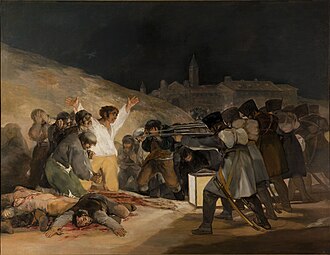 El tres de mayo de 1808 - Francisco Goya (1814)
.jpg) La Maja desnuda - Francisco Goya (1800)
La Maja desnuda - Francisco Goya (1800).jpg) Saturno devorando a su hijo - Francisco Goya (1819)
Saturno devorando a su hijo - Francisco Goya (1819)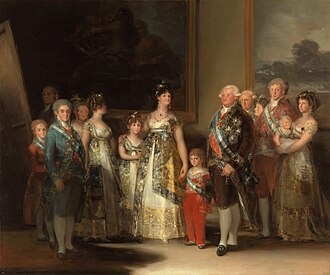 La familia de Carlos IV - Francisco Goya (1800)
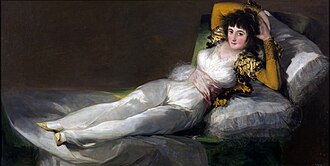 La maja vestida - Francisco Goya (1800)
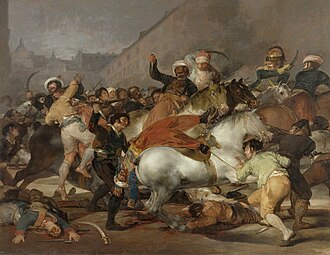 El dos de mayo de 1808 en Madrid - Francisco Goya (1814)
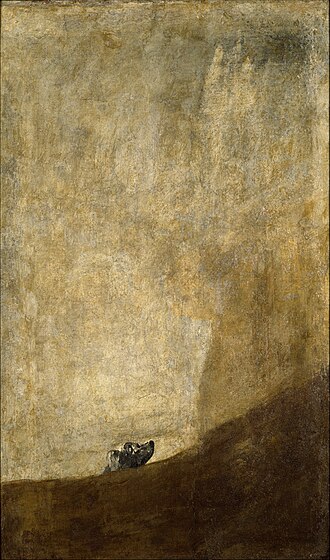 Perro semihundido - Francisco Goya (1819)
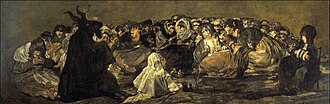 El aquelarre - Francisco Goya (1820s)