Pedro Pablo Rubens
1577-1640
Peter Paul Rubens was born in exile, trained as a learned painter and travelled Europe as both artist and diplomat. His swirling Baroque canvases, full of movement, colour and sensuality, made him the most influential artist of the Flemish tradition.
Origins
Rubens was born on 28 June 1577 in Siegen, to Jan Rubens and Maria Pypelincks, though he was reportedly baptised in Cologne. His father's family had lived in Antwerp since at least 1350. Jan, a lawyer and former alderman, had converted to Calvinism, and in 1568 the family fled persecution to Cologne. There Jan had an affair with Anna of Saxony, wife of William of Orange, and was imprisoned and threatened with execution; after his wife's repeated pleas he was released after two years and confined to Siegen. The family later returned to Cologne and to Catholicism. Jan died in 1587, and in 1590 his widow brought the children back to Antwerp. Peter Paul and his brother Philip received a humanist education, studying Latin and classical literature.
Life and turning points
In 1590 the brothers left school to help pay their sister's dowry, and Peter Paul served as a page to a countess. Drawn to art, he trained from 1592 with the landscape painter Tobias Verhaecht, then with Adam van Noort and finally with Otto van Veen, and in 1598 he became a master in Antwerp's Guild of St. Luke. In 1600 he travelled to Italy, entered the service of the Duke of Mantua, studied in Rome and in 1603 carried the duke's gifts to the Spanish court, the first of many journeys mixing art and diplomacy. He worked in Genoa and Rome until 1608. Back in Antwerp he ran a large workshop, was knighted by both Philip IV of Spain and Charles I of England, and died on 30 May 1640.
Style and technique
Rubens's Baroque style emphasised movement, colour and sensuality, in line with the dramatic art promoted by the Counter-Reformation, and his highly charged compositions drew on classical and Christian history. Otto van Veen instilled in him the ideal of the pictor doctus, the learned painter who knows theory, classical literature and the Italian masters. In Venice the colour of Veronese and Tintoretto struck him at once, and his mature style was profoundly shaped by Titian. In Rome he studied the Laocoön, Michelangelo, Raphael and Leonardo, and fell under the spell of Caravaggio. He painted altarpieces, portraits, landscapes and history paintings, designed tapestries and prints, and was one of the last major artists to use wooden panels even for very large works, sometimes painting altarpieces on slate to reduce reflections.
Stories and anecdotes
As a boy Rubens copied woodcuts by Hans Holbein the Younger and Tobias Stimmer, and engravings after Raphael. His first master, Verhaecht, was a relative by marriage, which may explain the choice. One of his schoolmates, Balthasar Moretus, grandson of the printer Christophe Plantin, became a lifelong friend. In Spain he painted an equestrian portrait of the Duke of Lerma that shows the influence of Titian's portrait of Charles V. In Genoa he drew the new palaces going up in the city, and these drawings were published in 1622 as Palazzi di Genova, a book that helped spread the Genoese palace style in Northern Europe. He remained a champion of Caravaggio and helped bring The Madonna of the Rosary to St. Paul's Church in Antwerp.
Legacy
Rubens is considered the most influential artist of the Flemish Baroque. Michael Jaffé's catalogue lists 1,403 works, without counting the many copies made in his workshop. His paintings were popular with nobility and collectors across Europe, and his portraits in Genoa influenced later painters such as Anthony van Dyck, Joshua Reynolds and Thomas Gainsborough. He was also a scholar and an avid collector, with one of the largest collections of art and books in Antwerp, and he designed his own house and the decorations for the royal entry of the Cardinal-Infante Ferdinand into Antwerp in 1635. In the energy of his figures and the warmth of his colour, a whole age of European painting still breathes.
¿Sabías que…?
- His brother Philip became a noted antiquarian, librarian and philologist but died young.
- His first pupil, Deodat del Monte, went with him to Italy.
- He wrote and illustrated a book on the palaces of Genoa.
- He made a copy of Caravaggio's Entombment of Christ.
barroco · pintura barroca de Flandes
Artistas relacionados
Vincent van Gogh · Caravaggio · Diego Velázquez · Anton van Dyck · Rembrandt van Rijn · Johannes Vermeer
Obras de Pedro Pablo Rubens
.jpg) La elevación de la cruz - Peter Paul Rubens (1609)
La elevación de la cruz - Peter Paul Rubens (1609)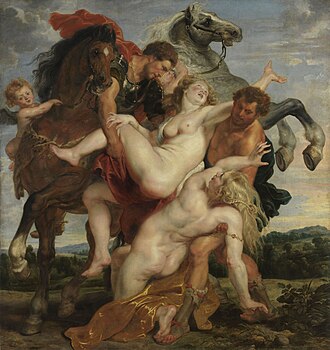 Rapto de las hijas de Leucipo - Peter Paul Rubens (1618)
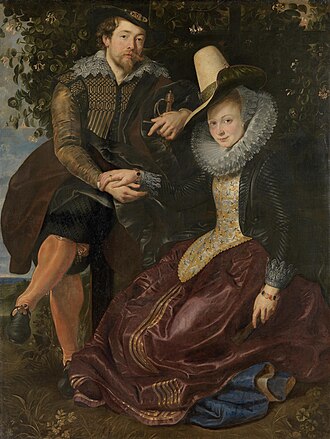 Autorretrato con su esposa Isabel Brant - Peter Paul Rubens (1600s)
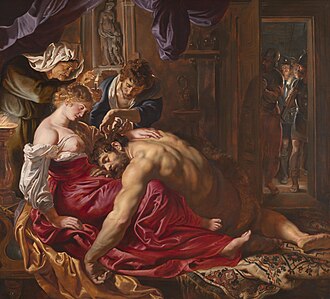 Sansón y Dalila - Peter Paul Rubens (1600s)
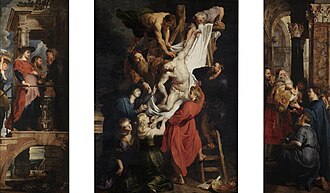 Descendimiento de Cristian - Peter Paul Rubens (1611)
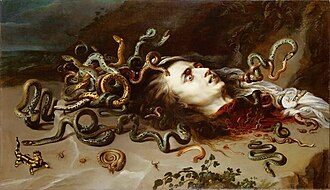 Head of Medusa - Peter Paul Rubens (1618)
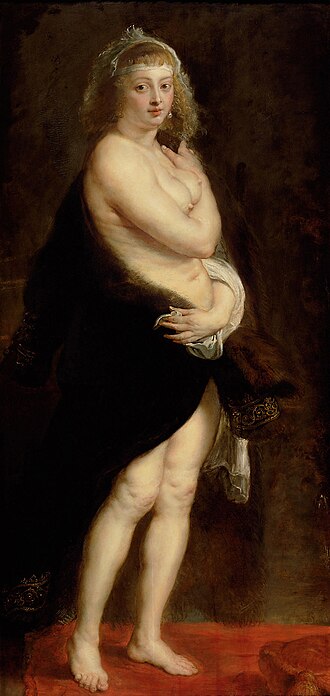 Helena Fourment saliendo del baño - Peter Paul Rubens (1638)
.jpg) El jardín del amor - Peter Paul Rubens (1632)
El jardín del amor - Peter Paul Rubens (1632)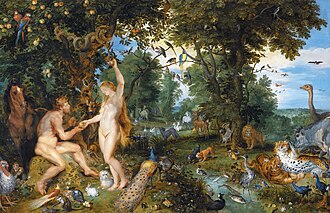 El Jardín del Edén con la caída del hombre - Peter Paul Rubens (1615)
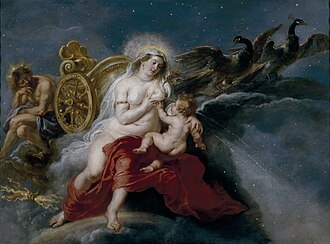 El nacimiento de la Vía Láctea - Peter Paul Rubens (1630s)
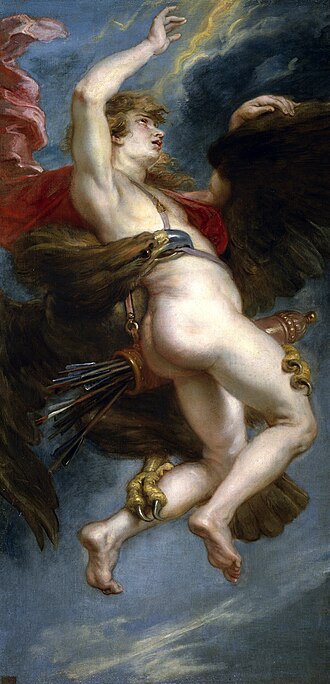 El rapto de Ganímedes - Peter Paul Rubens (1630s)
.jpg) La caza del hipopótamo - Peter Paul Rubens (1615)
La caza del hipopótamo - Peter Paul Rubens (1615)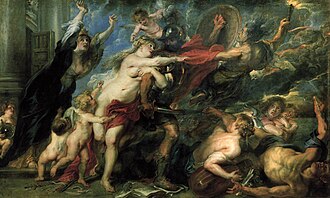 Los horrores de la guerra - Peter Paul Rubens (1637)
.jpg) La Adoración de los Reyes Magos - Peter Paul Rubens (1609)
La Adoración de los Reyes Magos - Peter Paul Rubens (1609)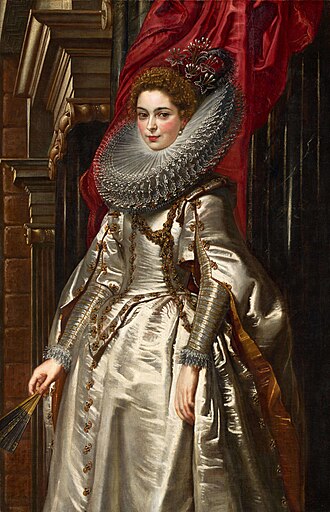 Retrato de la Marquesa Brígida Spinola-Doria - Peter Paul Rubens (1606)
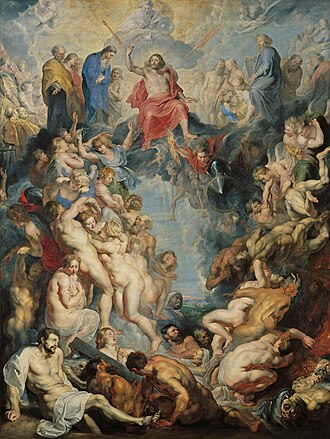 El Juicio Final - Peter Paul Rubens (1617)
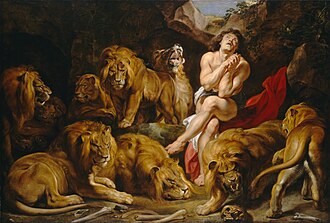 Daniel en el foso de los leones - Peter Paul Rubens (1615)
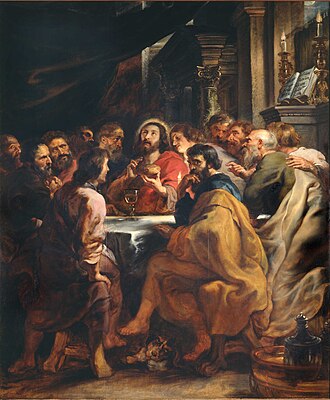 Last Supper - Peter Paul Rubens (1631)
%20-%20Prometheus%20Bound%20-%20Google%20Art%20Project.jpg) Prometeo encadenado - Peter Paul Rubens (1610s)
Prometeo encadenado - Peter Paul Rubens (1610s)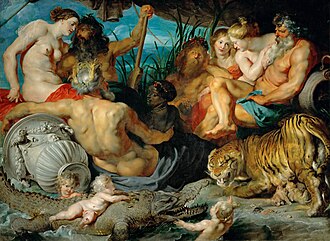 Los cuatro ríos del Paraíso - Peter Paul Rubens (1615)
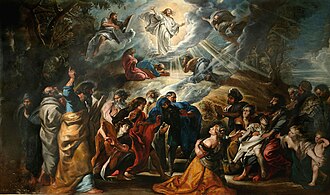 Transfiguración - Peter Paul Rubens (1605)
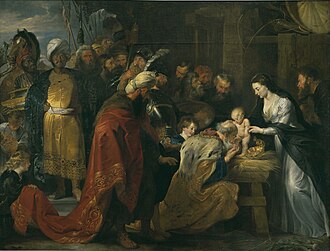 Adoración de los Reyes Magos - Peter Paul Rubens (1616)
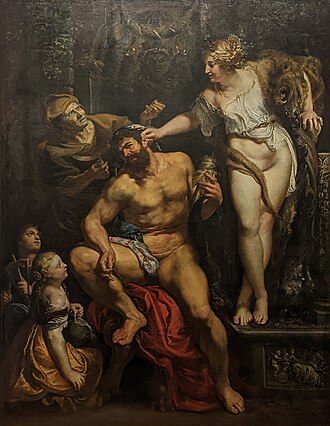 Hercules and Omphale - Peter Paul Rubens (1602)
%20(cropped).jpg) La Incredulidad de Santo Tomás - Peter Paul Rubens (1613)
La Incredulidad de Santo Tomás - Peter Paul Rubens (1613)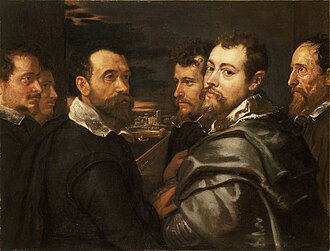 Autorretrato con cuatro amigos - Peter Paul Rubens (1602)
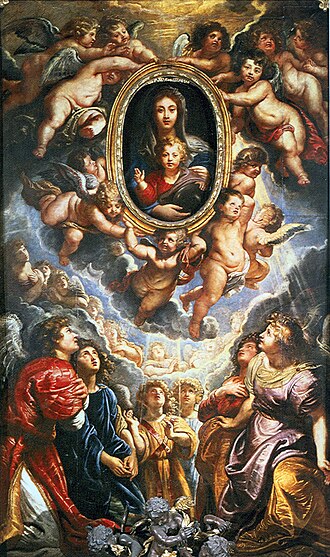 Madonna della Vallicella - Peter Paul Rubens (1606)
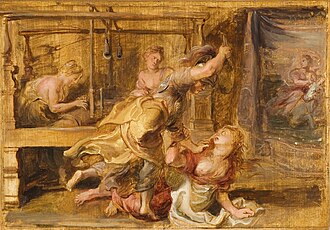 Pallas and Arachne - Peter Paul Rubens (1637)
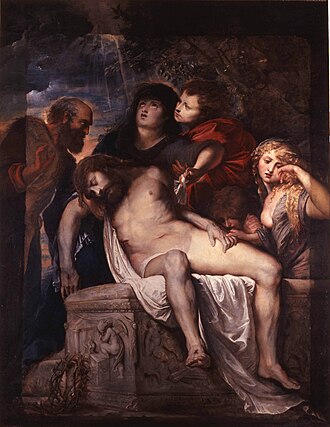 El Descendimiento de la cruz - Peter Paul Rubens (1602)
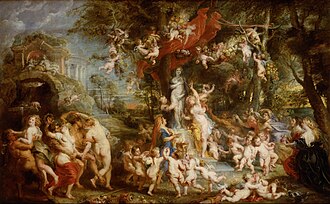 La fiesta de Venus - Peter Paul Rubens (1636)
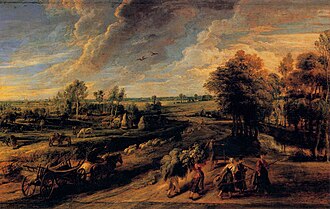 El regreso de los campesinos del campo - Peter Paul Rubens (1640)
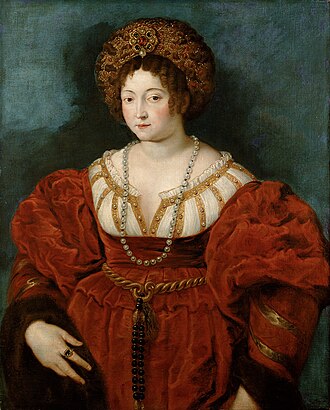 Isabella d'Este - Peter Paul Rubens (1605)
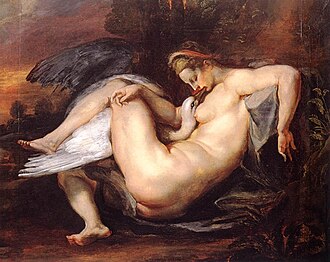 Leda y el cisne - Peter Paul Rubens (1601)
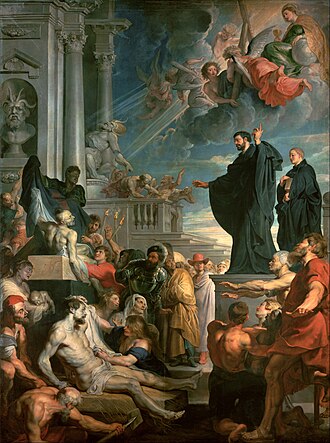 Miracles of St. Francis Xavier - Peter Paul Rubens (1610s)
.jpg) self-portrait - Peter Paul Rubens
self-portrait - Peter Paul Rubens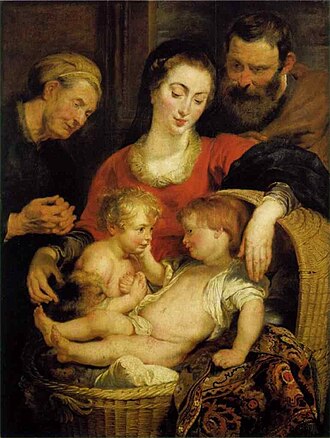 Madonna of the Basket - Peter Paul Rubens (1615)
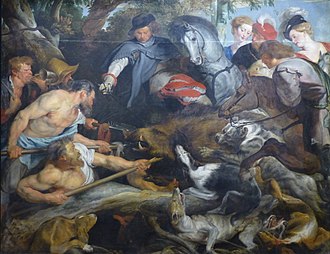 The Boar Hunt - Peter Paul Rubens (1610s)
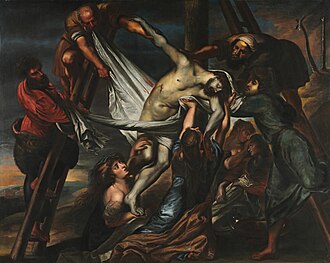 El descendimiento de la cruz - Peter Paul Rubens (1600s)
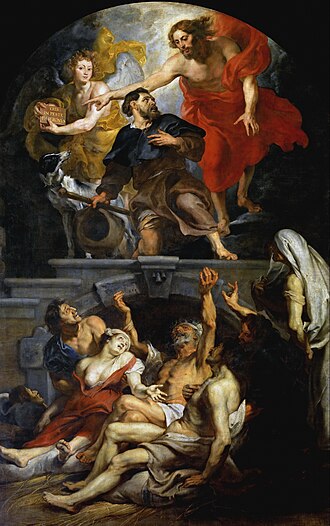 San Roque siendo nombrado por Cristo patrón de los enfermos de peste - Peter Paul Rubens (1619)
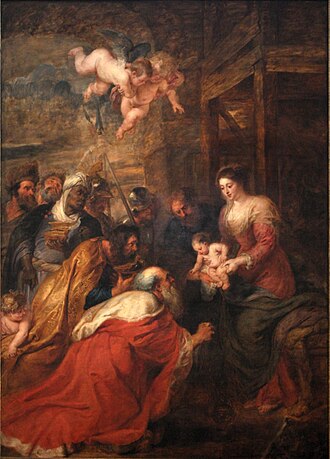 Adoration of the Magi - Peter Paul Rubens (1610s)