El Jardín del Edén con la caída del hombre
Pedro Pablo Rubens · 1615
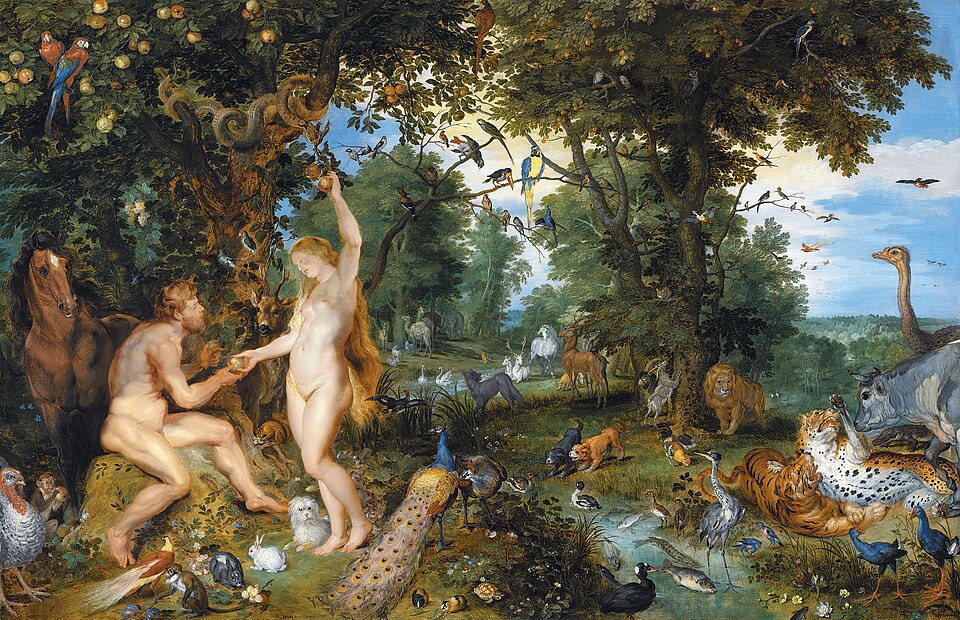
Adam and Eve stand in a paradise crowded with animals living in peace, one moment before everything changes. Two best friends painted it together: Rubens the bodies, Jan Brueghel every bird, beast and leaf around them.
The story behind the painting
The Garden of Eden with the Fall of Man, also called The Earthly Paradise with the Fall of Adam and Eve, was painted around 1615 by Peter Paul Rubens and Jan Brueghel the Elder. Rubens began it, sketching Adam and Eve in thin paint, then the tree and the serpent; Brueghel then painted the details with great care. The two were leading painters of the first three decades of the 17th century and close friends, so close that Rubens was godfather to Brueghel's children. Each set out to show his best work here.
What to look for
Adam and Eve stand beneath the tree of the knowledge of good and evil, heavy with fruits, while the tree of life rises on the other side. The garden holds a great variety of animals, perhaps a hundred, from many ecosystems. Because the sin has not yet been committed, they live in harmony: a cow watches calmly as two large cats play. Hidden at left, a South American capuchin monkey bites an apple. Birds of paradise are painted with scientific accuracy and with their feet clearly shown, at a time when they were believed to have none. Peacocks and macaws look on.
Meaning and intent
The scene refers to Genesis 2:8 to 14 and catches the moment just before the forbidden fruit is eaten. The monkey biting the apple foreshadows the sin to come; the monkey next to Adam is the hothead who cannot resist temptation, and the cat near Eve's heels stands for cruel cunning. In Christian symbolism the grapes in the leaves behind the couple point to Christ's death on the cross, since wine represents his blood. The delicate brushwork is a prime example of why Jan Brueghel was nicknamed Velvet Brueghel.
Legacy
From 1766 the painting belonged to Pieter de la Court van der Voort of Leiden. It then passed to William V, Prince of Orange, and in 1816 it entered the collection of the Royal Picture Gallery Mauritshuis in The Hague, where it still hangs. It remains a rare record of two great painters at work on one panel, each leaving the other room to shine: the supple bodies Rubens was known for, and the animals, flowers and foliage that made Brueghel famous.
¿Sabías que…?
- Painted around 1615 by Rubens (figures) and Jan Brueghel the Elder (flora and fauna).
- Rubens was godfather to Brueghel's children.
- Shows birds of paradise with feet, then believed to have none.
- In the Mauritshuis, The Hague, since 1816.
Sobre el artista
Pedro Pablo Rubens (1577-1640)
arte religioso · desnudo · sentado · melena · desnudo · rubio · Mauritshuis · Adán · contrapposto · Eva
Más obras de Pedro Pablo Rubens
.jpg) La elevación de la cruz - Peter Paul Rubens (1609)
La elevación de la cruz - Peter Paul Rubens (1609) Rapto de las hijas de Leucipo - Peter Paul Rubens (1618)
 Autorretrato con su esposa Isabel Brant - Peter Paul Rubens (1600s)
 Sansón y Dalila - Peter Paul Rubens (1600s)
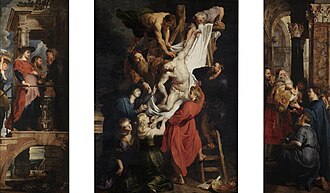 Descendimiento de Cristian - Peter Paul Rubens (1611)
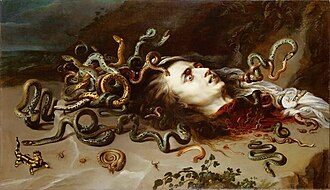 Head of Medusa - Peter Paul Rubens (1618)
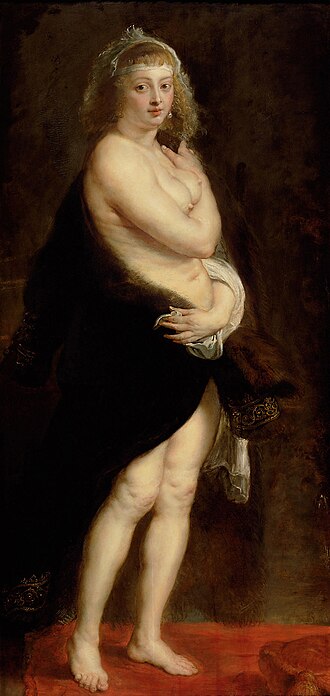 Helena Fourment saliendo del baño - Peter Paul Rubens (1638)
.jpg) El jardín del amor - Peter Paul Rubens (1632)
El jardín del amor - Peter Paul Rubens (1632)
Obras de artistas relacionados
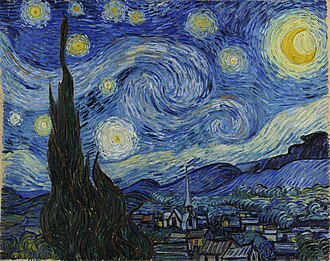 La noche estrellada - Vincent van Gogh (1889)
.jpg) Terraza de café por la noche - Vincent van Gogh (1888)
Terraza de café por la noche - Vincent van Gogh (1888)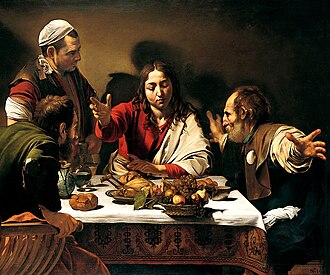 La cena de Emaús - Caravaggio (1601)
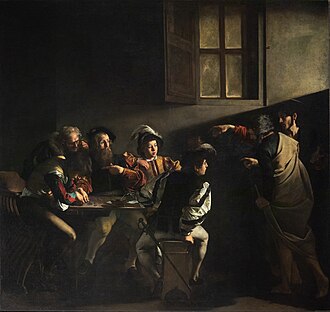 La vocación de San Mateo - Caravaggio (1609)
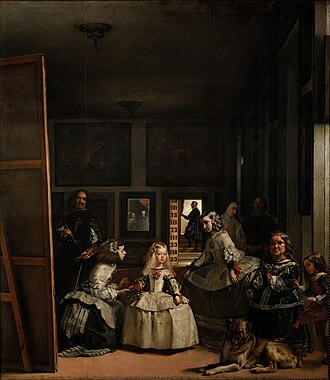 Las meninas - Diego Velázquez (1656)
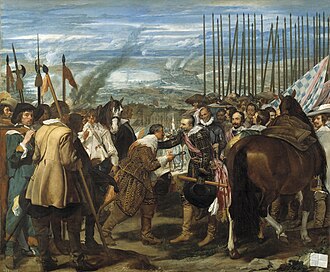 La rendición de Breda - Diego Velázquez (1635)
%20-%20Google%20Art%20Project.jpg) Triple retrato de Carlos I - Anthony van Dyck (1635)
Triple retrato de Carlos I - Anthony van Dyck (1635)%20with%20M.%20de%20St%20Antoine%20-%20Google%20Art%20Project.jpg) Charles I (1600-1649) with M. de St Antoine - Anthony van Dyck (1636)
Charles I (1600-1649) with M. de St Antoine - Anthony van Dyck (1636)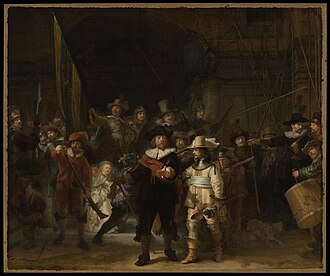 La ronda de noche - Rembrandt van Rijn (1642)
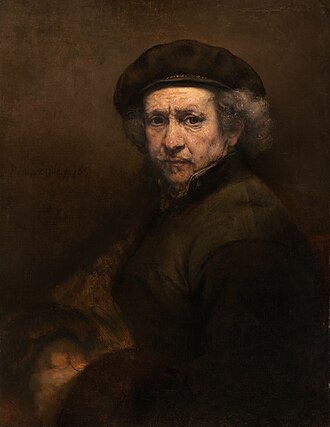 Autorretrato - Rembrandt van Rijn (1659)
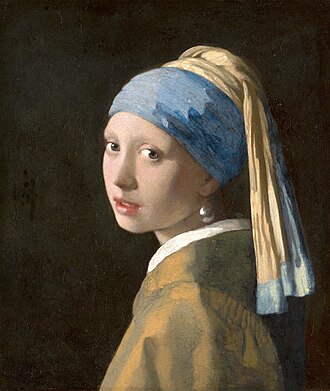 La joven de la perla - Johannes Vermeer (1665)
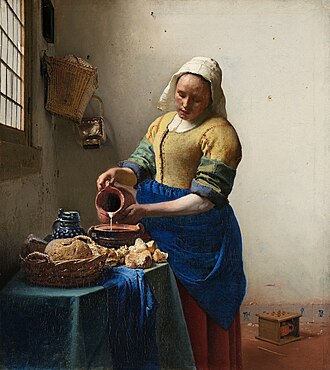 La lechera - Johannes Vermeer (c. 1658)