The Martyrdom of Saint Ursula
Caravaggio · 1610
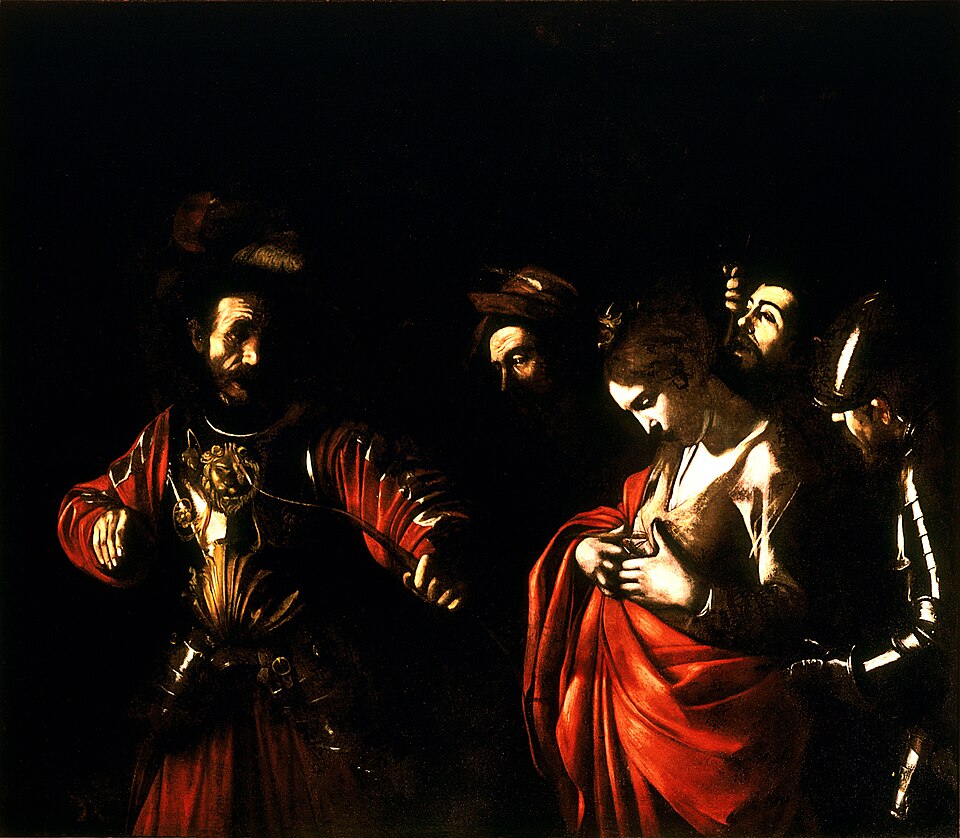
The arrow has just struck. Saint Ursula looks down at it with mild surprise, and behind her an upturned face, apparently Caravaggio's own, stares in shock. It is thought to be the last painting he ever made.
The story behind the painting
In one version of the legend, Ursula and eleven thousand virgin companions were captured by the Huns. The companions were killed, but the Hun king, struck by Ursula's modesty and beauty, offered to spare her if she married him. She refused, and he shot her with an arrow. Caravaggio painted the scene in Naples in 1610 for Marcantonio Doria, a 25-year-old Genoese nobleman and ardent collector of his work, to mark his stepdaughter's entry into a religious order as Sister Ursula. On 11 May 1610 Doria's agent Lanfranco Massa wrote that it was finished.
What to look for
Caravaggio brings the action right into the viewer's space, at the very moment the king lets fly his arrow. Ursula looks down at the shaft in her chest with an expression of mild surprise. To the right and rear a few onlookers stare in shock, and one of them, the upturned face behind Ursula, is apparently Caravaggio himself. In Sicily he had painted small groups dwarfed by massive architecture, as in The Beheading of Saint John the Baptist; here he returns to close, crowded drama. Everyone who had seen the painting was stunned, the agent reported.
Meaning and intent
Caravaggio had arrived in Naples from Sicily in late 1609 and, within days, was attacked outside a restaurant by four armed men, leading to rumours that he had been killed or disfigured. He probably needed a long time to recover, and few works can be linked to this stay. Doria, the source suggests, may have been glad to see his favourite artist in the picture, unmarked despite the rumours. In July 1610 Caravaggio set off by boat to receive a papal pardon for a death in a duel in 1606, but he died at Porto Ercole instead, most often said to be of fever.
Legacy
The damage began almost at once. To hasten drying, Massa left the painting in the sun, which softened the varnish; he promised to take it back to Caravaggio to fix. It reached Genoa on 18 June, and Doria hung it with his Raphaels and Leonardos. Later it passed to his heirs and was moved to Naples in 1832. Repairs were tried several times without much success, until a 2025 restoration by Laura Cibrario and Fabiola Jatta, aided by X-rays, is reported to have brightened the colours and revealed hidden details. It belongs to the Intesa Sanpaolo collection in the Gallery of Palazzo Zevallos Stigliano, Naples.
Did you know?
- Finished shortly before 11 May 1610 in Naples.
- Commissioned by Marcantonio Doria of Genoa.
- Caravaggio apparently painted himself behind the saint.
- Restored with X-ray analysis in 2025.
About the artist
Caravaggio (1571-1610)
More by Caravaggio
 Supper at Emmaus - Caravaggio (1601)
 The Calling of Saint Matthew - Caravaggio (1609)
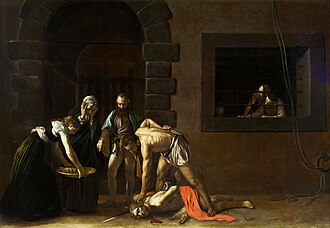 The Beheading of Saint John the Baptist - Caravaggio (1608)
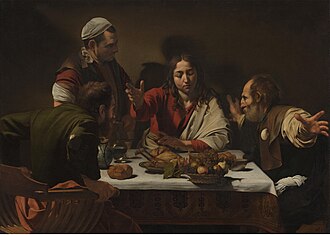 Supper at Emmaus - Caravaggio (1601)
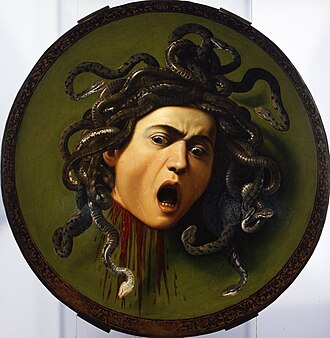 Medusa - Caravaggio (1597)
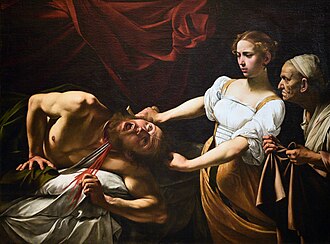 Judith Beheading Holofernes - Caravaggio (1598)
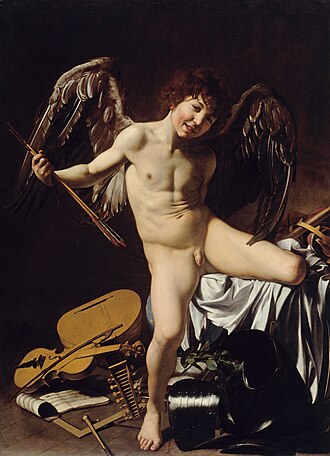 Amor Vincit Omnia - Caravaggio (1600s)
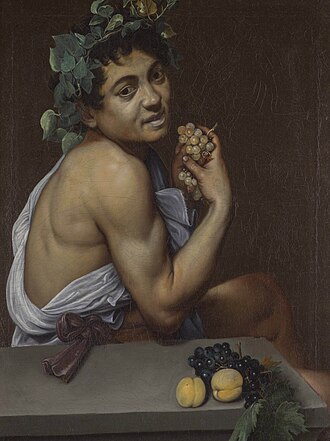 Self-Portrait as Bacchus - Caravaggio (1595)
Paintings by related artists
 Las Meninas - Diego Velázquez (1656)
 The Surrender of Brea - Diego Velázquez (1635)
 Saint Francis in Meditation - Francisco de Zurbarán (1639)
 The Immaculate Conception - Francisco de Zurbarán (1661)
 Charles I in Three Positions - Anthony van Dyck (1635)
 Charles I (1600-1649) with M. de St Antoine - Anthony van Dyck (1636)
 The Elevation of the Cross - Peter Paul Rubens (1609)
 The Rape of the Daughters of Leucippus - Peter Paul Rubens (1618)
 The Night Watch - Rembrandt van Rijn (1642)
 Self-Portrait - Rembrandt van Rijn (1659)
 A Militiaman Holding a Berkemeyer, Known as the ‘Merry Drinker’ - Frans Hals (1620s)
 Laughing Cavalier - Frans Hals (1624)