The Martyrdom of Saint Matthew
Caravaggio · 1600
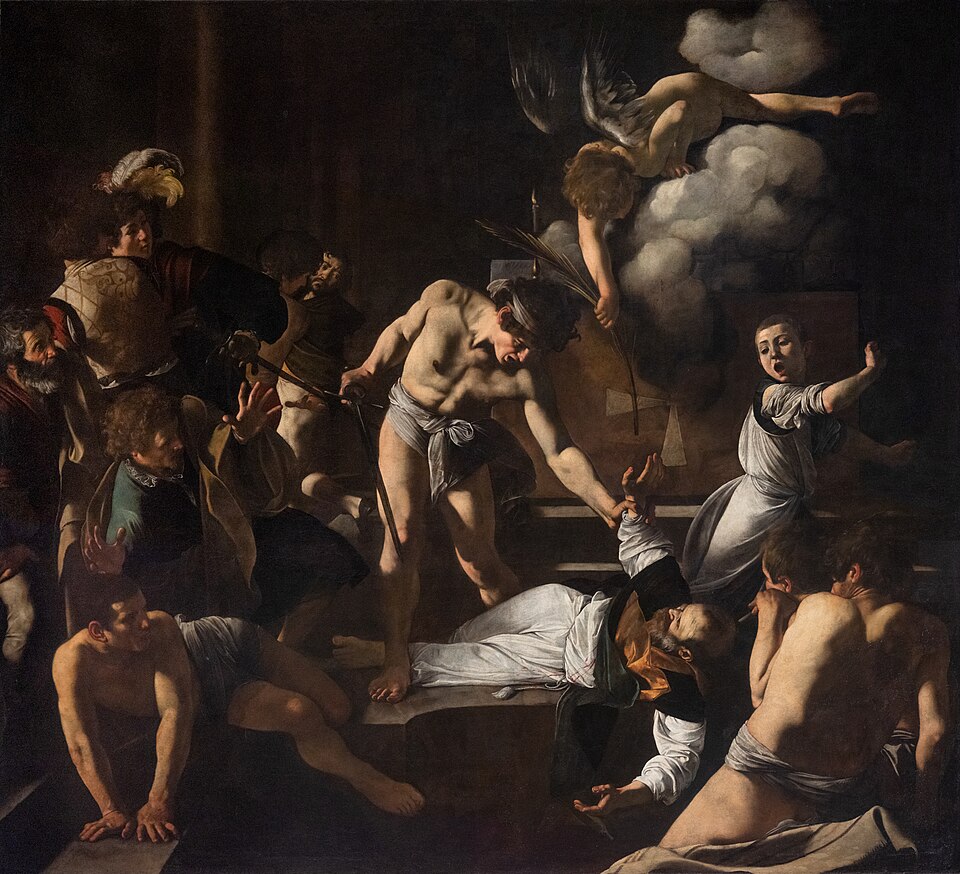
In a flash of light, an executioner stands over a fallen saint, onlookers scatter, and an angel reaches down with a palm. Behind the killer, Caravaggio painted his own face watching.
The story behind the painting
The Martyrdom of Saint Matthew, painted in 1599-1600, hangs in the Contarelli Chapel of San Luigi dei Francesi in Rome, opposite The Calling of Saint Matthew and beside the altarpiece The Inspiration of Saint Matthew. It was the first of the three to be installed, in July 1600. Cardinal Matthieu Cointerel, who had died decades before, had set out exactly what should be shown: the saint murdered by a soldier, suitable architecture and crowds showing fitting emotion. The commission, strictly from Cardinal Francesco Maria del Monte, troubled Caravaggio, who had never painted so large a canvas or so many figures. X-rays reveal two earlier attempts beneath the final one.
What to look for
Tradition holds that Matthew was killed on the orders of the king of Ethiopia while celebrating Mass, after rebuking the king for desiring his niece, a nun. Caravaggio chose the moment of greatest drama: the half-naked executioner, burning in the glare, stands over the fallen saint with his sword. Around them figures show terror, awe and consternation, among them a horror-struck boy at left, while an angel holds out the palm of martyrdom. The architecture of the earlier versions has gone, the actors are fewer and closer, and a sharply selective light picks out the key elements like a spotlight on a stage. Left of centre, behind the assassin, is Caravaggio's self-portrait.
Meaning and intent
At first the scene reads as a confused melee, but the source invites us to look again. Matthew is not quailing in fear; he is reaching for the angel's gift. The executioner's grasp and the angel's reach run as two parallel paths, and only Matthew is aware of the heavenly visitor. Understood this way, the painting is less about general terror than about a saint's death as a personal meeting with the divine, in keeping with Italian Baroque art that often showed martyrdom as a moment of joy rather than fear.
Legacy
The painting marks the moment, the source says, when late sixteenth-century Mannerism gave way to the Baroque, and it caused a sensation. Federico Zuccari, a leading painter, came to see it and dismissed it, but younger artists were won over, and Caravaggio suddenly became the most famous artist in Rome. He even turned the dimness of the small chapel to advantage: the biographer Peter Robb imagines visitors seeing the pale figures looming from the dark down the nave. The saint and the boy at left are borrowed, almost quoted, from Titian's Assassination of Saint Peter Martyr in Venice. Wikidata records no museum, as the work remains in the church.
Did you know?
- Painted 1599-1600; installed in July 1600, first of the three Contarelli canvases.
- X-rays reveal two earlier compositions.
- Includes a self-portrait of Caravaggio behind the executioner.
- Still in the Contarelli Chapel, San Luigi dei Francesi, Rome.
About the artist
Caravaggio (1571-1610)
religious art · man · Matthew the Apostle
More by Caravaggio
 Supper at Emmaus - Caravaggio (1601)
 The Calling of Saint Matthew - Caravaggio (1609)
 The Beheading of Saint John the Baptist - Caravaggio (1608)
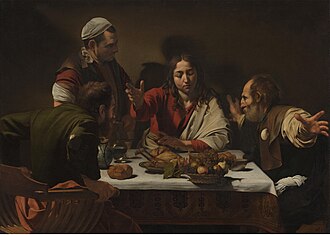 Supper at Emmaus - Caravaggio (1601)
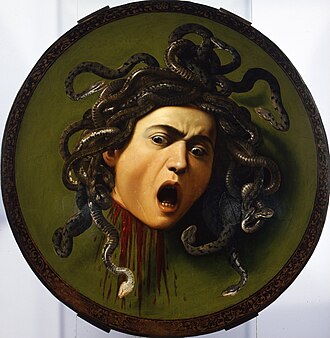 Medusa - Caravaggio (1597)
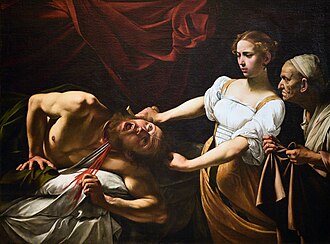 Judith Beheading Holofernes - Caravaggio (1598)
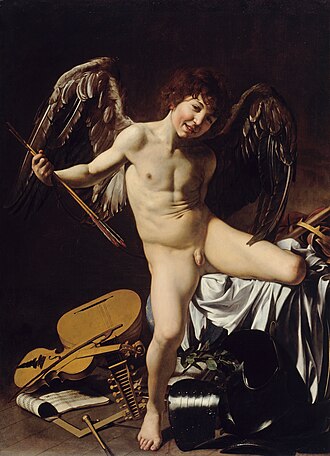 Amor Vincit Omnia - Caravaggio (1600s)
%2C%201595%20circa%2C%20534.jpg) Self-Portrait as Bacchus - Caravaggio (1595)
Self-Portrait as Bacchus - Caravaggio (1595)
Paintings by related artists
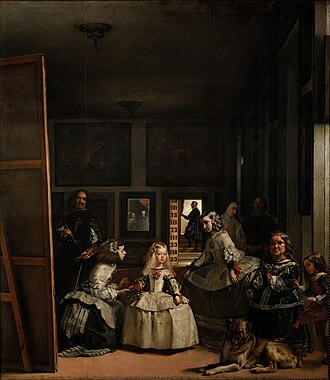 Las Meninas - Diego Velázquez (1656)
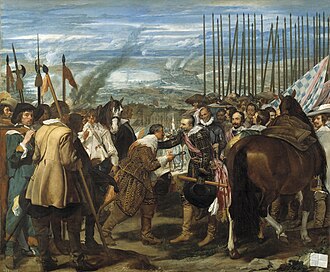 The Surrender of Brea - Diego Velázquez (1635)
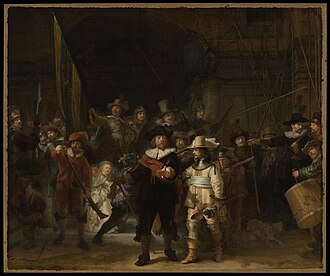 The Night Watch - Rembrandt van Rijn (1642)
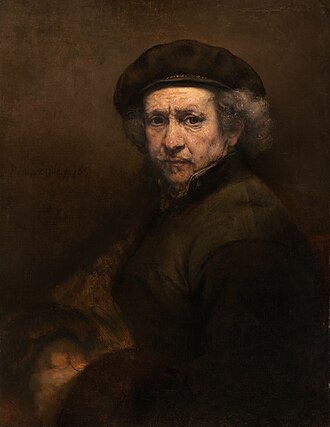 Self-Portrait - Rembrandt van Rijn (1659)
 Girl with a Pearl Earring - Johannes Vermeer (1665)
 The Milkmaid - Johannes Vermeer (c. 1658)