The Crucifixion of Saint Andrew
Caravaggio · 1607
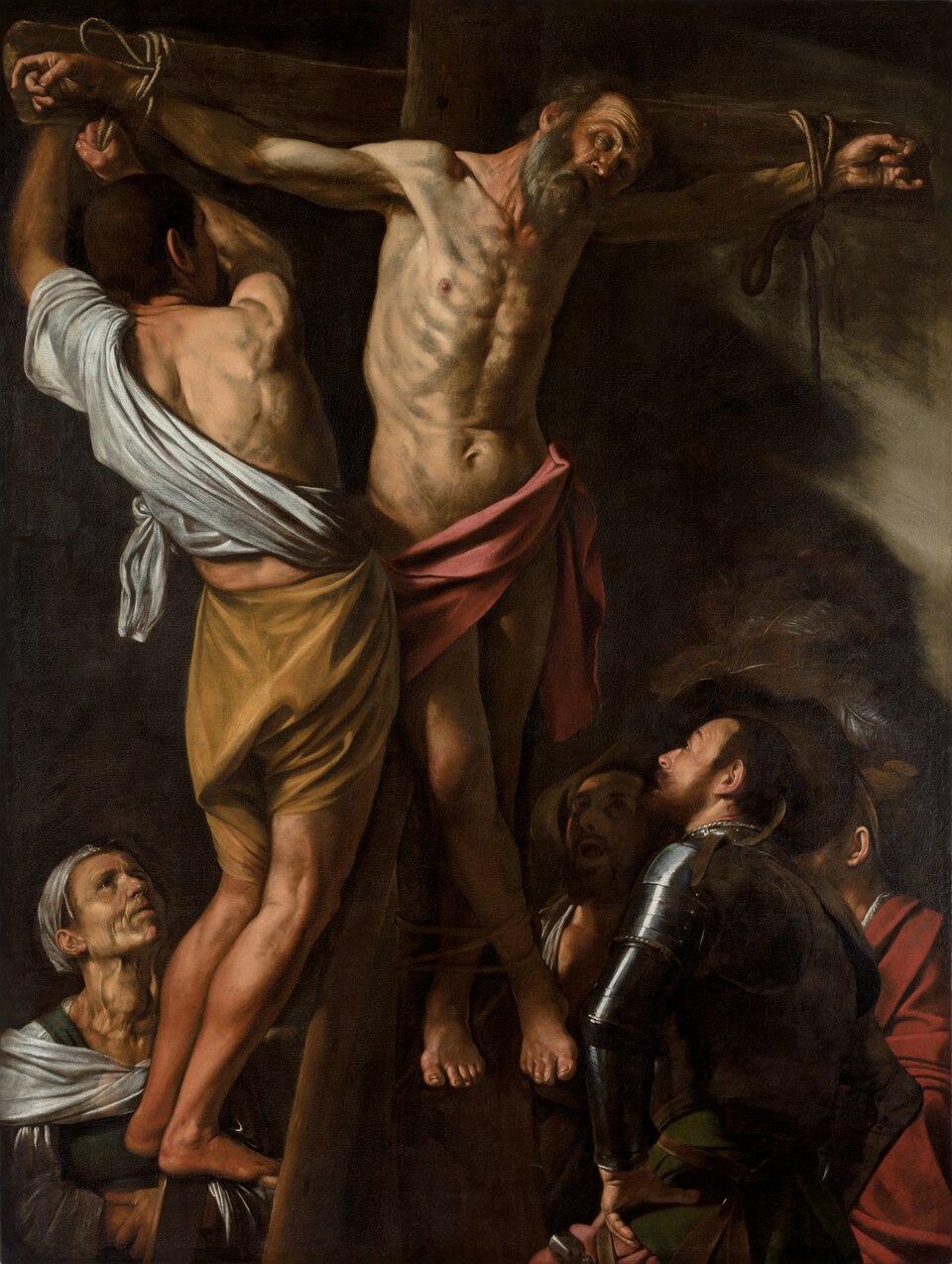
An old saint hangs on a cross, ropes cutting into his body, while the men below are frozen in place. Caravaggio painted it in Naples in 1607 for a viceroy who loved Saint Andrew, and it vanished into a Spanish palace for centuries.
The story behind the painting
The painting was almost certainly commissioned by Juan Alonso Pimentel de Herrera, 5th Duke of Benavente, viceroy of Naples for seven years and especially devoted to Saint Andrew; he helped renovate the saint's crypt in Amalfi Cathedral. When he left Naples for Spain on 11 July 1610 he took with him a picture that the biographer Bellori called la Crocifissione di Santo Andrea. It was installed in the family palace in Valladolid. In 1653, after the death of the 7th Duke, the appraiser Diego Valentín Díaz described a large painting of a nude Saint Andrew being put on the cross, with three executioners and a woman, in an ebony frame, by micael angel caraballo. That Valladolid painting is thought to be the one in Cleveland today.
What to look for
This is the moment after the miracle, not the moment of death. Andrew is bound to the cross with ropes rather than nails. Note the shape of the cross: from the seventeenth century the saint was usually shown on a diagonal cross, but Caravaggio followed the sixteenth century belief that he died on an ordinary Latin cross. Below him, as Díaz recorded, are three executioners and a woman. The Roman proconsul Aegeas stands at lower right, the man whose order could not be carried out. The canvas is large, about 202.5 by 152.7 cm, and the nearly nude, aged body of the saint is the centre of attention.
Meaning and intent
According to the legend, the martyrdom took place at Patras in Greece. Bound to the cross, Andrew survived two days, preaching to the crowd until they were converted and demanded his release. When Aegeas ordered him taken down, his men were struck by a miraculous paralysis, because the saint had prayed to be allowed to undergo martyrdom. Caravaggio paints that strange suspended instant: the executioners who cannot act, the governor who has changed his mind, and the saint who has chosen his own death. For a viceroy devoted to Andrew, it was an image of faith stronger than power.
Legacy
The Cleveland Museum of Art acquired the painting in 1976 from the Arnaiz collection in Madrid, after its rediscovery in 1974; Benedict Nicolson first gave this version to Caravaggio that year. Three other versions exist. One, formerly in the Back-Vega collection in Vienna and now in the Spier Collection in London, was attributed to Caravaggio by some mid-twentieth century scholars, then considered a copy by Louis Finson, and since 2011 has again been called a second version by Caravaggio. A copy in Toledo, found by Roberto Longhi in 1920, was badly damaged in the Spanish Civil War, and another in Dijon is now given to Finson.
Did you know?
- Painted in 1607 in Naples.
- Taken to Spain by the viceroy of Naples in 1610.
- Acquired by the Cleveland Museum of Art in 1976.
- Shows Andrew on a Latin cross, not the later diagonal cross.
About the artist
Caravaggio (1571-1610)
religious art · Baroque · Cleveland Museum of Art · crucifixion
More by Caravaggio
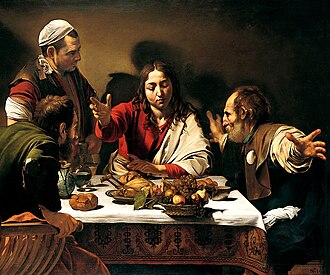 Supper at Emmaus - Caravaggio (1601)
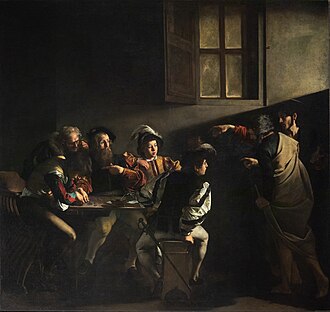 The Calling of Saint Matthew - Caravaggio (1609)
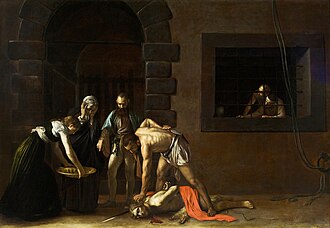 The Beheading of Saint John the Baptist - Caravaggio (1608)
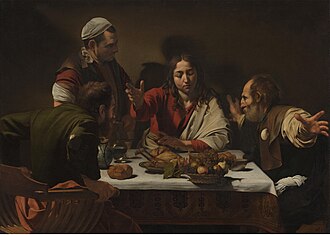 Supper at Emmaus - Caravaggio (1601)
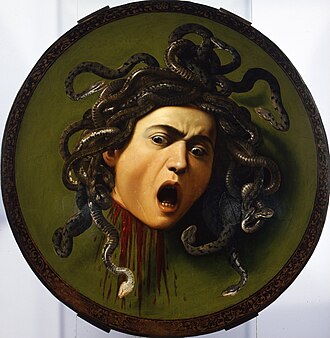 Medusa - Caravaggio (1597)
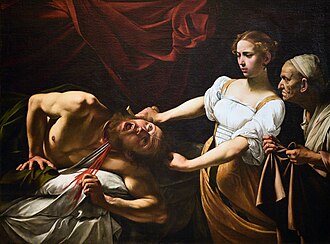 Judith Beheading Holofernes - Caravaggio (1598)
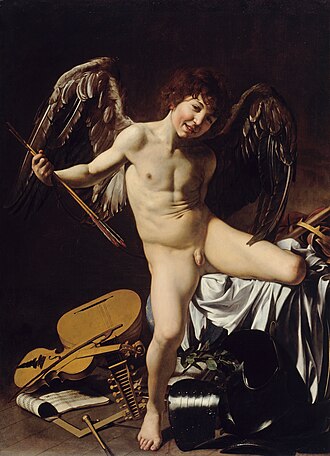 Amor Vincit Omnia - Caravaggio (1600s)
%2C%201595%20circa%2C%20534.jpg) Self-Portrait as Bacchus - Caravaggio (1595)
Self-Portrait as Bacchus - Caravaggio (1595)
Paintings by related artists
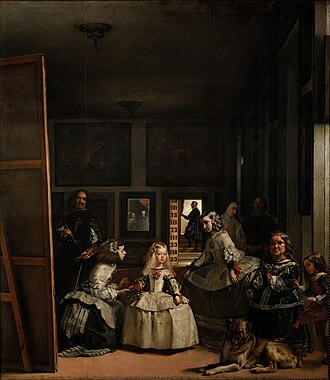 Las Meninas - Diego Velázquez (1656)
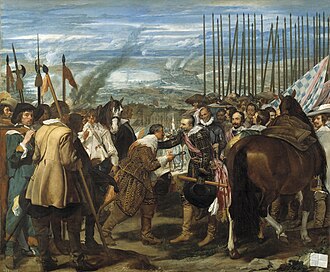 The Surrender of Brea - Diego Velázquez (1635)
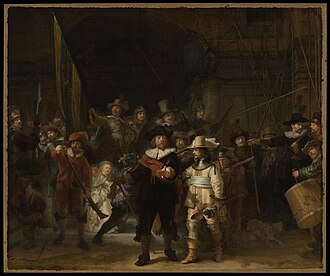 The Night Watch - Rembrandt van Rijn (1642)
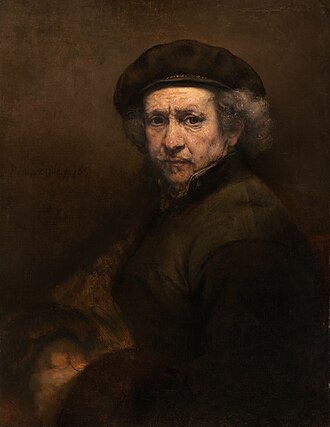 Self-Portrait - Rembrandt van Rijn (1659)
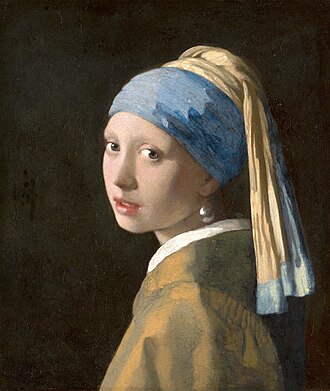 Girl with a Pearl Earring - Johannes Vermeer (1665)
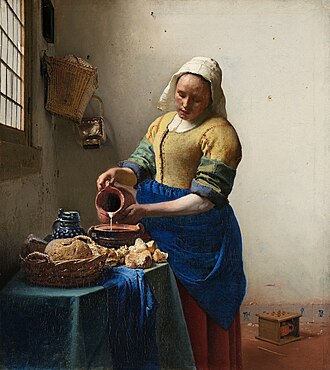 The Milkmaid - Johannes Vermeer (c. 1658)