Portrait of Mary Hill, Lady Killigrew
Anthony van Dyck · 1638
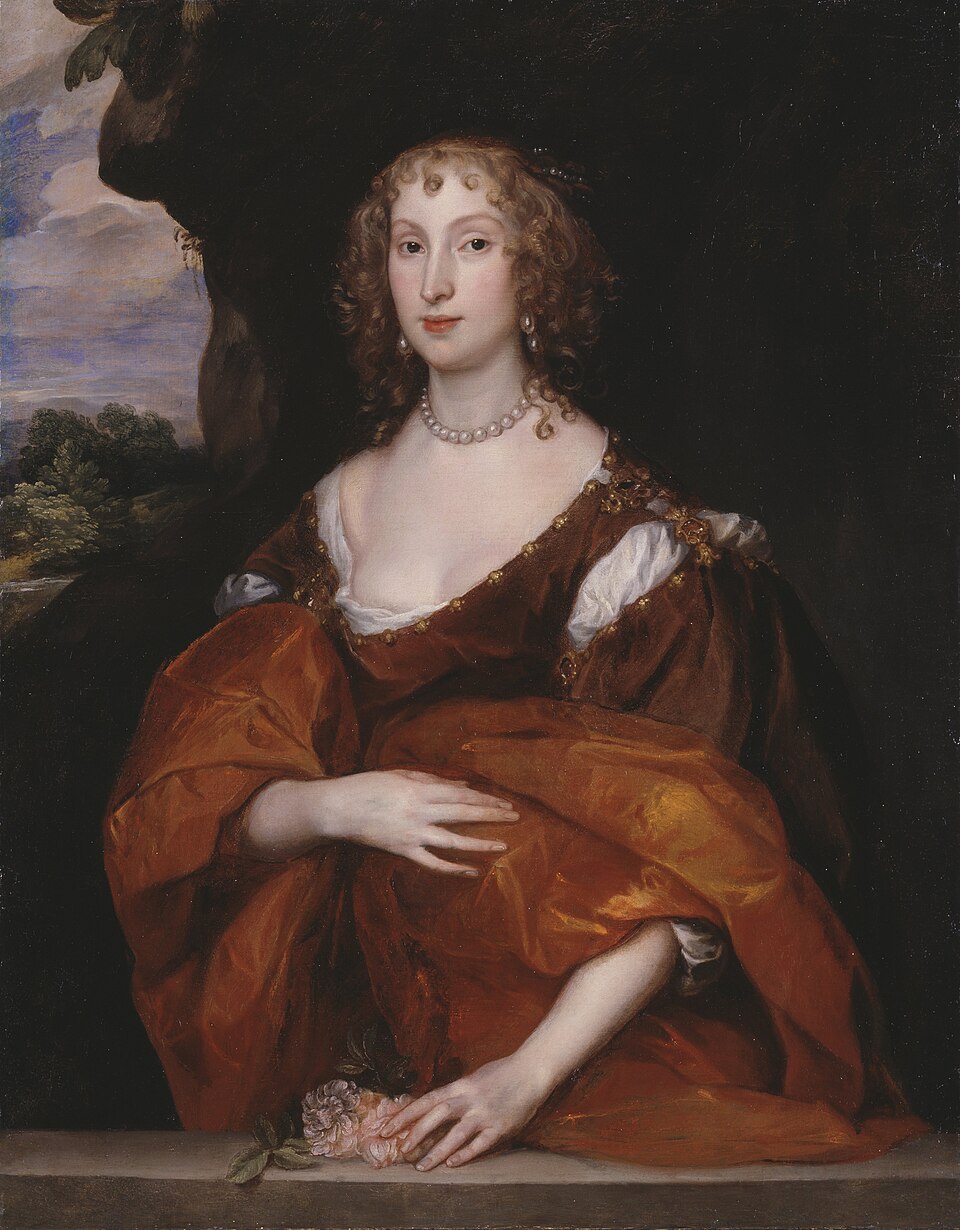
A woman in a low-cut russet gown touches a spray of roses, bare rocks behind her. Van Dyck painted Mary Hill, Lady Killigrew, in 1638 as one half of a married pair, and after more than 150 years apart the two portraits hang together again.
The story behind the painting
Mary Hill came from Honiley in Warwickshire and married Sir William Killigrew, a courtier to King Charles I and later a noted playwright. Her dates of birth and death are unknown; the couple had seven children. The portrait is dated 1638, when Sir William and his partners were trying to drain the Lincolnshire fens, an immensely expensive undertaking that caused the family great economic distress. That did not stop them from commissioning a matching pair of husband and wife portraits from the Flemish painter Anthony van Dyck.
What to look for
Lady Killigrew faces the viewer, standing by a stone parapet. She wears a russet gown cut low, with the edge of a white shift showing beneath it. Look at her hand: she touches roses. Then look behind her at the bare rocks of the background. The painting measures about 83 by 106.5 cm. Van Dyck was known for bringing a number of contemporary elements into English portrait painting, and the small objects here are not decoration alone; each carries a meaning chosen for a married woman.
Meaning and intent
According to the source, the roses she touches allude to a happy marriage, and the bare rocks symbolise constancy. Read beside her husband's portrait, the painting becomes a statement about a couple: love and faithfulness, set down at a time of money troubles. That constancy was tested. During the English Civil War of 1642 to 1651 the couple were reduced to poverty, forced to flee the country, and lived apart for several years. They were reunited at the Restoration in 1660.
Legacy
After the Restoration Sir William regained his position at court, and Lady Mary became dresser to the dowager Queen Henrietta Maria. The Tate in London bought van Dyck's portrait of Sir William Killigrew, also dated 1638, in 2002, and acquired this portrait of his wife from a different source in 2003, bringing the pair together for the first time in over 150 years. Wikidata also lists the Los Angeles County Museum of Art as a holder. Another portrait of her, after van Dyck, is at Belton House in Lincolnshire.
Did you know?
- Painted by van Dyck in 1638 as a pair with her husband's portrait.
- The roses allude to a happy marriage; the rocks to constancy.
- The couple fled England during the Civil War and reunited in 1660.
- The Tate reunited the pair in 2002 and 2003.
About the artist
Anthony van Dyck (1599-1641)
portrait · Tate · Los Angeles County Museum of Art
More by Anthony van Dyck
 Charles I in Three Positions - Anthony van Dyck (1635)
 Charles I (1600-1649) with M. de St Antoine - Anthony van Dyck (1636)
 Charles I at the Hunt - Anthony van Dyck (1635)
 Self-portrait with a Sunflower - Anthony van Dyck (1632)
 Lord John Stuart and His Brother, Lord Bernard Stuart - Anthony van Dyck (1638)
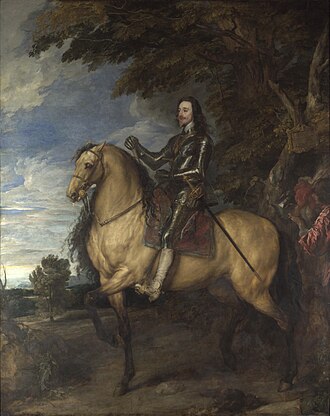 Equestrian Portrait of Charles I - Anthony van Dyck (1637)
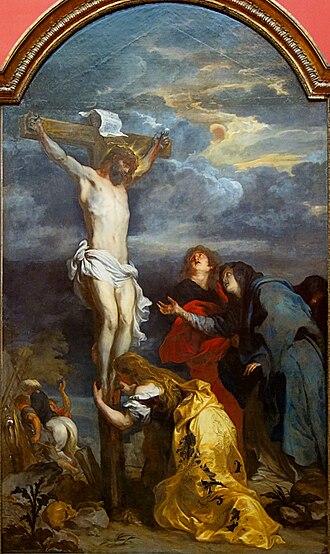 Crucifixion - Anthony van Dyck
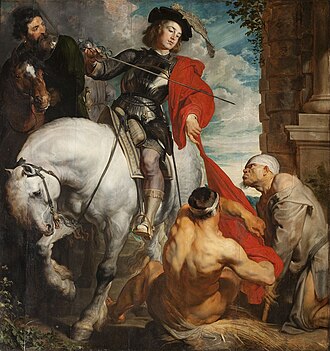 Saint Martin and the Beggar - Anthony van Dyck (1621)
Paintings by related artists
 Supper at Emmaus - Caravaggio (1601)
 The Calling of Saint Matthew - Caravaggio (1609)
 Las Meninas - Diego Velázquez (1656)
 The Surrender of Brea - Diego Velázquez (1635)
 Saint Francis in Meditation - Francisco de Zurbarán (1639)
 The Immaculate Conception - Francisco de Zurbarán (1661)
 The Elevation of the Cross - Peter Paul Rubens (1609)
 The Rape of the Daughters of Leucippus - Peter Paul Rubens (1618)
 The Night Watch - Rembrandt van Rijn (1642)
 Self-Portrait - Rembrandt van Rijn (1659)
 A Militiaman Holding a Berkemeyer, Known as the ‘Merry Drinker’ - Frans Hals (1620s)
 Laughing Cavalier - Frans Hals (1624)