Portrait of Alof de Wignacourt and his Page
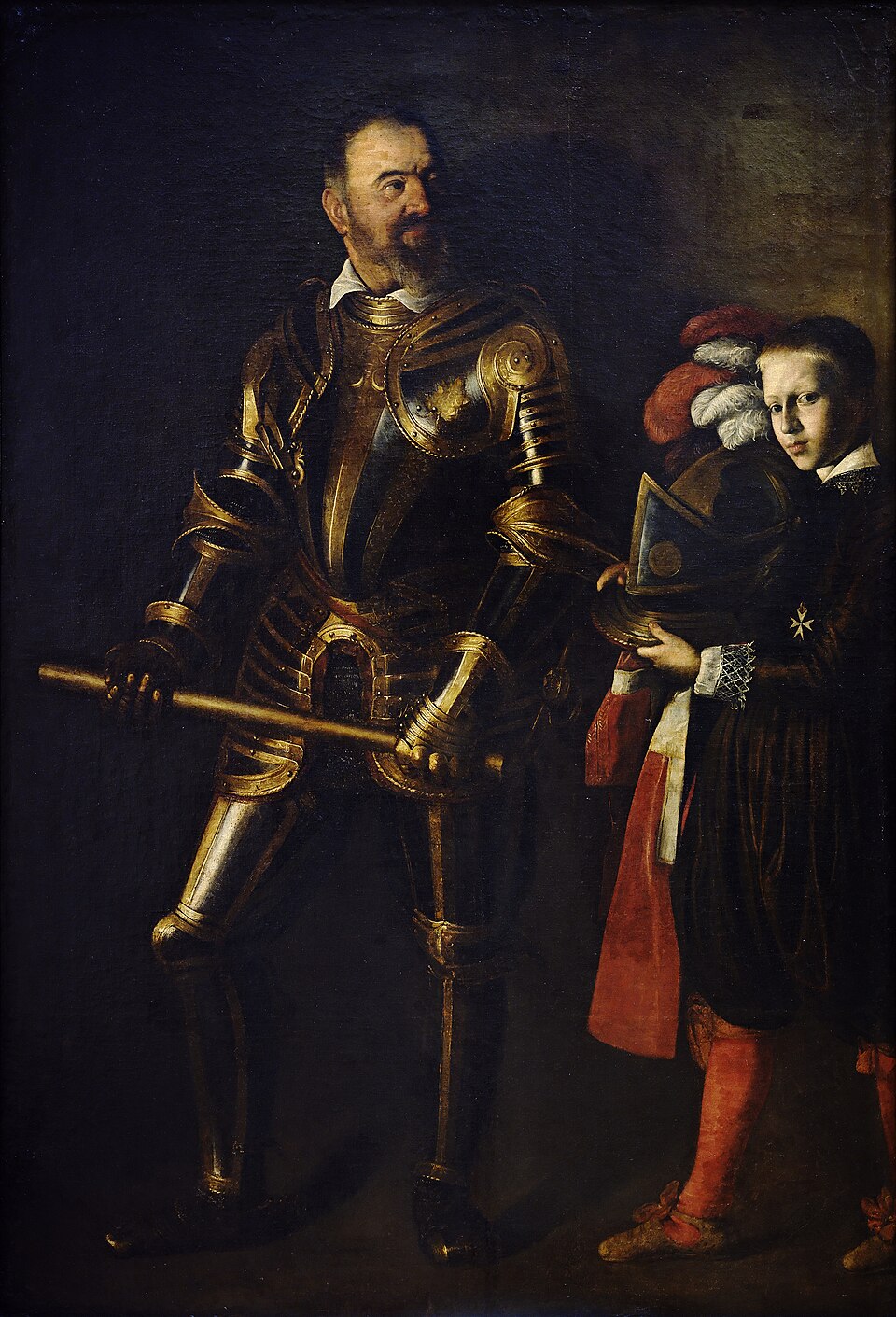
A Grand Master of the Knights of Malta in gleaming black and gold armour, and beside him a boy holding his helmet. Caravaggio painted the man of steel, but it is the curious page who still catches our eye.
The story behind the painting
Alof de Wignacourt joined the Knights of Saint John in 1564, aged seventeen, and fought the next year in the Great Siege of Malta. Elected Grand Master in 1601, he wanted to raise the prestige of the Order and its new capital, Valletta. Caravaggio, then the most famous painter in Rome and Naples, arrived in Malta from Naples in July 1607. According to his early biographers Giovanni Baglione and Giovanni Bellori, he began at once with portraits of Wignacourt and other high ranking knights. The painting is dated about 1607 to 1608.
What to look for
Wignacourt, then about sixty, stands in formal Milanese armour holding his baton of command, staring upwards and out of the frame. The page is placed a little awkwardly: his feet line up with the knight's, as if beside him, yet his hand and the helmet overlap Wignacourt's elbow, as if he stood in front. This is explained by Caravaggio's habit of painting separately from live models; the two were apparently never in the studio together. The boy's lively expression and alert gaze made him so attractive that later artists visiting Malta copied him several times.
Meaning and intent
The knight is meant to be looked at in awe, every gleaming inch an image of the Order's military might. Wignacourt had strengthened the island's fortifications, built an aqueduct and turned the Knights into a sovereign power, a prince answerable only to the Pope. One of his innovations was a court of young pages from Europe's noblest Catholic families. Next to the man of steel, the page with his boyish interest is the one fully human presence, and the more sympathetic one.
Legacy
A double portrait with a page was unusual at the time. Wignacourt may have ordered it to stress the dignity of his court, or Caravaggio may have remembered a work by Titian he could have seen in his youth in Milan, Alfonso d'Avalos Addressing his Troops, with a page holding the governor's helmet. According to John Gash and others, the page is probably Nicholas de Paris Boissy, a French aristocrat who became Grand Prior of France in 1657. The painting, about 194 by 134 cm, now hangs in the Louvre.
Did you know?
- Painted in Malta about 1607-1608, soon after Caravaggio arrived in July 1607.
- The sitter was elected Grand Master of the Knights of Malta in 1601.
- The page is probably Nicholas de Paris Boissy.
- Held in the Louvre, Paris.
About the artist
Caravaggio (1571-1610)
portrait · Department of Paintings of the Louvre · Italian Baroque painting
More by Caravaggio
 Supper at Emmaus - Caravaggio (1601)
 The Calling of Saint Matthew - Caravaggio (1609)
 The Beheading of Saint John the Baptist - Caravaggio (1608)
 Supper at Emmaus - Caravaggio (1601)
 Medusa - Caravaggio (1597)
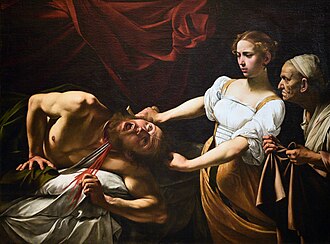 Judith Beheading Holofernes - Caravaggio (1598)
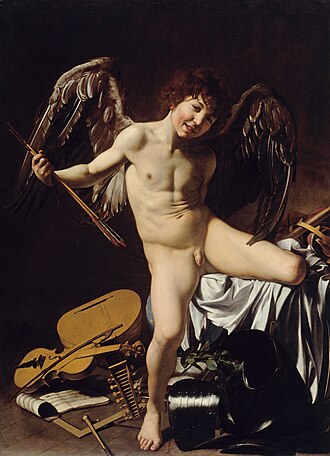 Amor Vincit Omnia - Caravaggio (1600s)
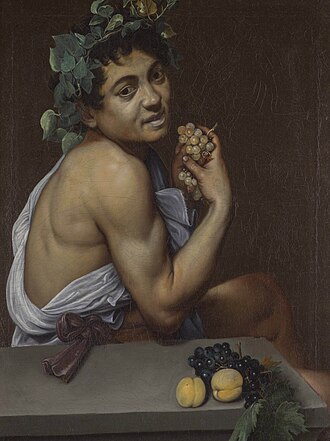 Self-Portrait as Bacchus - Caravaggio (1595)
Paintings by related artists
 Las Meninas - Diego Velázquez (1656)
 The Surrender of Brea - Diego Velázquez (1635)
 Saint Francis in Meditation - Francisco de Zurbarán (1639)
 The Immaculate Conception - Francisco de Zurbarán (1661)
 Charles I in Three Positions - Anthony van Dyck (1635)
 Charles I (1600-1649) with M. de St Antoine - Anthony van Dyck (1636)
 The Elevation of the Cross - Peter Paul Rubens (1609)
 The Rape of the Daughters of Leucippus - Peter Paul Rubens (1618)
 The Night Watch - Rembrandt van Rijn (1642)
 Self-Portrait - Rembrandt van Rijn (1659)
 A Militiaman Holding a Berkemeyer, Known as the ‘Merry Drinker’ - Frans Hals (1620s)
 Laughing Cavalier - Frans Hals (1624)