Magistrate of Brussels
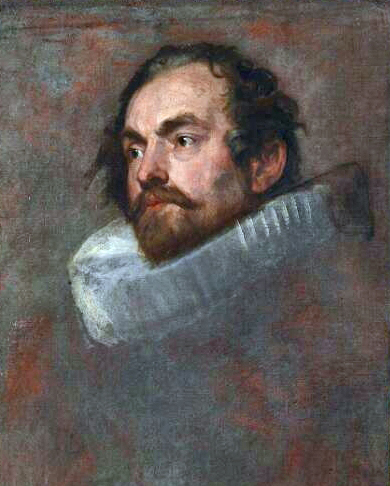
For years it hung in a retreat house in Derbyshire, thought to be a copy, and once fell off the wall onto a CD player. Then a television appraisal and a careful cleaning revealed a real oil sketch by Anthony van Dyck.
The story behind the painting
Father Jamie MacLeod bought the painting some years earlier from an antiques shop in Nantwich, Cheshire, and hung it in the Whaley Hall Ecumenical Retreat House he runs at Whaley Bridge. The frame was labelled Sir A van Dyck, but the picture was thought to be a copy. At one point it fell from the wall and smashed a CD player, without significant damage. In 2012 he took it to a recording of the BBC programme Antiques Roadshow at Newstead Abbey, and then to a second recording at the Royal Agricultural University in Cirencester, where the presenter Fiona Bruce recognised it as potentially a van Dyck.
What to look for
Fiona Bruce had been working with the art historian Philip Mould on an episode of Fake or Fortune? about van Dyck, and Mould shared her suspicion. He suggested treatment by an expert restorer, describing it as the art equivalent of an archaeological excavation. Simon Gillespie removed layers of later overpaint with solvent, work equal to about three weeks full-time. What had looked like a finished portrait turned out to be a sketch with unfinished details: the ruff in particular is only outlined. Look at the head of the magistrate against a red background, the same red found in other known head studies for the same commission.
Meaning and intent
Mould believed the work was probably a preparatory sketch for van Dyck's 1634 group painting Magistrates of Brussels, which was destroyed in the bombardment of Brussels in 1695. Its composition survives in a grisaille sketch in the École Nationale Supérieure des Beaux-Arts in Paris, made by van Dyck to show his planned layout. The pose of this head matches the rightmost figure in that grisaille. Three other heads of magistrates with the same red background are known, two in the Ashmolean Museum in Oxford and one sold to an unknown buyer, and a work in the Royal Collection may belong to the series. The sketch is a rare trace of a lost masterpiece.
Legacy
The attribution was confirmed by Christopher Brown, a noted authority on van Dyck, and the rediscovery in 2013 became one of the best-known finds in the history of Antiques Roadshow. Father MacLeod planned to sell it to buy church bells marking the centenary of the start of the First World War. It was offered at Christie's on 8 July 2014 but did not sell, and was later sold to a private collector. In 2015 it was on loan to the Rubenshuis in Antwerp, in 2016 it was shown at the Frick Collection in New York, and as of September 2018 it was again part of the Rubenshuis display.
Did you know?
- Rediscovered in 2013 through BBC Antiques Roadshow.
- Confirmed as van Dyck by Christopher Brown after restoration by Simon Gillespie.
- Probably a sketch for the lost Magistrates of Brussels of 1634, destroyed in 1695.
- Shown at the Rubenshuis, Antwerp, and the Frick Collection, New York.
About the artist
Anthony van Dyck (1599-1641)
More by Anthony van Dyck
 Charles I in Three Positions - Anthony van Dyck (1635)
 Charles I (1600-1649) with M. de St Antoine - Anthony van Dyck (1636)
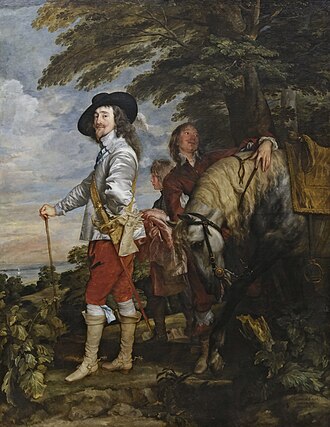 Charles I at the Hunt - Anthony van Dyck (1635)
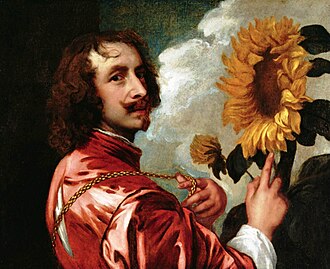 Self-portrait with a Sunflower - Anthony van Dyck (1632)
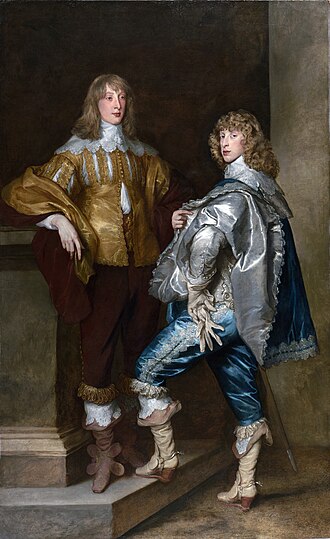 Lord John Stuart and His Brother, Lord Bernard Stuart - Anthony van Dyck (1638)
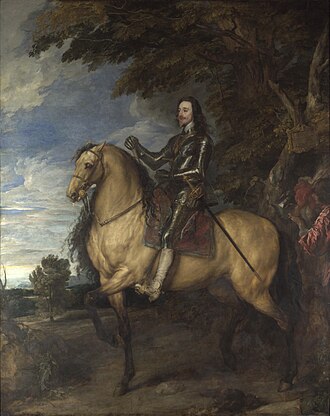 Equestrian Portrait of Charles I - Anthony van Dyck (1637)
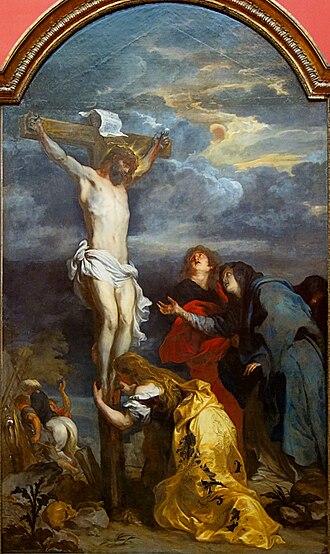 Crucifixion - Anthony van Dyck
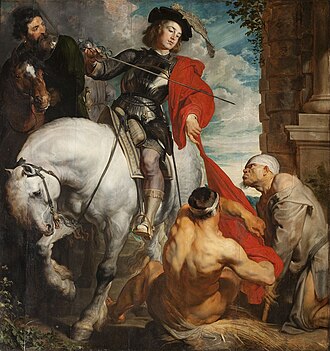 Saint Martin and the Beggar - Anthony van Dyck (1621)
Paintings by related artists
 Supper at Emmaus - Caravaggio (1601)
 The Calling of Saint Matthew - Caravaggio (1609)
 Las Meninas - Diego Velázquez (1656)
 The Surrender of Brea - Diego Velázquez (1635)
 Saint Francis in Meditation - Francisco de Zurbarán (1639)
 The Immaculate Conception - Francisco de Zurbarán (1661)
 The Elevation of the Cross - Peter Paul Rubens (1609)
 The Rape of the Daughters of Leucippus - Peter Paul Rubens (1618)
 The Night Watch - Rembrandt van Rijn (1642)
 Self-Portrait - Rembrandt van Rijn (1659)
 A Militiaman Holding a Berkemeyer, Known as the ‘Merry Drinker’ - Frans Hals (1620s)
 Laughing Cavalier - Frans Hals (1624)