Ecce Homo
Caravaggio · 1605
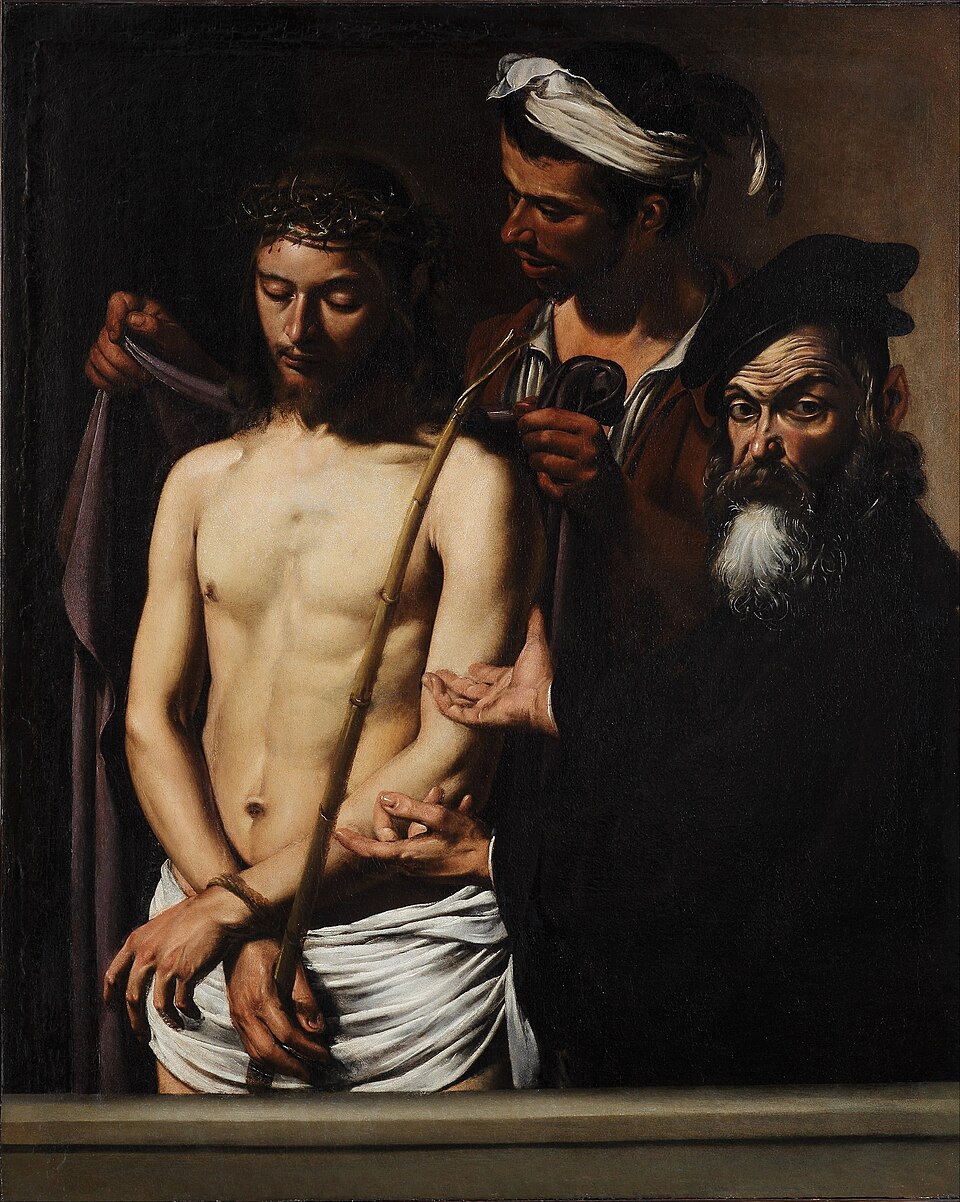
Pilate presents the mocked Christ to the crowd: Behold the man. This painting once hung forgotten in a school stairwell as a copy, and scholars still argue whether Caravaggio painted it.
The story behind the painting
According to Giambattista Cardi, nephew of the painter Cigoli, Cardinal Massimo Massimi commissioned an Ecce Homo from three artists, Cigoli, Caravaggio and Domenico Passignano, without telling them about each other. The contract with Caravaggio was signed on 25 June 1605, for delivery in early August. But that summer he was arrested for attacking a house, then fled to Genoa after assaulting a notary, and in May 1606 he fled Rome after killing a man in a duel. Cigoli's version was painted only in 1607, suggesting Massimi was still waiting. Wikidata dates the painting 1605; John Gash proposes 1609.
What to look for
The scene comes from the Gospel of John: Pontius Pilate shows Christ to the crowd with the words Ecce homo, Behold the man. Caravaggio combined that moment with the earlier mocking, when Christ, already crowned with thorns, was robed like a king by his tormentors. The forms are close to us, modelled by dramatic light, with no depth or background. Look at the torturer, who seems to mix cruelty with pity, and at Pilate, a neutral, almost sympathetic figure dressed in clothing of Caravaggio's own time, as a 17th-century official. The canvas is about 128 by 103 cm according to Wikidata.
Meaning and intent
Unlike Cigoli, who made Christ's tormentor a grotesque, Caravaggio dropped that convention and painted a human being, which gives the scene its psychological realism. Massimi already owned a Crowning with Thorns by Caravaggio, and this picture may have been meant as its companion. Yet the attribution is disputed. Sebastian Schutze finds the composition cramped and its narrative fractured, with Pilate looking like a donor in an altarpiece, painted in another manner. Anna Orlando and Lorenzo Pericolo believe it is genuine. A recently re-attributed Ecce Homo in Madrid has also been claimed as the painting Massimi commissioned; the question remains unsettled.
Legacy
Until the Second World War the painting hung in a stairwell of the nautical school in Genoa, listed as a copy by Leonello Spada. It was moved during the war and for a time thought lost, until Caterina Marcenaro found it in the Palazzo Ducale in 1953. Roberto Longhi and Marcenaro attributed it to Caravaggio in 1954. That year Pico Cellini restored it heavily, adding new cloth to all four edges, an intervention now considered invasive. A 2003 restoration in Genoa used X-rays and infrared. It hangs in the Palazzo Bianco and was lent to Columbus, Ohio, Genoa's sister city, in 2012.
Did you know?
- Contract signed 25 June 1605; Wikidata dates it 1605, John Gash suggests 1609.
- Rediscovered in Genoa's Palazzo Ducale in 1953.
- First attributed to Caravaggio by Roberto Longhi in 1954.
- Attribution still debated; held in the Palazzo Bianco, Genoa.
About the artist
Caravaggio (1571-1610)
religious art · man · Jesus Christ · Baroque
More by Caravaggio
 Supper at Emmaus - Caravaggio (1601)
 The Calling of Saint Matthew - Caravaggio (1609)
 The Beheading of Saint John the Baptist - Caravaggio (1608)
 Supper at Emmaus - Caravaggio (1601)
 Medusa - Caravaggio (1597)
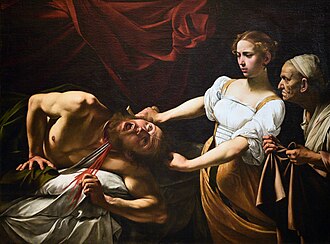 Judith Beheading Holofernes - Caravaggio (1598)
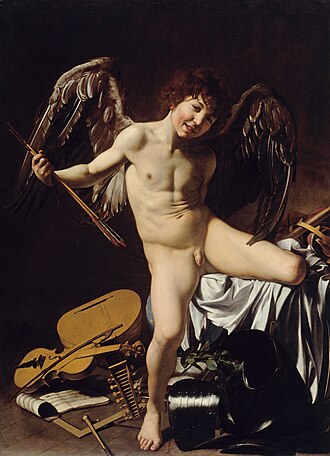 Amor Vincit Omnia - Caravaggio (1600s)
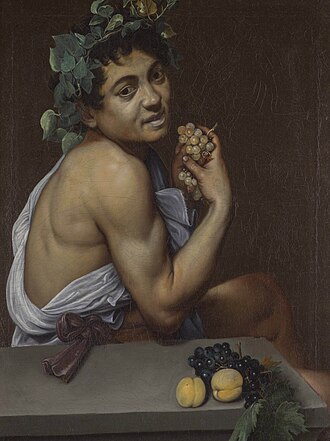 Self-Portrait as Bacchus - Caravaggio (1595)
Paintings by related artists
 Las Meninas - Diego Velázquez (1656)
 The Surrender of Brea - Diego Velázquez (1635)
 Saint Francis in Meditation - Francisco de Zurbarán (1639)
 The Immaculate Conception - Francisco de Zurbarán (1661)
 Charles I in Three Positions - Anthony van Dyck (1635)
 Charles I (1600-1649) with M. de St Antoine - Anthony van Dyck (1636)
 The Elevation of the Cross - Peter Paul Rubens (1609)
 The Rape of the Daughters of Leucippus - Peter Paul Rubens (1618)
 The Night Watch - Rembrandt van Rijn (1642)
 Self-Portrait - Rembrandt van Rijn (1659)
 A Militiaman Holding a Berkemeyer, Known as the ‘Merry Drinker’ - Frans Hals (1620s)
 Laughing Cavalier - Frans Hals (1624)