Annunciation
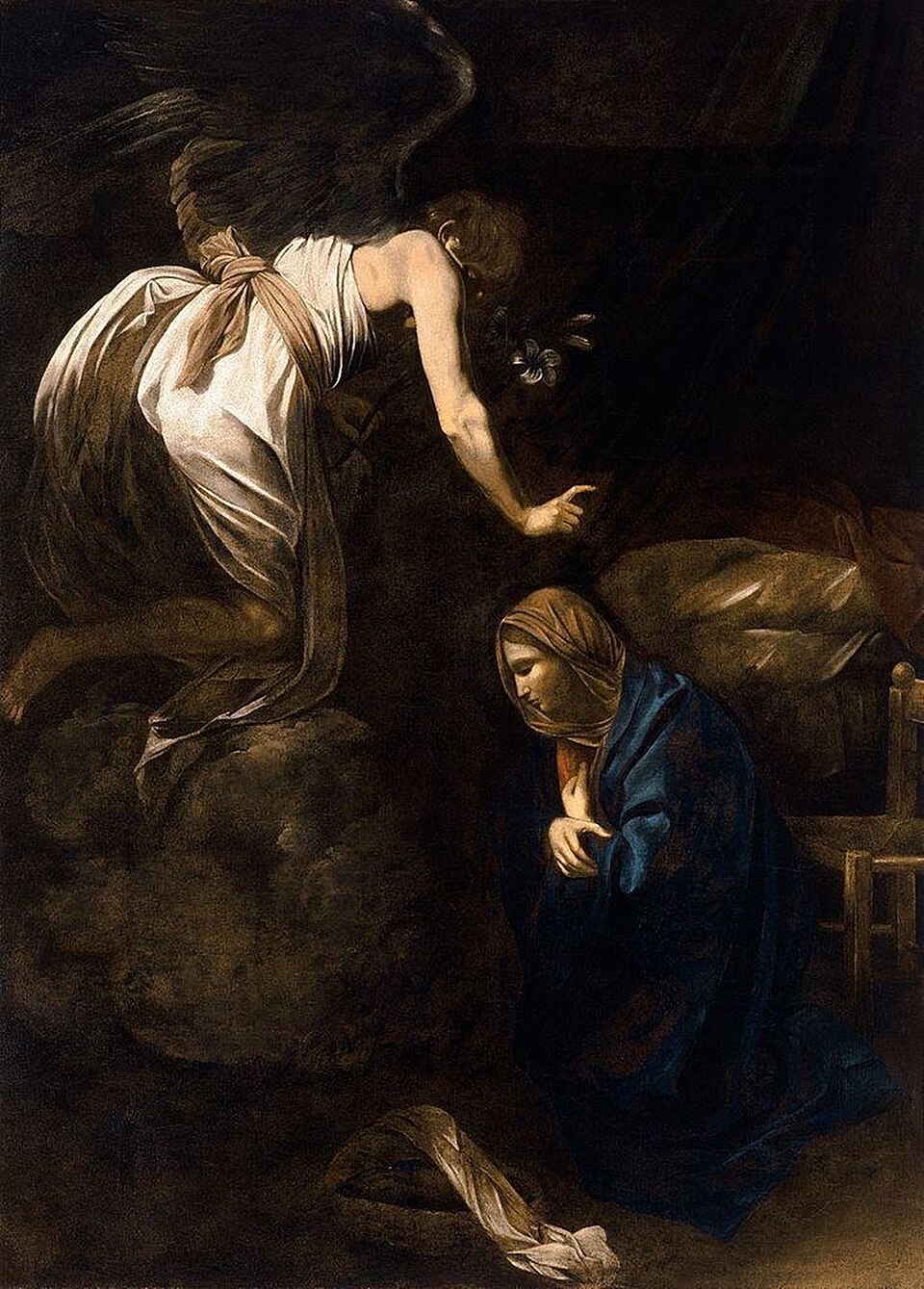
Out of a wall of darkness, an angel drops on a cloud while the Virgin bows low below him. Damaged as it is, this late altarpiece still carries the electric charge of Caravaggio's final years.
The story behind the painting
Caravaggio finished this Annunciation around 1608, in the restless last period of his life. The painting found its home far from Italy: Henry II, Duke of Lorraine, gave it to his primatial church in Nancy as the main altarpiece. How it got there is not fully certain. The Wikipedia text suggests it was perhaps acquired by one of the Duke's sons during a visit to Malta in 1608. Today it hangs in the Musée des Beaux-Arts de Nancy. Wikidata gives no exact year for the work, so the date of about 1608 comes from the Wikipedia account. It is a large canvas, 285 by 205 centimetres, made to be seen from a distance above an altar, where its darkness and its two bright figures would speak across the church.
What to look for
Only two figures share the canvas. Above, the Archangel Gabriel arrives on a cloud, holding lilies, a flower that is itself a symbol of the Virgin. Below, Mary kneels in a prostrate, receptive posture as she hears God's plan for her. Notice how almost the entire picture is dark except for these two bodies, a classic example of Caravaggio's tenebrism. The angel seems to float out of the picture, almost pushing past its surface toward us, an illusion the source calls more Baroque than usual for the painter. Look too at the loose, quick brushwork, typical of his late years. Be aware that the painting has been heavily damaged and retouched; what most clearly remains of Caravaggio's own hand is the angel.
Meaning and intent
The drama here is psychological rather than noisy. Caravaggio sets an energetic heavenly messenger against a quiet, accepting young woman, and the contrast between action and stillness becomes the whole story of the Annunciation. Gabriel brings the message; Mary receives it with her body bowed. The darkness around them is not empty. It isolates the moment, as if the rest of the world has fallen away and only this exchange matters. The lilies tie the two together, a gift from heaven that already speaks of the Virgin's purity. In this way a familiar scene from Christian art becomes intimate, almost private, even on the scale of a great altarpiece.
Legacy
Because so much of the surface has been repainted, the Nancy Annunciation is less often celebrated than Caravaggio's Roman masterpieces. Yet it offers something precious: a view of the artist's late manner, with its looser handling and its bold illusionism. Scholars have noted that the angel resembles the figure in John the Baptist at the Fountain, another work linked to the painter, which helps place this canvas within his late output. The painting's journey to Lorraine also shows how quickly Caravaggio's art travelled beyond Rome. For visitors in Nancy, it remains a rare chance to stand before an altarpiece by him in France, and to feel how light and shadow can carry a sacred message.
Did you know?
- Wikipedia dates the painting to around 1608; Wikidata gives no year.
- Henry II, Duke of Lorraine, gave it to his primatial church in Nancy as the main altarpiece.
- The painting is heavily damaged and retouched; the angel is the best preserved part of Caravaggio's work.
- The angel resembles the figure in John the Baptist at the Fountain.
About the artist
Caravaggio (1571-1610)
religious art · Mary · Italian Baroque painting · angel · Annunciation
More by Caravaggio
 Supper at Emmaus - Caravaggio (1601)
 The Calling of Saint Matthew - Caravaggio (1609)
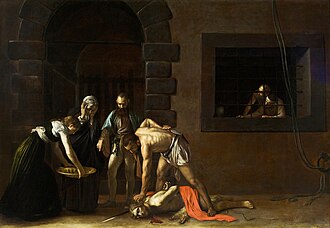 The Beheading of Saint John the Baptist - Caravaggio (1608)
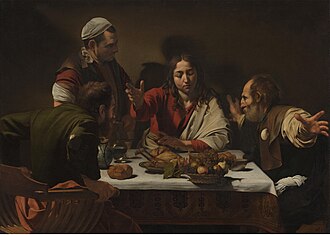 Supper at Emmaus - Caravaggio (1601)
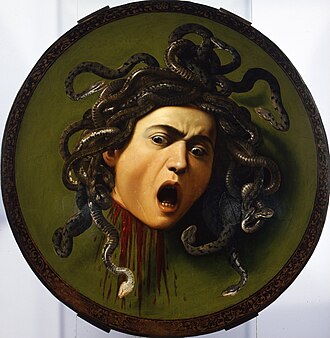 Medusa - Caravaggio (1597)
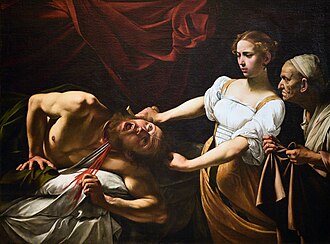 Judith Beheading Holofernes - Caravaggio (1598)
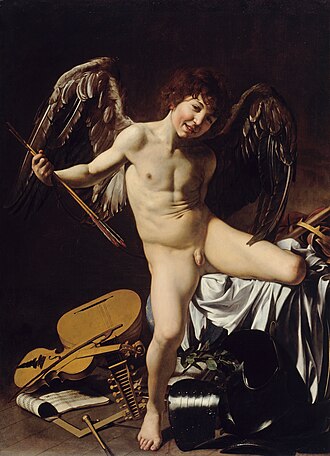 Amor Vincit Omnia - Caravaggio (1600s)
%2C%201595%20circa%2C%20534.jpg) Self-Portrait as Bacchus - Caravaggio (1595)
Self-Portrait as Bacchus - Caravaggio (1595)
Paintings by related artists
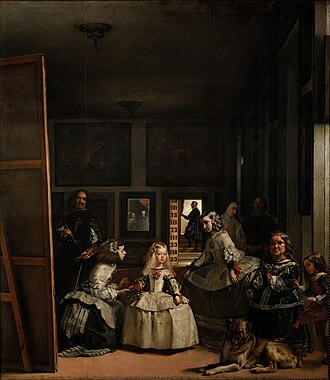 Las Meninas - Diego Velázquez (1656)
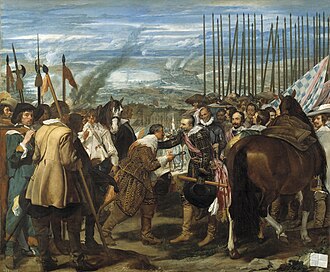 The Surrender of Brea - Diego Velázquez (1635)
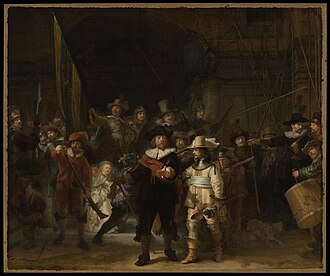 The Night Watch - Rembrandt van Rijn (1642)
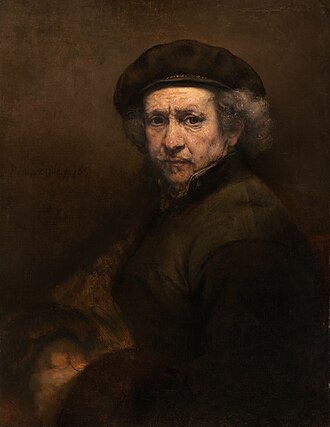 Self-Portrait - Rembrandt van Rijn (1659)
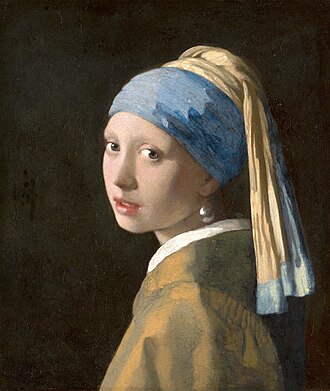 Girl with a Pearl Earring - Johannes Vermeer (1665)
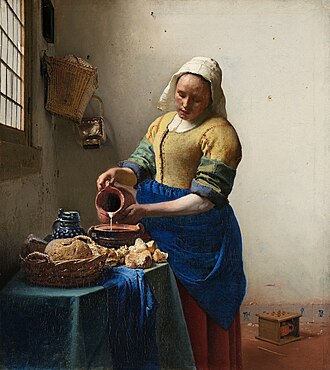 The Milkmaid - Johannes Vermeer (c. 1658)