Roses and Jasmine in a Delft Vase
Pierre-Auguste Renoir · 1880s
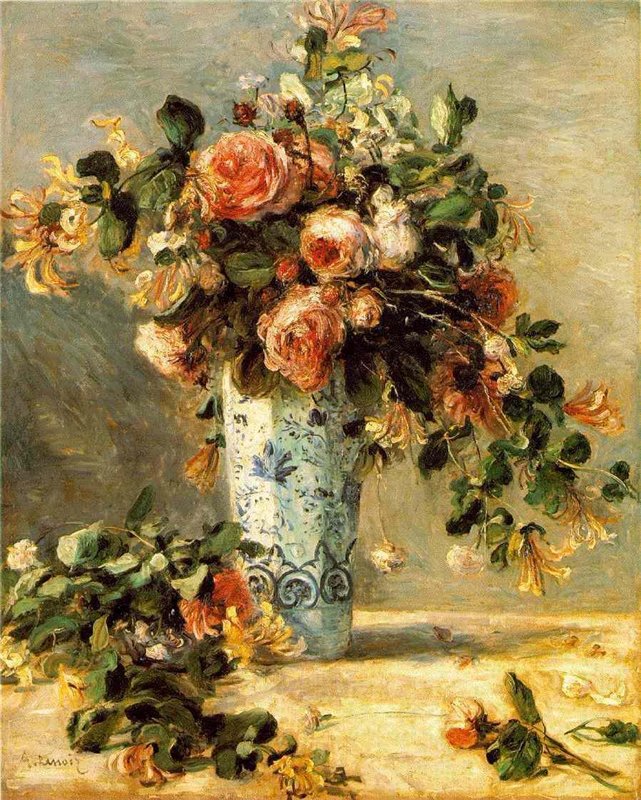
Roses and jasmine spill from a Delft vase onto a tablecloth. Hidden in a vault during the war, then kept unseen in a Russian museum store, this Renoir was shown to the public only in 1995.
The story behind the painting
Renoir painted Roses and Jasmine in a Delft Vase around 1880 to 1881, under the influence of the art dealer Paul Durand-Ruel. In the early 1880s Durand-Ruel's finances had greatly improved, and he could regularly support his Impressionist friends. Durand-Ruel said that partly thanks to his influence Renoir painted more still lifes at this time than before, noting that flower still lifes found buyers more easily. Wikidata places the painting more broadly in the 1880s.
What to look for
The picture shows a bouquet of roses and jasmine in a Delft earthenware vase. Several sprigs of jasmine and roses lie beside the vase on a table covered with a cloth. In the lower left is the signature, A. Renoir. It is oil on canvas and measures 81.5 by 65 cm, a generous size for a flower piece. As you look, follow the stems that have fallen onto the cloth, which pull the eye away from the vase and across the table.
Meaning and intent
The painting belongs to a moment when a dealer's encouragement shaped what an Impressionist painted. Flowers were a subject collectors wanted, and Renoir answered with a large, full bouquet. The sources do not record what the picture meant to him personally. What they do show is a still life born from a working friendship between painter and dealer at a time when that support helped keep the Impressionists painting. Its early Russian inventories simply called it Vase with Flowers.
Legacy
Once finished, the canvas went to Copenhagen, to the collection of Paul Hermann Heilbutt, then to Germany, where the Weimar businessman Otto Krebs acquired it. After Krebs died in 1941, his collection was hidden in a specially built vault on his Holzdorf estate. In 1945 Soviet troops occupied Holzdorf, and teams found and inventoried the collection. In 1949 the painting went to the Hermitage, where it stayed long in storage, while in the West the Krebs collection was thought lost. It was first shown in 1995 and has been in the permanent collection since 2001.
Did you know?
- Painted around 1880 to 1881.
- Signed A. Renoir at lower left.
- Hidden in a vault on Otto Krebs's estate during the war.
- First shown at the Hermitage in 1995.
About the artist
Pierre-Auguste Renoir (1841-1919)
Hermitage Museum · floral painting
More by Pierre-Auguste Renoir
 Dance at Le Moulin de la Galette - Pierre-Auguste Renoir (1876)
 Luncheon of the Boating Party - Pierre-Auguste Renoir (1881)
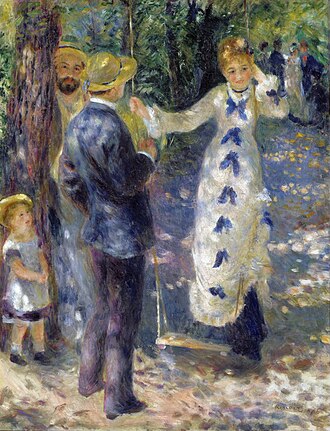 La Balançoire - Pierre-Auguste Renoir (1876)
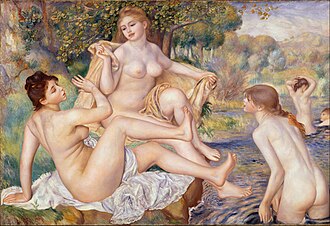 The Great Bathers - Pierre-Auguste Renoir (1884)
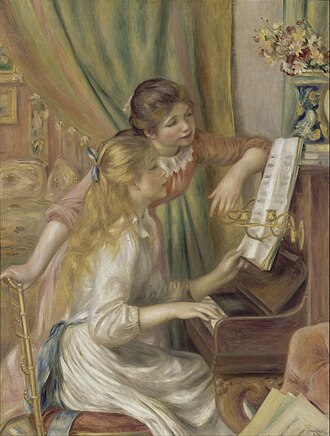 Girls at the Piano - Pierre-Auguste Renoir (1892)
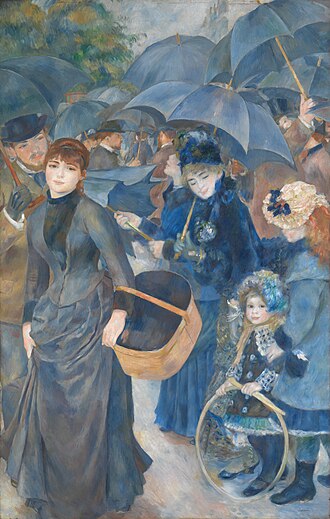 The Umbrellas - Pierre-Auguste Renoir (1880s)
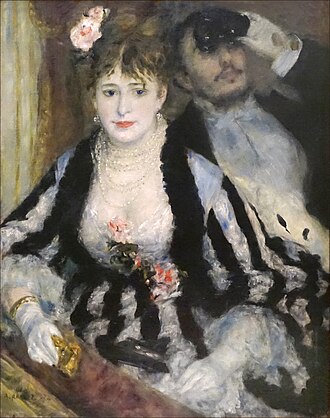 La loge - Pierre-Auguste Renoir (1874)
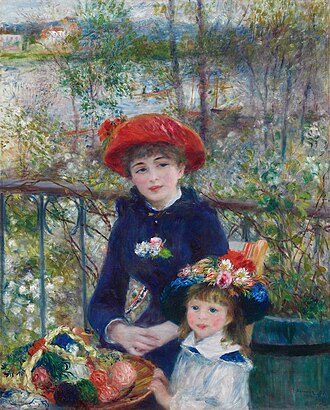 Two Sisters - Pierre-Auguste Renoir (1881)
Paintings by related artists
 Impression, Sunrise - Claude Monet (1872)
 Water Lilies - Claude Monet (1906)
 Luncheon on the Grass - Édouard Manet (1863)
 Olympia - Édouard Manet (1863)
 The Cradle - Berthe Morisot (1872)
 Summer's Day - Berthe Morisot (1879)
 L'Absinthe - Edgar Degas (1875)
 The Bellelli Family - Edgar Degas (1858)
 The Canal du Loing at Moret - Alfred Sisley (1892)
 The Watering Pond at Marly with Hoarfrost - Alfred Sisley (1876)
 Paris Street; Rainy Day - Gustave Caillebotte (1877)
 Les raboteurs de parquet - Gustave Caillebotte (1875)