Die hl. Barbara
Jan van Eyck · 1437
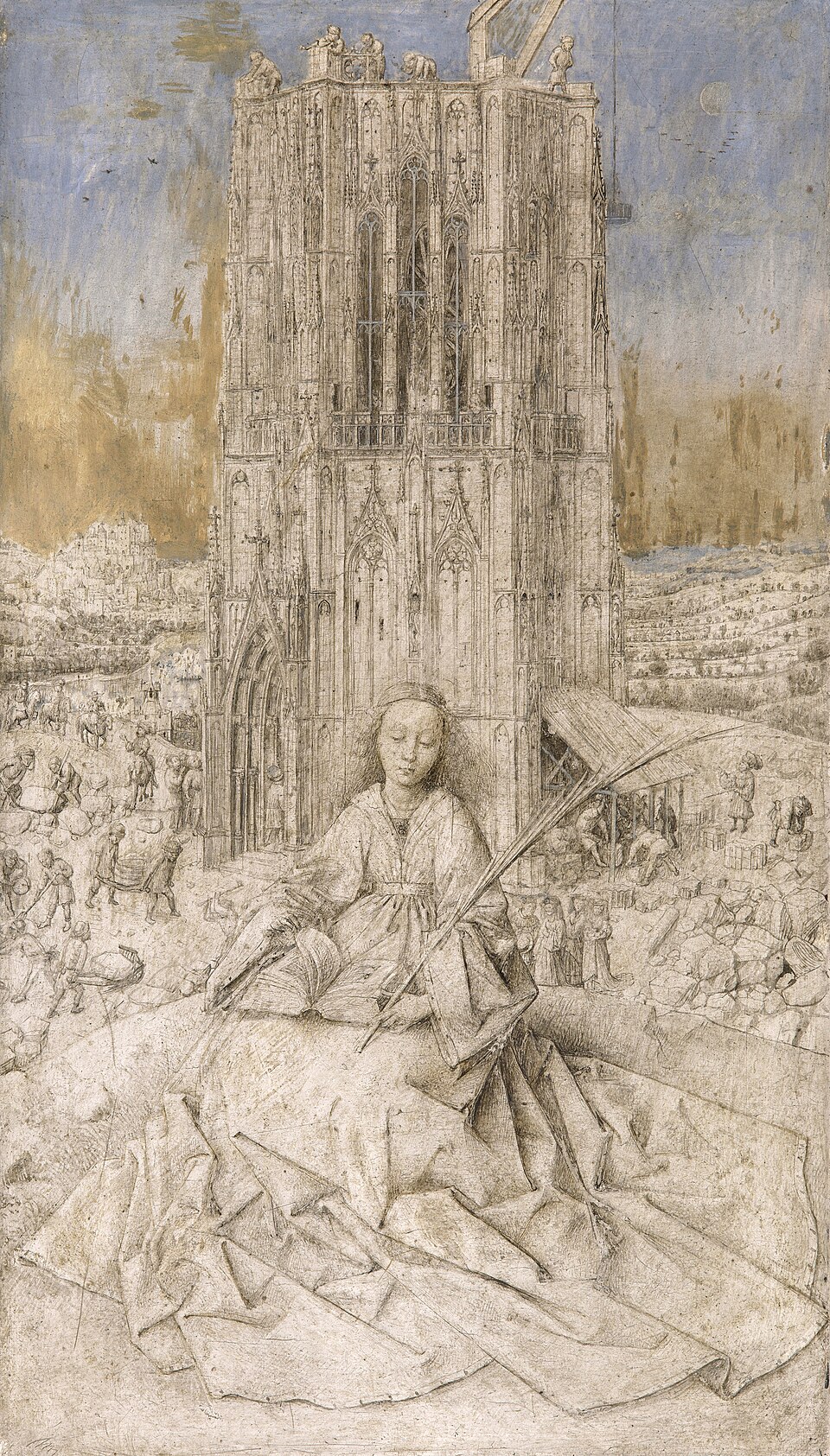
A young woman sits reading in the foreground while behind her a vast Gothic tower rises, swarming with builders hauling stone. Jan van Eyck signed this tiny panel in 1437, and nobody is sure whether it is finished.
The story behind the painting
Saint Barbara was a 3rd-century Christian martyr who became a popular saint in the late Middle Ages. According to her legend, her wealthy pagan father Dioscorus locked her in a tower to keep her from unwelcome suitors. While captive she let in a priest who baptised her, and for this she was hunted and finally beheaded by her father. She was a favourite subject for artists of van Eyck's generation; Robert Campin's Werl Triptych of 1438 is another example. Van Eyck made this small panel, only 34 by 18.5 cm, on oak in 1437.
What to look for
Barbara sits reading a book before a large Gothic tower still being built, with workmen carrying stone on the ground and on the tower itself. She has the narrow shoulders typical of van Eyck's women, a wide-sleeved houppelande with a fur collar, and, as a maiden, a bare head. Behind her three women in headdresses visit the site. The tower resembles Cologne Cathedral, then under construction. Detail fades as your eye moves back: the builders at the top are sketchier than those below. The painted red marble frame bears the words Jan van Eyck made me, 1437, in carved-looking capitals.
Meaning and intent
The tower is Barbara's attribute, the place of her captivity, and here it is shown as a living building site full of architects, foremen and labourers. The art historian Simone Ferrari wrote that its many small scenes seem to foreshadow Pieter Bruegel the Elder. Scholars still argue whether the panel is a study for a planned oil painting, an unfinished underdrawing, or a finished work in its own right; Wikipedia says the last is considered more likely. If the signature was added at the end, it may refer only to the design, but inscriptions were sometimes painted first.
Legacy
The panel was made with brush, stylus, silverpoint, ink, oil and black pigment on a chalk ground. The blue sky and some window tracery may be later additions, sometimes linked to the 17th-century Flemish painter Karel van Mander. If it was meant as a finished work, it would be the earliest surviving drawing by any artist, though not on paper or parchment, and the source notes it was highly regarded in its own time as an object in itself. Today it belongs to the Royal Museum of Fine Arts in Antwerp.
Schon gewusst?
- Signed and dated 1437 on its painted frame.
- Only 34 by 18.5 cm, on oak panel.
- Debated: finished drawing or unfinished painting.
- Held by the Royal Museum of Fine Arts in Antwerp.
Über den Künstler
Jan van Eyck (1390-1441)
religiöse Kunst · Flämische Primitive · Königliches Museum der Schönen Künste · Vlaamse Kunstcollectie · Barbara von Nikomedien
Mehr von Jan van Eyck
 Arnolfini-Porträt - Jan van Eyck (1434)
 Genter Altar - Jan van Eyck (1432)
 Rolin-Madonna - Jan van Eyck
 Die Madonna in der Kirche - Jan van Eyck (1440)
 Madonna des Kanonikus Georg van der Paele mit hll. Donatian, Georg und Stifter Paele - Jan van Eyck (1436)
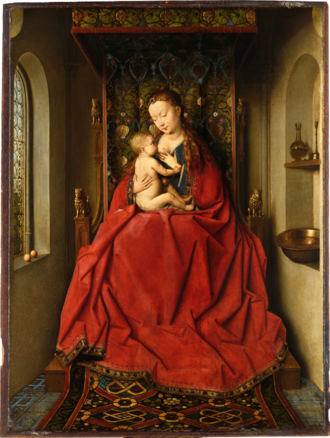 Lucca-Madonna - Jan van Eyck (1437)
 Dresdner Marienaltar - Jan van Eyck (1437)
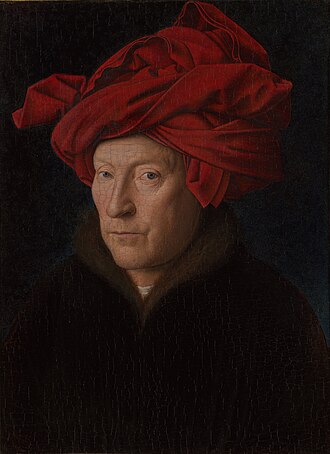 Porträt eines Mannes - Jan van Eyck (1433)
Werke verwandter Künstler
 Kreuzabnahme - Rogier van der Weyden (1440s)
 Porträt einer Dame - Rogier van der Weyden (1460)
 Die Verkündigung - Hans Memling (1480s)
 Szenen der Passion Christi - Hans Memling (1470)
 Der Garten der Lüste - Hieronymus Bosch
 Das Narrenschiff - Hieronymus Bosch (1500s)
 Die Jäger im Schnee - Pieter Bruegel the Elder (1565)
 Die niederländischen Sprichwörter - Pieter Bruegel the Elder (1551)