Die Madonna in der Kirche
Jan van Eyck · 1440
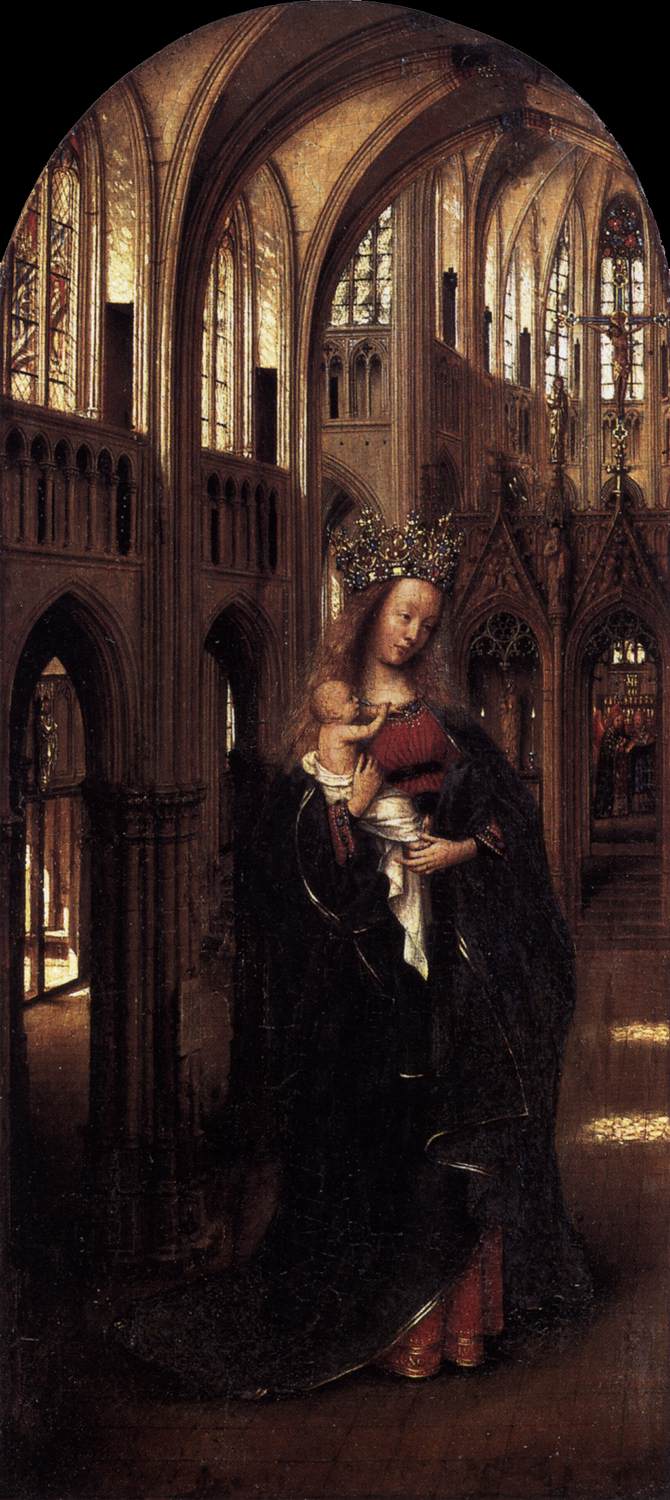
A panel barely larger than a hand holds an entire Gothic cathedral, flooded with light, and a crowned Mary taller than its arches. Step close: Jan van Eyck meant you to.
The story behind the painting
Madonna in the Church was probably painted around 1438 to 1440, though its date has been argued for more than a century, with proposals as early as 1424 to 1429. Most art historians see it as the left wing of a dismantled diptych whose other half was presumably a votive portrait. It was first documented in 1851. For a time it was given to Jan's brother Hubert, but by 1912 it was firmly attributed to Jan. Berlin's Gemäldegalerie acquired it in 1874. Three years later it was stolen and soon returned, but without its original inscribed frame, which was never recovered.
What to look for
At 31 by 14 cm, the panel is almost a miniature, small enough to invite you to lean in. Mary wears a dark blue robe over a red dress, a jewelled crown on her head, and holds the Child, who grips the neckline of her dress. She is unrealistically large for the building, as in Byzantine images. Behind her, a statue of Virgin and Child stands between two candles, two angels sing in a doorway, and reliefs show scenes from her life. Beams of light pour through the high windows and settle in two pools on the floor. Even cobwebs hang between the arches of the vault.
Meaning and intent
The light is the heart of the picture. Its shadows are rendered with unusual realism for the time, likely based on observation. Yet Erwin Panofsky noticed that the sunlight enters from the north, though churches of the period usually faced east, so light should come from the south. He concluded the light stands for the divine and follows the laws of symbolism, not nature. It alludes to Mary's purity and God's presence. The lost frame carried a hymn whose later stanza, not copied by van Eyck, compares the Virgin to a sunbeam passing through glass without staining it. Letters on her hem seem to read fragments of words for sun and light.
Legacy
Near-contemporary copies by the Master of 1499 and Jan Gossaert paired the panel with different donor wings and updated its style, changes later described as spiritually if not aesthetically disastrous to the original. Today the work is widely considered one of van Eyck's finest. Millard Meiss wrote that the splendour and subtlety of its light is unsurpassed in Western art. Wikidata gives the date as 1440; Wikipedia explains that scholars have placed it anywhere from the 1420s to around 1440, and some recent writers even suggest it may be his earliest surviving signed work.
Schon gewusst?
- Size 31 x 14 cm; Gemäldegalerie, Berlin, acquired 1874.
- Stolen in 1877 and returned without its original frame.
- Probably c. 1438-1440, though dates from the 1420s have been proposed.
Über den Künstler
Jan van Eyck (1390-1441)
religiöse Kunst · Frau · Maria · Jesuskind · Junge · Flämische Primitive · Mutter · Gemäldegalerie Berlin · Madonna mit Kind
Mehr von Jan van Eyck
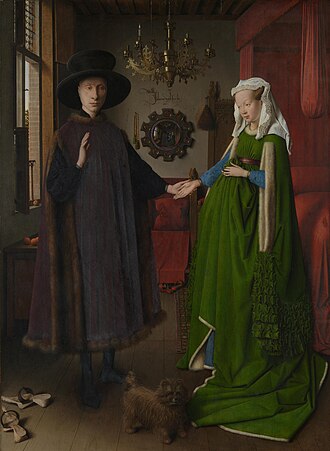 Arnolfini-Porträt - Jan van Eyck (1434)
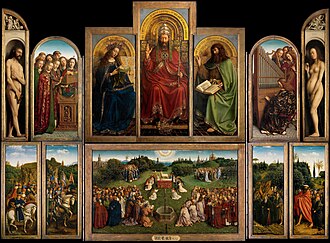 Genter Altar - Jan van Eyck (1432)
.webp) Rolin-Madonna - Jan van Eyck
Rolin-Madonna - Jan van Eyck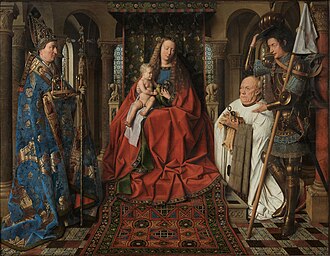 Madonna des Kanonikus Georg van der Paele mit hll. Donatian, Georg und Stifter Paele - Jan van Eyck (1436)
.png) Lucca-Madonna - Jan van Eyck (1437)
Lucca-Madonna - Jan van Eyck (1437)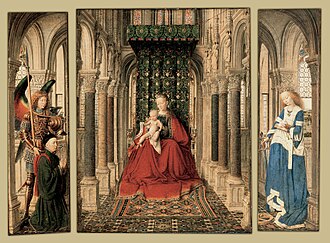 Dresdner Marienaltar - Jan van Eyck (1437)
%201433.jpg) Porträt eines Mannes - Jan van Eyck (1433)
Porträt eines Mannes - Jan van Eyck (1433)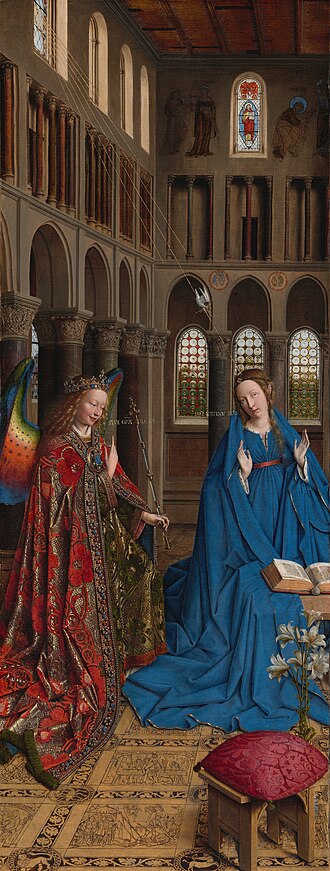 Verkündigung - Jan van Eyck (1430s)
Werke verwandter Künstler
 Der Garten der Lüste - Hieronymus Bosch
 Das Narrenschiff - Hieronymus Bosch (1500s)
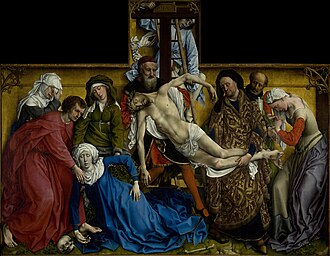 Kreuzabnahme - Rogier van der Weyden (1440s)
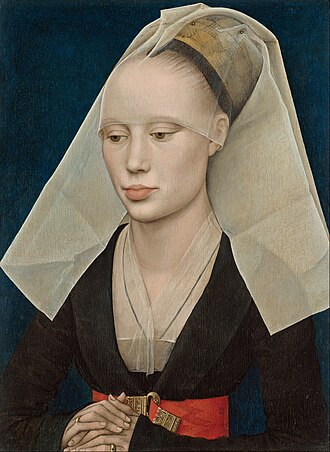 Porträt einer Dame - Rogier van der Weyden (1460)
%20-%20Google%20Art%20Project.jpg) Die Jäger im Schnee - Pieter Bruegel the Elder (1565)
Die Jäger im Schnee - Pieter Bruegel the Elder (1565)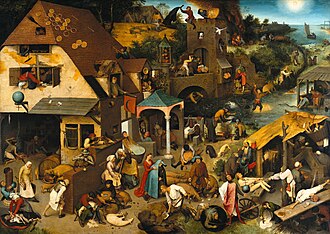 Die niederländischen Sprichwörter - Pieter Bruegel the Elder (1551)