Porträt der Margareta van Eyck
Jan van Eyck · 1439
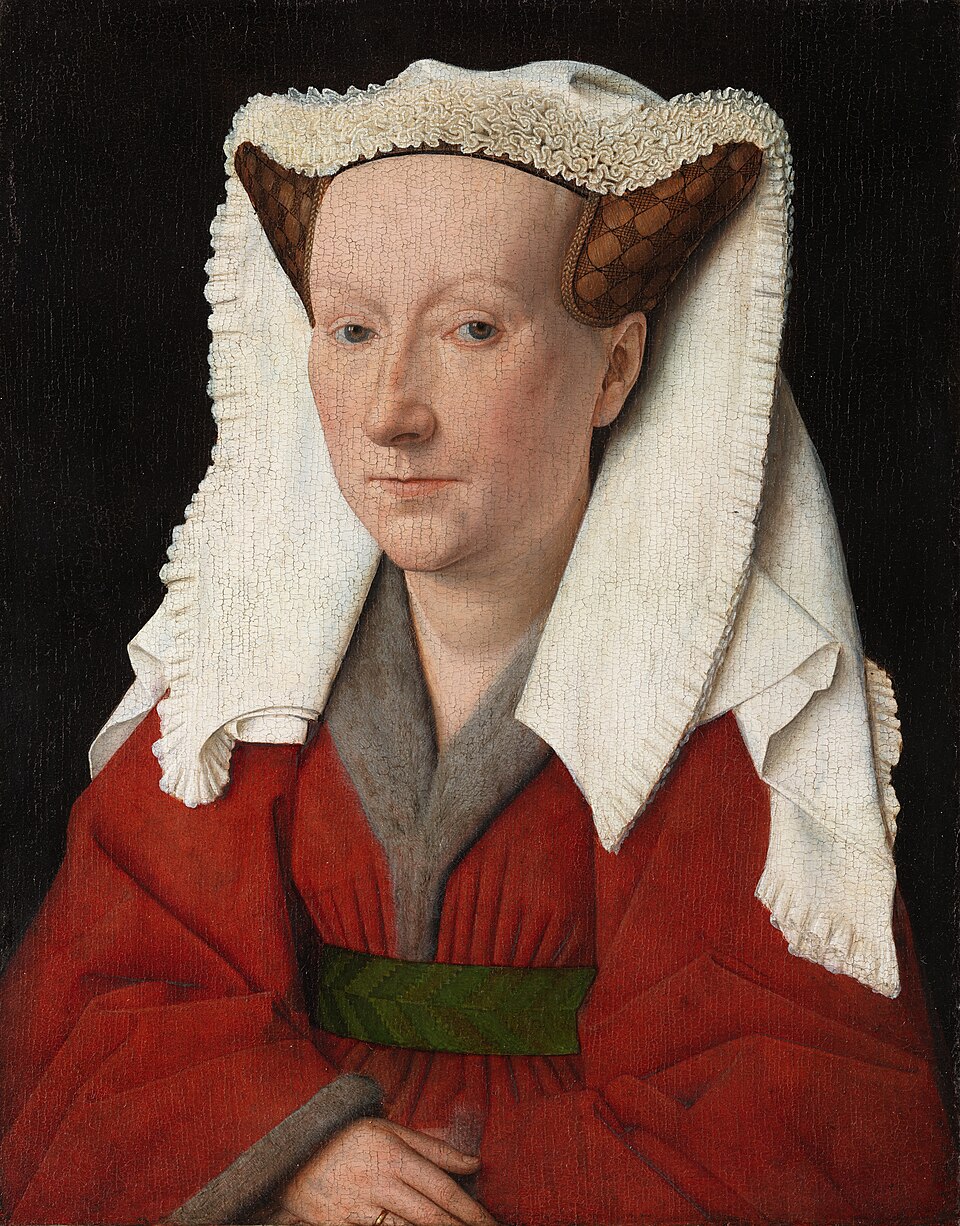
A woman of about 33 looks out at us in a red gown and a white horned headdress, with a slight squint in one eye. Jan van Eyck painted his wife Margaret in 1439, and on the frame she speaks: my husband Johannes completed me.
The story behind the painting
Jan van Eyck painted this small oil on wood in 1439, two years or less before his death, making it one of his latest surviving works and one of the earliest European paintings of an artist's spouse. Very little is known of Margaret; even her maiden name is lost, and records call her Damoiselle Marguierite. The couple probably married around 1432 to 1433, soon after Jan moved to Bruges, and their first child is recorded in 1434. Why the portrait was made is unknown. It may have marked an anniversary or her birthday.
What to look for
Margaret is shown in three-quarter view against a black, featureless background. She wears an elegant red wool gown lined with grey fur, probably squirrel, at the neck and cuffs, and a white horned wimple built from layers of crimped linen. Her left eye shows a squint. Jan enlarged her head relative to her body and gave her a high, fashionable forehead to focus on her face, and the geometry of headdress, arms and V-shaped neckline dominates the panel. The original frame is inscribed with the date 17 June 1439, her age as 33 (the article elsewhere says she was around 34), and his motto, As I can.
Meaning and intent
The portrait is unidealised, and her direct but plaintive gaze creates an intimate, informal mood, so it was probably made for private rather than public viewing. Her clothes are fashionable but not as sumptuous as the bride's in the Arnolfini Portrait, which suggests she came from the lower nobility. The motto Als ich kan was a pun on his surname. On the frame the words are given to her: her husband completed her. After Jan's death, the city of Bruges gave the widow of this renowned painter and diplomat only a modest pension.
Legacy
The panel hung until the early 18th century in the Bruges chapel of the Guild of Painters, where it was paired for a time with a self-portrait by Jan. Many believe it was once a pendant to the presumed self-portrait now in the National Gallery, London. Early Netherlandish painters were almost forgotten by 1800, and accounts differ on its rediscovery, one saying it was found for sale in a fish market. Cleaned and restored in London in 1998, it now hangs in the Groeningemuseum in Bruges, still in its original frame.
Schon gewusst?
- Painted by Jan van Eyck in 1439, when Margaret was 33.
- One of the earliest European portraits of an artist's wife.
- The original frame carries the date and his motto, As I can.
- In the Groeningemuseum in Bruges.
Über den Künstler
Jan van Eyck (1390-1441)
Porträt · Flämische Primitive · Vlaamse Kunstcollectie · Groeningemuseum
Mehr von Jan van Eyck
 Arnolfini-Porträt - Jan van Eyck (1434)
 Genter Altar - Jan van Eyck (1432)
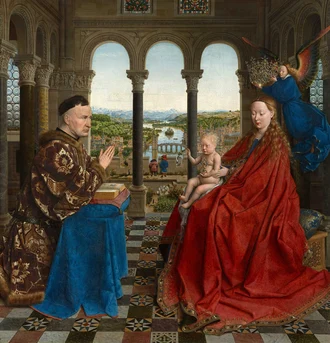 Rolin-Madonna - Jan van Eyck
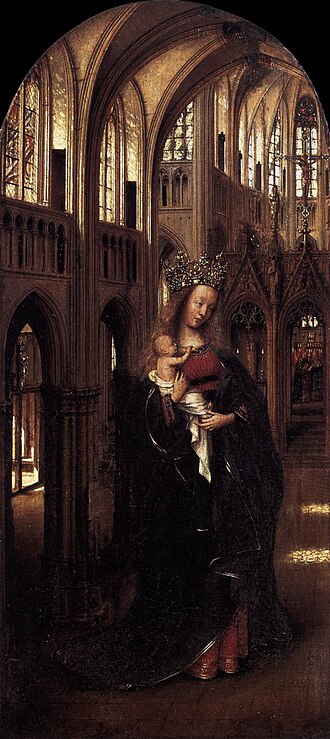 Die Madonna in der Kirche - Jan van Eyck (1440)
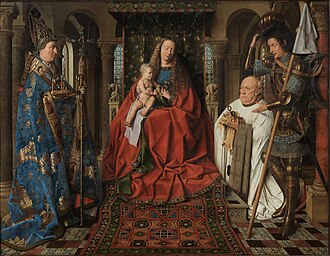 Madonna des Kanonikus Georg van der Paele mit hll. Donatian, Georg und Stifter Paele - Jan van Eyck (1436)
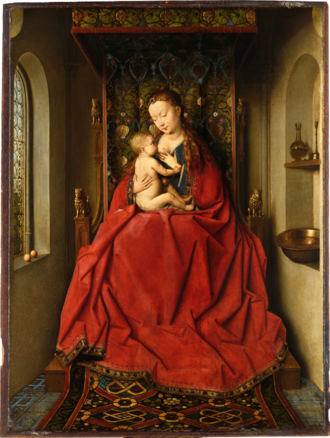 Lucca-Madonna - Jan van Eyck (1437)
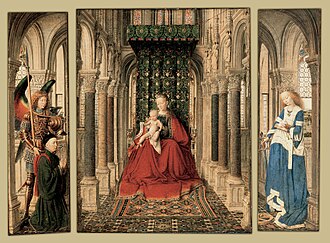 Dresdner Marienaltar - Jan van Eyck (1437)
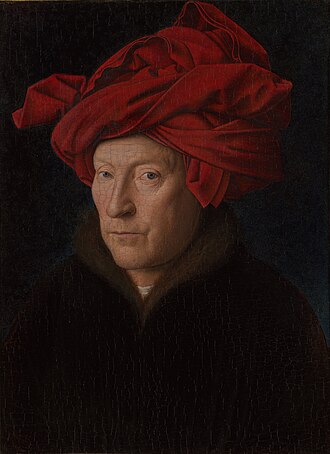 Porträt eines Mannes - Jan van Eyck (1433)
Werke verwandter Künstler
 Kreuzabnahme - Rogier van der Weyden (1440s)
 Porträt einer Dame - Rogier van der Weyden (1460)
 Die Verkündigung - Hans Memling (1480s)
 Szenen der Passion Christi - Hans Memling (1470)
 Der Garten der Lüste - Hieronymus Bosch
 Das Narrenschiff - Hieronymus Bosch (1500s)
 Die Jäger im Schnee - Pieter Bruegel the Elder (1565)
 Die niederländischen Sprichwörter - Pieter Bruegel the Elder (1551)