Tiếng thét
Edvard Munch · 1893
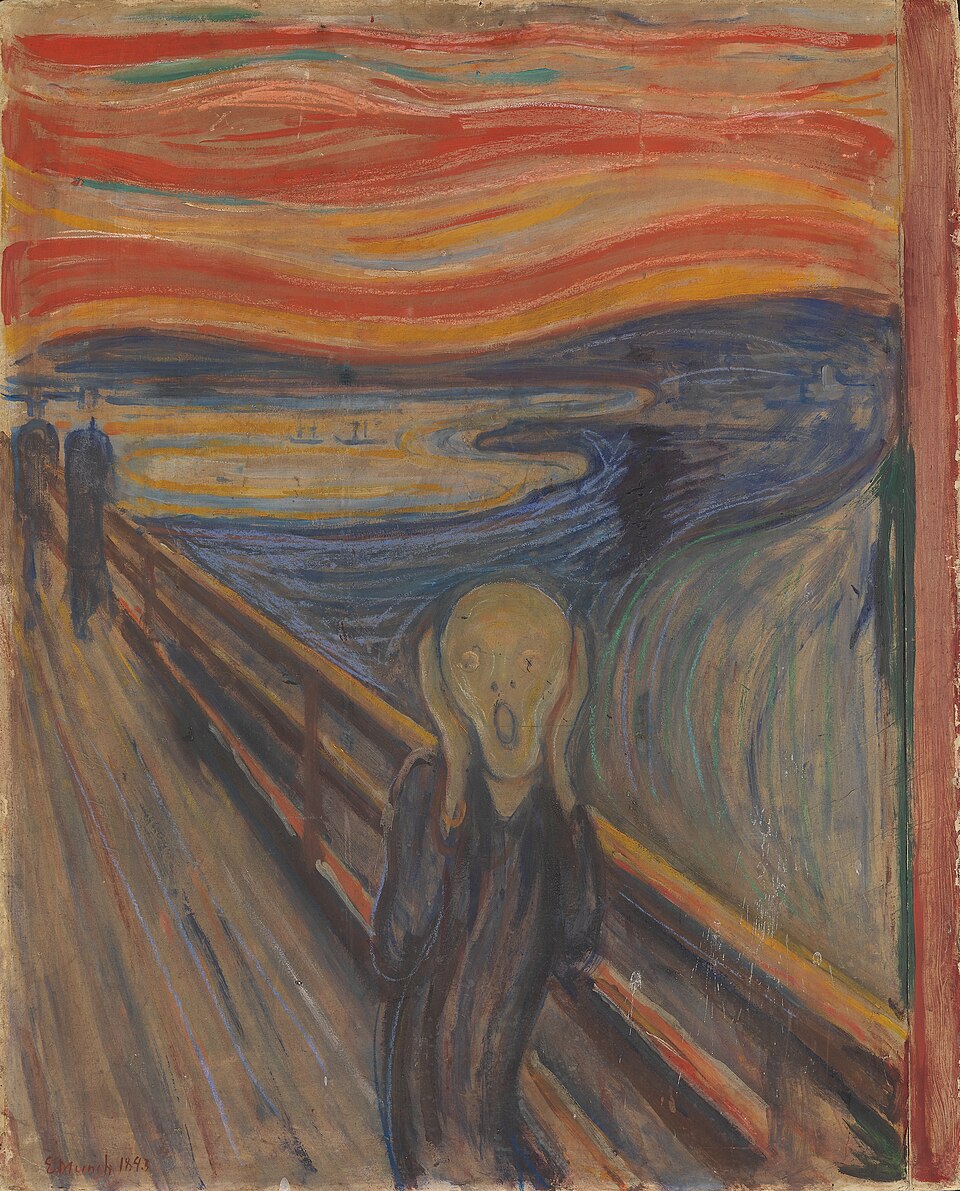
One of the most iconic images in art, The Scream by Edvard Munch has become synonymous with existential dread and modern anxiety.
The story behind the painting
In 1893, Norwegian artist Edvard Munch created The Scream, a painting that would go on to become an iconic representation of modern anxiety. Munch recalled that he was walking at sunset when the setting sun's light turned the clouds 'a blood red' and he sensed an 'infinite scream passing through nature'. This experience inspired him to create a piece that captured the intense emotions of the human condition. The painting was part of Munch's series, The Frieze of Life, which explored themes of love, anxiety, jealousy, and betrayal.
What to look for
The Scream depicts a figure standing on a bridge, overcome with emotion, their face contorted in a silent scream. The figure is set against a backdrop of swirling, vibrant colors, with bold brushstrokes and expressive lines. The sky is a kaleidoscope of reds, oranges, and yellows, while the water below is a deep blue. The bridge railing and the figure's dark clothing provide a sense of depth and contrast to the vibrant colors of the sky and water. Munch's use of bold, expressive brushstrokes and vivid colors creates a sense of dynamic energy in the painting.
Meaning and intent
The Scream is widely regarded as an expression of existential dread and modern anxiety. The painting's agonized face has become a universal symbol of the human experience, representing the intense emotions that can overwhelm us. Munch's work was influenced by his own struggles with mental health and his experiences with loss and grief. The painting's meaning has been interpreted in many ways, but at its core, it is a powerful expression of the human condition.
Legacy
The Scream has had a profound influence on modern art, inspiring countless artists and movements. It has become an cultural icon, reproduced and parodied countless times. The painting has been part of several high-profile exhibitions and has been widely studied and admired. Today, it remains one of the most famous paintings in the world, a testament to Munch's innovative style and his ability to capture the essence of the human experience.
Có thể bạn chưa biết
- The Scream was created in 1893 by Edvard Munch.
- The painting is part of Munch's series, The Frieze of Life.
- The Scream has been stolen from public museums twice, but has been recovered both times.
- The painting's Norwegian name is Skrik, and its German title is Der Schrei der Natur.
Wikipedia · Wikipedia - Edvard Munch · Wikidata
Tranh khác của Edvard Munch
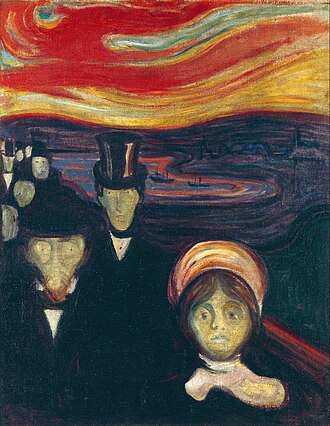 Anxiety - Edvard Munch (1894)