海から上がるヴィーナス
ティツィアーノ・ヴェチェッリオ · 1520
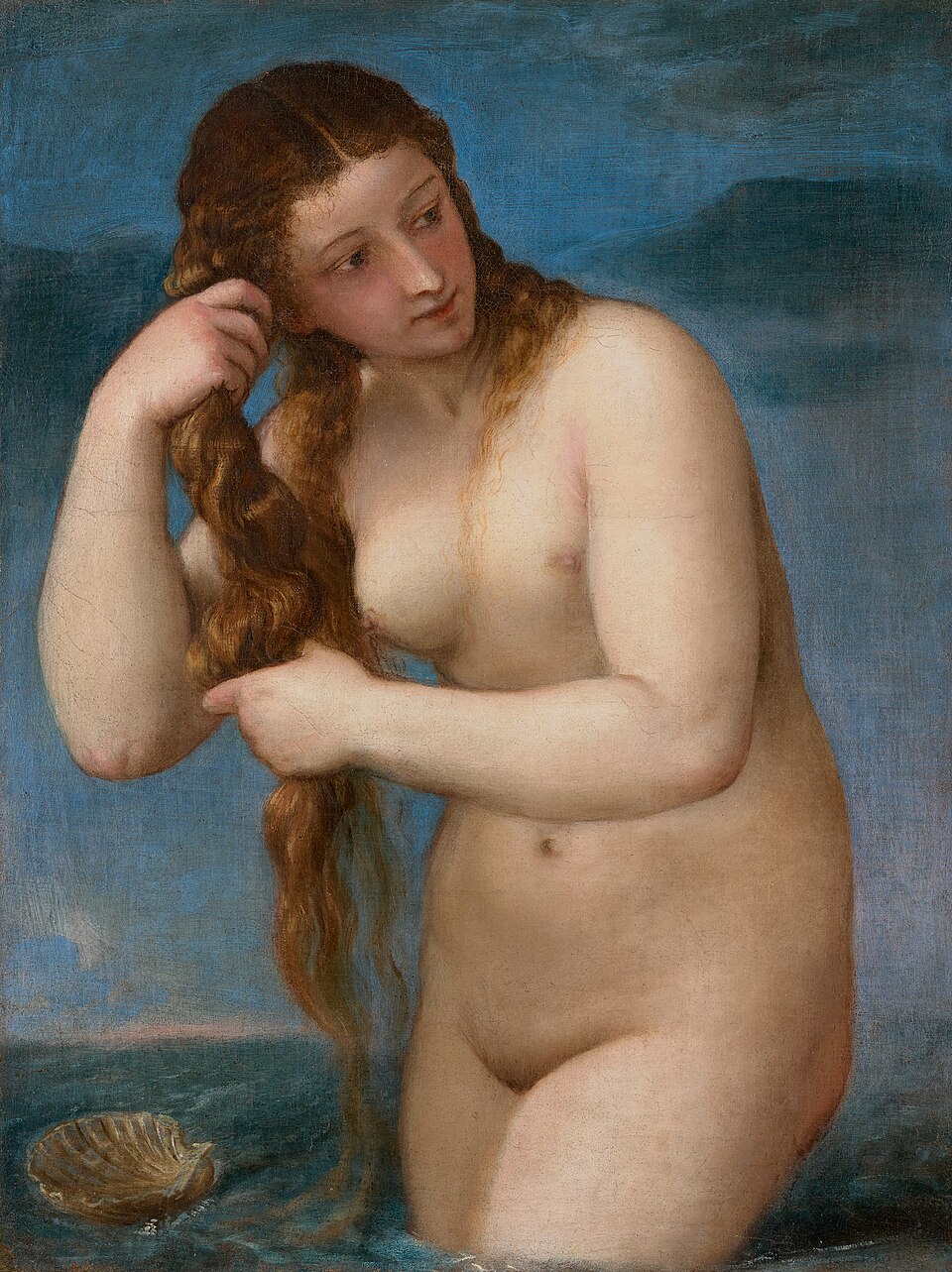
Around 1520 Titian painted Venus just risen from the sea, wringing the water from her hair. With one small gesture he set out to rival a lost masterpiece of ancient Greece.
The story behind the painting
The subject is the birth of Venus. According to the Greek poet Hesiod, the goddess was born fully grown from a shell, and Titian keeps a reminder of that at the bottom left of the canvas. He painted the picture around 1520. Its deeper story is a challenge to the ancients: the Greek painter Apelles had made a famous Venus wringing her hair, a work mentioned in Pliny's Natural History but long lost. Titian included the same detail on purpose, to prove that he could match the art of antiquity.
What to look for
Look first at the hands lifting and twisting the wet hair, the gesture borrowed from Apelles. Then find the shell at the bottom left. It is much smaller than in other scenes of the birth of Venus, such as Botticelli's, where the shell is like a boat carrying the goddess. Here it is only a sign that tells you who she is. Notice too her full, voluptuous body and her sideways glance, which owe much to ancient sculpture of the Crouching Venus and Cnidian Venus types. The painting is in good condition.
Meaning and intent
Titian is speaking to the past here. Every element points back to antiquity: the poem of Hesiod for the shell, Greek statues for the body and the glance, and Apelles for the wringing of the hair. Yet the shell is shrunk to a small sign, so that nothing distracts from the goddess herself, alone with the sea behind her. The picture is a declaration that a painter of Venice could take on the most admired artists of the ancient world, and that living flesh in paint could stand beside the legends of marble.
Legacy
The painting was once owned by Queen Christina of Sweden and passed through the Orleans Collection to John Egerton, 6th Duke of Sutherland, who lent it with 26 other paintings to the National Gallery of Scotland in 1945. After the childless Duke died in 2000, the work was acquired in 2003 from his cousin, Francis Egerton, 7th Duke of Sutherland, with the help of the National Art Collections Fund and others. The 7th Duke said that nothing had really changed, except that it now belonged to the nation. It became the centrepiece of an exhibition in 2004.
豆知識
- Painted by Titian around 1520.
- The hair-wringing gesture imitates a lost work by Apelles.
- Once owned by Queen Christina of Sweden.
- In public ownership in Scotland since 2003.
画家について
ティツィアーノ・ヴェチェッリオ (1488-1576)
盛期ルネサンス · 神話画 · ヌード · ヴェネツィア派 · 裸 · ロングヘア · 直立姿勢 · 空 · ウェヌス · 雲 · スコットランド国立美術館 · 海
同じ画家の作品: ティツィアーノ・ヴェチェッリオ
 ウルビーノのヴィーナス - Titian (1538)
 聖母被昇天 - Titian (1510s)
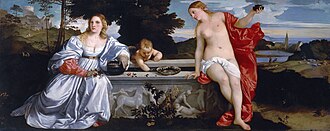 聖愛と俗愛 - Titian (1510s)
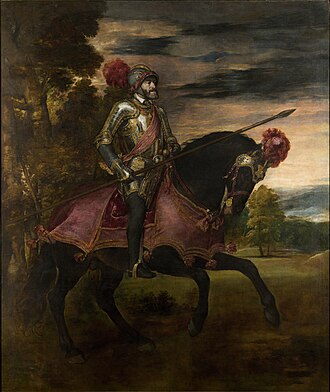 騎乗像 - Titian (1548)
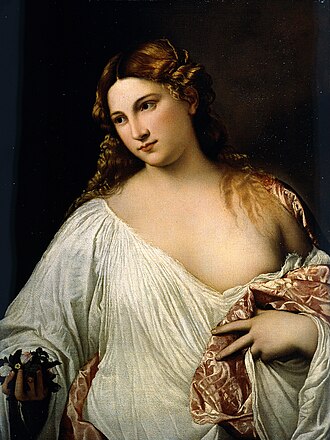 フローラ - Titian (1517)
 賢明の寓意 - Titian (1550)
 ディアナとアクタイオン - Titian (1550s)
 バッカスとアリアドネ - Titian (1520s)
関連する画家の作品
 最後の晩餐 - Jacopo Tintoretto (1563)
 奴隷を解放する聖マルコ - Jacopo Tintoretto (1540s)
 カナの婚礼 - Paolo Veronese (1560s)
 レヴィ家の饗宴 - Paolo Veronese (1573)