賢明の寓意
ティツィアーノ・ヴェチェッリオ · 1550
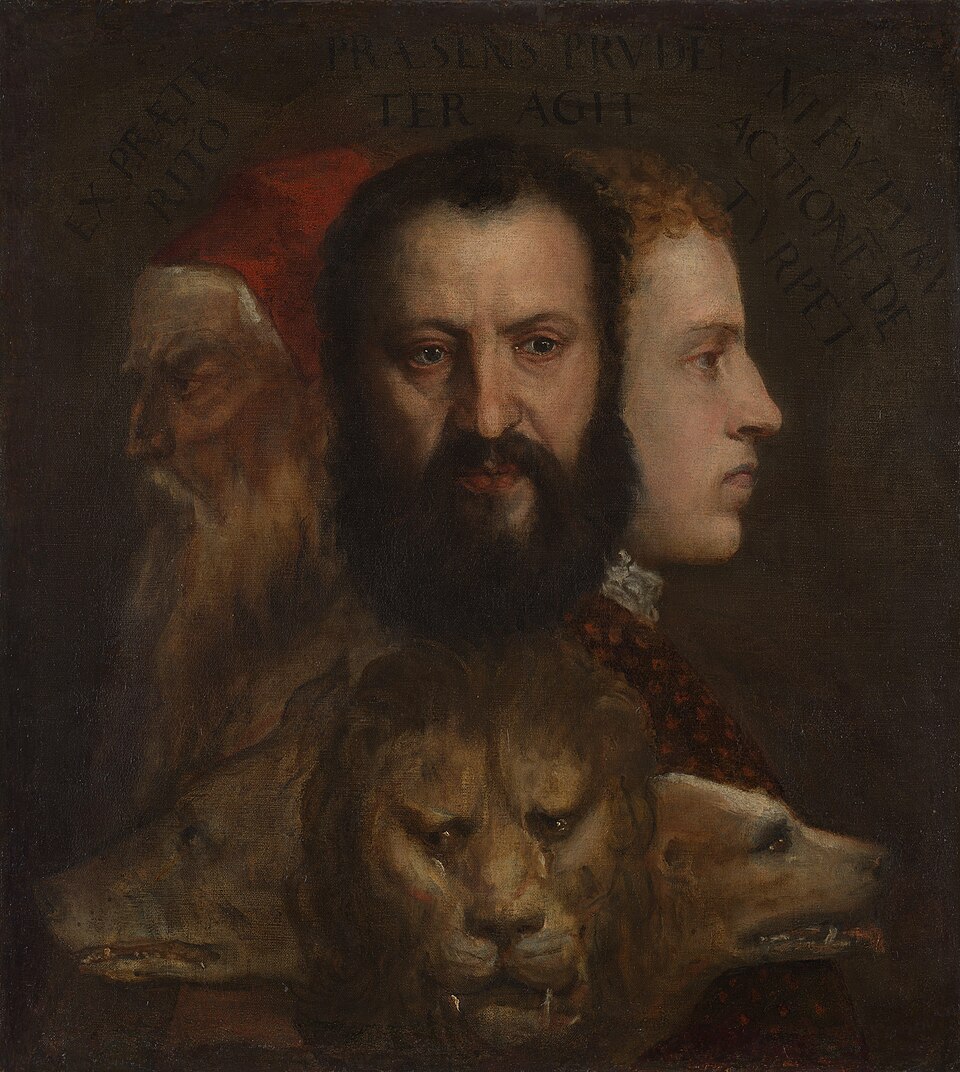
Three faces look into the past, the present and the future, while a wolf, a lion and a dog stare out beneath them. Above, a faint Latin line tells us what Titian's strange painting is about: acting wisely.
The story behind the painting
The Allegory of Prudence is an oil on canvas attributed to Titian and his assistants and dated c. 1550-1565; Wikidata gives 1550. It shows three human heads, each facing a different way, above three animal heads. Who are the men? It has been argued that they are portraits of the aged Titian, his son Orazio and his young nephew Marco Vecellio, both of whom lived and worked with him. Erwin Panofsky linked the picture to the passing of Titian's property to the next generations as death approached, a visual counsel to manage the inheritance wisely. Nicholas Penny is highly sceptical, noting discrepancies with other evidence of the men's appearance and thinking a commission more likely. Since no portraits of Orazio or Marco survive, confirmation is difficult. The painting was presented to the National Gallery, London, in 1966 by David and Betty Koetser.
What to look for
Read the human heads from left to right: an old man in profile, a mature man looking straight out, and a young man turned the other way. Below, in the same order, are a wolf, a lion and a dog. Then search the dark band above the faces for a barely visible inscription. Its Latin, broken into three parts above the three heads, means: from the experience of the past, the present acts prudently, lest it spoil future actions. The canvas is fairly small, 75.5 by 68.4 centimetres, so the faces and beasts are close together, almost like a single creature with many heads.
Meaning and intent
The painting works on several levels. The three ages of man, old age, maturity and youth, recall a subject Titian had painted fifty years earlier in The Three Ages of Man. Their directions suggest time itself: past, present and future. The animals repeat the idea, since a three-headed creature of wolf, lion and dog was linked to Serapis by Macrobius and to Apollo by Petrarch, and appears in later emblem books. The inscription gives the painting its name. Other readings differ sharply: one sees an admission of sin and penitence, an old man regretting a careless youth; another sees a claim that the prudence of age is essential to artistic judgement.
Legacy
Few paintings by Titian invite so many interpretations, and the source sets them side by side without settling the matter. If the heads are Titian, Orazio and Marco, the picture may also defend the continuity of the Venetian workshop tradition, passing skill from one generation to the next. If they are not, it remains a striking puzzle of faces, animals and words about time. Either way, the work in London keeps visitors leaning closer to read that faint inscription, which is exactly what the painting asks us to do: look back carefully before acting.
豆知識
- Dated c. 1550-1565 by Wikipedia; Wikidata gives 1550.
- Attributed to Titian and assistants.
- Size: 75.5 x 68.4 cm.
- Given to the National Gallery, London, in 1966.
画家について
ティツィアーノ・ヴェチェッリオ (1488-1576)
ナショナル・ギャラリー · 寓意 · イヌ
同じ画家の作品: ティツィアーノ・ヴェチェッリオ
.jpg) ウルビーノのヴィーナス - Titian (1538)
ウルビーノのヴィーナス - Titian (1538)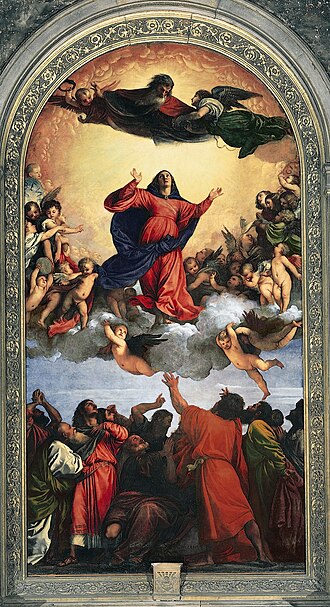 聖母被昇天 - Titian (1510s)
FXD.jpg) 聖愛と俗愛 - Titian (1510s)
聖愛と俗愛 - Titian (1510s)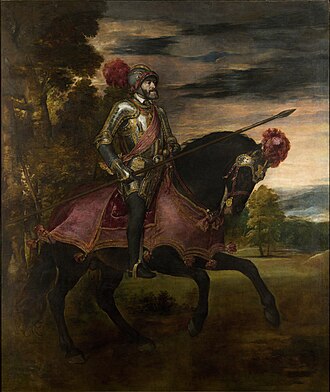 騎乗像 - Titian (1548)
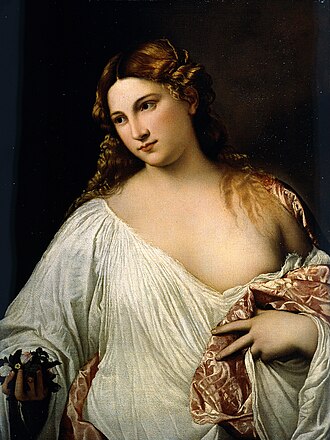 フローラ - Titian (1517)
 バッカスとアリアドネ - Titian (1520s)
%20nave%20left%20-%20Altar%20of%20Madona%20di%20Ca'Pesaro.jpg) ペーザロ家の祭壇画 - Titian
ペーザロ家の祭壇画 - Titian エウロペの略奪 - Titian
 モナ・リザ
モナ・リザ 白貂を抱く貴婦人
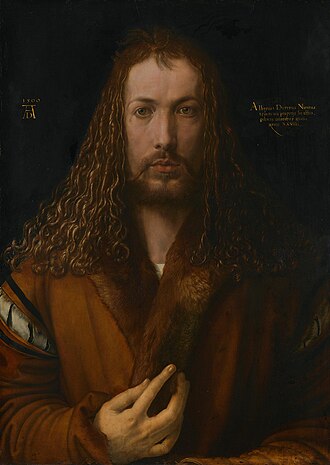 自画像
自画像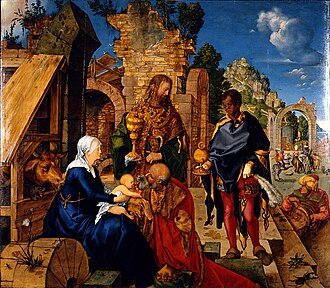 東方三博士の礼拝
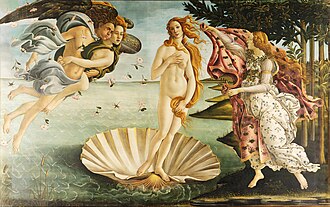 ヴィーナスの誕生
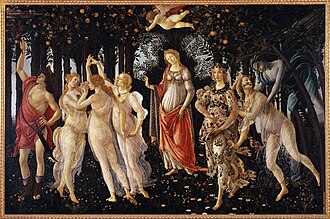 プリマヴェーラ